Contact info +
.png)
.png)
.png)
Showroom Hours:
Mon-Fri - 9AM-5PM | Sat - 10AM-2PM | Sun - Closed
Mon-Fri - 9AM-5PM | Sat - 10AM-2PM | Sun - Closed


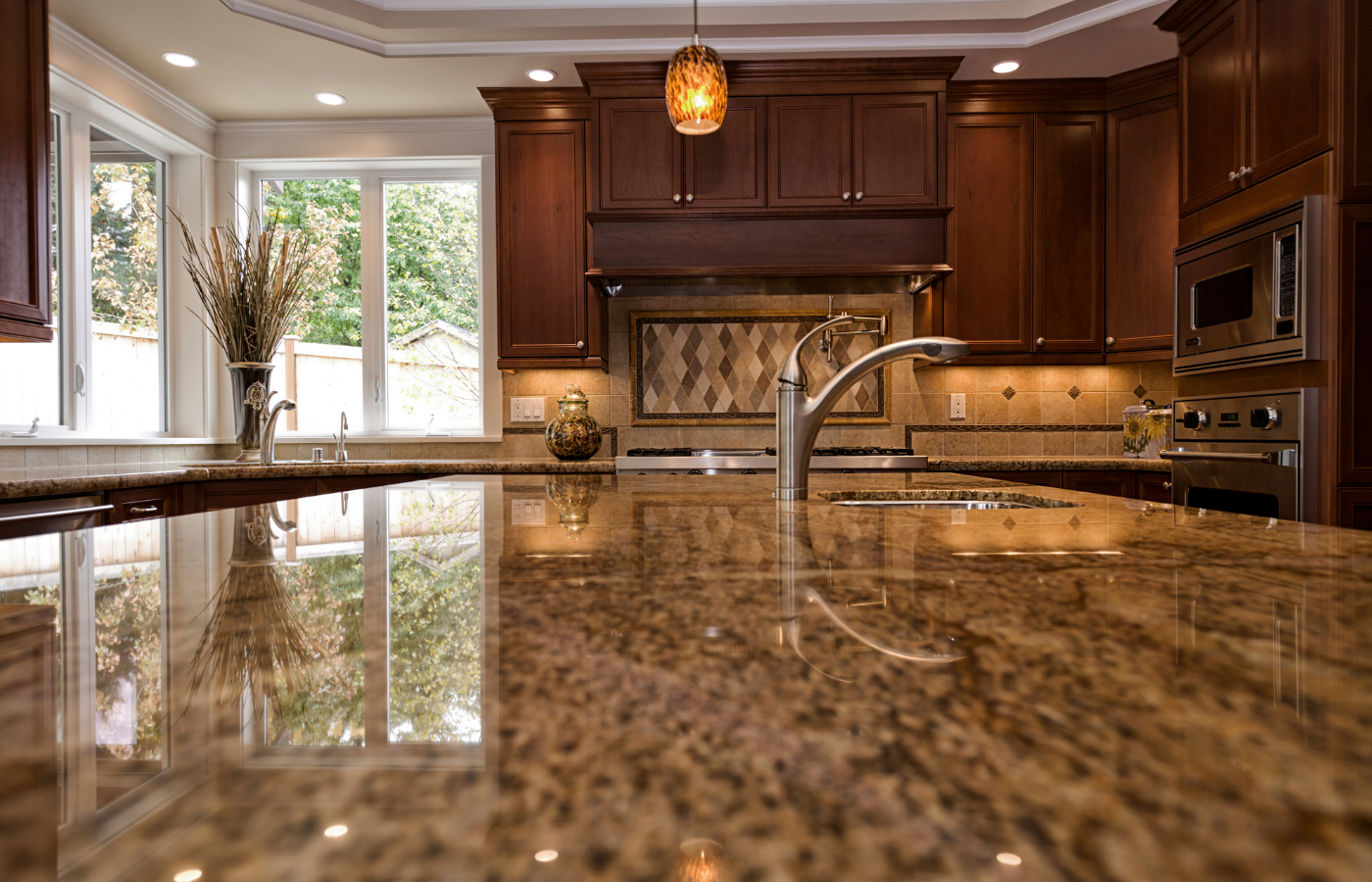
A chipped edge, thin crack, stubborn dark spot, or new scratch can make an otherwise beautiful granite countertop suddenly look damaged. Fortunately, many granite problems can be repaired or significantly improved without replacing the entire countertop.
So, can granite countertops be repaired? In many cases, yes. Chips can often be filled, some cracks can be stabilized and repaired, stains may be removable, and certain surface imperfections can be professionally refinished. The right solution depends on the type, location, and severity of the damage. At Design Surfaces in Westlake, we recommend identifying exactly what happened to the granite before deciding whether repair, restoration, or replacement makes the most sense.
Yes, many types of granite countertop damage can be repaired. The success of the repair depends on what is damaged and whether the issue is cosmetic, structural, or related to staining or moisture.
Granite repairs commonly address:
Repair does not necessarily mean the affected area will become completely invisible. Granite is a natural stone with variation in color, mineral composition, pattern, and movement, which can influence how well a repair blends into the surrounding surface.
The first step is determining what kind of problem you actually have.
Small granite chips can often be repaired, especially when the damage is localized and the surrounding stone remains stable.
Chips commonly occur:
A professional repair may involve cleaning the damaged area, filling the missing portion with an appropriate stone repair material, matching the surrounding color as closely as practical, and finishing the repair so it blends with the countertop.
The size and location of the chip matter. A tiny chip along an edge is very different from a large section breaking away near a sink or unsupported area.
If the granite continues cracking around the chipped area, the underlying cause should be evaluated before focusing only on appearance.
Some cracked granite countertops can be repaired, but cracks require more careful evaluation than small chips.
A crack may develop because of:
The repair method depends on the crack's width, location, movement, and effect on the stability of the countertop.
A stable hairline crack may be repairable. A crack that continues spreading, creates movement between sections, or appears near an unsupported area may indicate a larger structural problem.
In those situations, simply filling the visible line may not solve the cause.
Not every visible line in granite is damage.
Granite is a natural material, and some slabs contain fissures that formed as part of the stone's geological development. These can appear as fine lines running through the surface.
A fissure is not automatically the same as a crack caused by impact or structural stress.
A possible crack deserves closer evaluation if the line:
Natural features can be especially noticeable in granite with significant movement or mineral variation. If you are unsure whether a line is natural or new damage, avoid trying to fill or grind it before having it evaluated.
Granite is highly scratch resistant, but scratches and surface marks can still occur.
What appears to be a scratch may sometimes be:
That distinction matters because each issue requires a different response.
Surface residue may simply need appropriate cleaning. A true scratch or altered finish may require professional polishing or refinishing, particularly if the damage is noticeable across a large area.
Avoid trying to sand, grind, or aggressively polish granite yourself. Matching the surrounding finish requires control over both the level of abrasion and the final sheen.
Many granite stains can be improved or removed, but the correct treatment depends on what caused the stain.
Different types of granite countertop stains require different removal methods, so identifying the source should come before choosing a treatment.
Common sources include:
An absorbed stain behaves differently from residue sitting on the countertop's surface.
Oil may create a persistent dark area. Rust can produce orange or brown discoloration. Coffee, wine, and other substances can leave marks with different characteristics.
Identifying the stain before treating it is important. A product that works for one type of discoloration may be ineffective or inappropriate for another.
The Natural Stone Institute provides guidance for identifying different types of natural stone stains before choosing a treatment.
Dark granite spots do not always indicate permanent damage.
A granite countertop turning dark can sometimes be explained by temporary water absorption rather than permanent staining. This is particularly noticeable around sinks, faucets, soap dispensers, and other frequently wet areas.
If the darkened section gradually returns to its normal color as it dries, moisture absorption may be the explanation.
A dark area that remains after the countertop is completely dry could indicate:
Before attempting a repair, determine whether anything is actually broken. Moisture and staining generally require different solutions than physical damage.
In many cases, the appearance of cloudy or dull granite can be improved, but first determine what is causing the change.
A dull area may result from:
Around sinks and faucets, hard water stains on granite can also create cloudy white deposits that may look like damage even when the problem is surface buildup.
Start with appropriate cleaning rather than immediately assuming the granite needs polishing.
If residue or mineral buildup is causing the appearance, removing the buildup may reveal that the underlying finish is still intact.
If the stone itself has lost its finish, professional refinishing or polishing may be appropriate.
Some granite seam problems can be repaired, although the correct approach depends on why the seam changed.
A seam may become more noticeable because of:
If the issue is primarily cosmetic, repairing or replacing the seam material may improve its appearance.
If the countertop sections are moving, however, the support or installation should be evaluated before the seam is simply refilled.
A repaired seam will perform better when the underlying countertop remains stable.
Damage to an edge can sometimes be repaired, particularly when the broken piece is small and the surrounding granite is structurally sound.
Larger breaks are more complicated.
Edge repairs must account for:
Highly patterned granite may visually disguise some repairs better than very uniform stone. However, a repair should still prioritize stability over making the damaged area completely disappear.
There is no single repair method for every granite problem.
Depending on the damage, professional repair may involve:
Stain removal follows a different process because the goal is to remove or draw out an absorbed substance rather than rebuild missing stone.
This is why correctly diagnosing the problem comes before choosing the repair.
Very minor cosmetic issues may have DIY repair products available, but granite repair can become difficult quickly.
The biggest challenge is not simply filling a damaged area. It is creating a repair that is stable and visually compatible with the surrounding stone.
DIY repair can be particularly risky when dealing with:
Using the wrong adhesive, abrasive, polish, or stain treatment can make professional restoration more difficult later.
When the cause or severity of the damage is unclear, professional evaluation is usually the safer approach.
Repair makes the most sense when the problem is localized and the countertop remains structurally sound.
For example, replacing an entire granite installation because of one small edge chip may be unnecessary if the damaged area can be repaired successfully.
Replacement becomes more reasonable when:
The age of the countertop alone does not determine whether it needs replacement. Condition and stability matter more.
Not always.
A skilled repair can often make damage considerably less noticeable, but granite's natural pattern and the type of damage influence the final result.
Repairs may blend especially well when the stone contains:
A repair may be easier to see on very uniform granite or in an area where light reflects directly across the surface.
The goal should be a stable, durable, visually compatible repair rather than a guarantee that the original damage will become completely undetectable.
Granite is durable, but thoughtful everyday habits can help reduce avoidable damage.
To protect granite countertops:
It is also helpful to understand how often granite countertops should be sealed, since appropriate sealing can help reduce liquid absorption and staining.
Preventive care is particularly important around edges and cutouts, where the stone may have less material surrounding the opening.
For additional maintenance information, the Natural Stone Institute provides care guidance for natural stone surfaces.
Granite's durability is one reason it remains a popular natural stone for kitchens and bathrooms, but every slab is unique.
Pattern, mineral composition, finish, edge profile, fabrication, installation, and daily use can all influence how a countertop performs over time.
At Design Surfaces, serving homeowners, designers, and contractors across Cleveland, we help clients compare full granite slabs and consider both appearance and practical performance before fabrication.
Seeing a full slab in person can also help you understand natural fissures, mineral variation, movement, and other characteristics that may be difficult to appreciate from a small sample.
So, can granite countertops be repaired? Yes, many common granite problems can be repaired or significantly improved without replacing the entire countertop.
Small chips, certain cracks, stains, damaged seams, and some surface imperfections may all have repair options. The important part is determining whether you are dealing with physical damage, staining, moisture, residue, or an underlying installation issue before choosing a solution.
For minor damage, repair may preserve a countertop for years to come. For larger cracks, movement, or recurring problems, professional evaluation can help determine whether restoration or replacement is the better long-term choice.
Visit Design Surfaces in Westlake to explore granite and other countertop materials in person and get expert guidance on selecting natural stone for lasting beauty and everyday performance.
Call: 440.899.9900 • Contact: Submit a Request • Email: info@designsurfacesdist.com


