Contact info +
.png)
.png)
.png)
Showroom Hours:
Mon-Fri - 9AM-5PM | Sat - 10AM-2PM | Sun - Closed
Mon-Fri - 9AM-5PM | Sat - 10AM-2PM | Sun - Closed


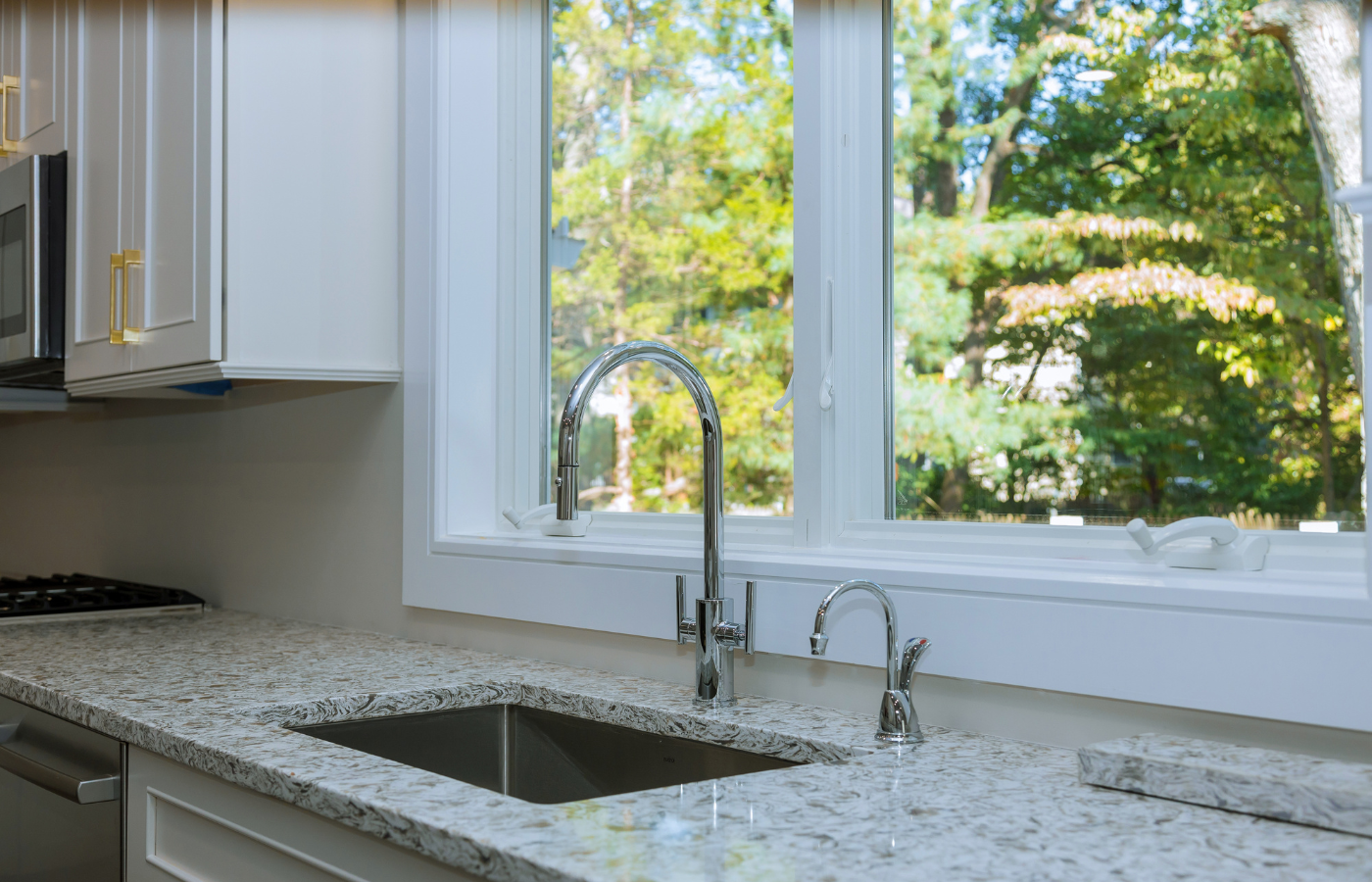
A granite countertop can look perfectly polished and still be ready for another coat of sealer. That is what makes sealing schedules confusing. Some homeowners are told to reseal every year, while others go several years without needing it.
The better answer is that granite should be sealed based on how the individual stone is performing, not simply because a date on the calendar has arrived. At Design Surfaces in Westlake, Ohio, we help homeowners understand how granite density, finish, daily use, and previous sealing all affect maintenance. Here is how to tell when your granite may need to be sealed again.
There is no single resealing schedule that works for every granite countertop.
Some granite may need attention more frequently, while dense varieties can go considerably longer between applications. The performance of the existing sealer matters more than following a universal annual schedule.
The Natural Stone Institute also recommends consulting the stone supplier or sealer manufacturer for the frequency appropriate to the specific product and stone.
Factors that influence how often granite countertops should be sealed include:
Instead of automatically resealing every year, watch how the countertop reacts to liquids.
Granite is a natural stone. Although many varieties are relatively dense, some can absorb water, oil, wine, coffee, and other liquids when they remain on the surface.
A penetrating stone sealer helps slow that absorption.
The purpose is not to create a plastic-like coating or make granite completely waterproof. Instead, sealing gives you more time to clean up spills before they penetrate deeply enough to create discoloration.
That can be especially valuable in kitchens, where granite regularly comes into contact with:
Sealing adds protection, but prompt cleanup and proper maintenance still matter.
How the countertop responds to water is one of the most useful clues.
If water remains on the surface without noticeably darkening the stone, the granite may still have adequate protection or may naturally be very dense.
If the granite begins to darken where the water sits, moisture may be absorbing into the stone.
That can indicate that the countertop should be evaluated for resealing.
Other signs may include:
Do not confuse these signs with existing stains, hard water buildup, or cleaner residue. Those problems may require cleaning or restoration rather than another coat of sealer.
A simple water test can provide useful information about how quickly granite is absorbing moisture.
Choose a clean, inconspicuous section of the countertop and place a small amount of water on the surface.
Observe whether the granite begins to darken beneath it.
If the stone changes color relatively quickly, it may be absorbing moisture.
If the water remains on top without changing the stone's appearance, the countertop may not need immediate resealing.
The goal is not to leave standing water on the countertop for an extended period. You are simply observing how the surface responds.
If you are uncertain about the result, ask your fabricator, installer, or stone professional before applying additional sealer.
No.
Granite is not one uniform material. Different slabs can vary considerably in density, mineral composition, color, finish, and porosity.
A dense dark granite may absorb very little liquid, while another stone may accept moisture more readily.
Finish can also influence performance.
A polished surface may naturally resist absorption better than some more textured finishes, depending on the particular stone.
Honed finishes have a softer, matte appearance and may show moisture, fingerprints, or oils differently.
Leathered surfaces create texture and depth but may have different maintenance considerations depending on the stone.
This variation is why sealing recommendations should be based on the actual countertop rather than granite as a category.
Not necessarily.
The idea that every granite countertop must be sealed once a year is an oversimplification.
In fact, the Natural Stone Institute notes that many granite countertops may not require sealing at all, although some can benefit from the added resistance a quality penetrating sealer provides.
Some countertops may need sealing sooner. Others may continue performing well for significantly longer.
Applying additional sealer when the existing protection is still effective does not necessarily improve the countertop.
Instead of choosing an arbitrary anniversary date, monitor how the granite handles moisture and spills.
Reseal when the surface shows that additional protection may be useful.
Yes, more sealer is not always better.
A penetrating sealer is intended to enter the stone rather than build up as a visible layer on top.
If the granite cannot absorb additional product, excess sealer may remain on the surface and create:
This is one reason you should not continually add sealer simply because a certain amount of time has passed.
Determine whether the countertop actually needs it first.
Repeated moisture exposure makes sink areas one of the first places homeowners may notice changes.
Water frequently collects around:
If the granite temporarily darkens when wet and then returns to its normal appearance after drying, the stone may be absorbing moisture.
If the darkening persists, however, the issue could involve more than sealing.
Possible causes include:
Persistent darkening should be evaluated before simply applying more sealer.
No.
Sealing makes granite more resistant to absorption, but it does not make the surface stain proof.
A sealed countertop can still develop marks if spills remain in place long enough.
Oil is particularly important because it can create dark stains that penetrate below the surface.
Wine, coffee, cosmetics, sauces, and strongly pigmented foods should also be cleaned promptly.
Think of sealer as added response time. It gives you a better opportunity to remove a spill before it becomes a deeper problem.
Not necessarily.
Hard water marks are often mineral deposits sitting on top of the countertop rather than liquids absorbed into the stone.
They commonly appear as:
Resealing the countertop does not remove those minerals.
If the issue is hard water buildup, the surface needs an appropriate granite-safe cleaning method rather than simply another application of sealer.
The answer depends heavily on the granite.
Dense granite may naturally absorb very little moisture, even without frequent sealing.
More porous stone can be more susceptible to:
Once a substance has penetrated deeply into the stone, removing it can require a poultice or professional treatment.
Proper sealing can reduce that risk.
A standard penetrating sealer should generally preserve the natural appearance of granite rather than creating a visible surface coating.
However, different products behave differently.
Some sealers are designed specifically to enhance or deepen the color of natural stone.
Before applying anything, confirm whether the product is:
This is especially important if you want the countertop to retain its current color and sheen.
Sealed granite still needs stone-safe cleaning.
For everyday care, start with:
Avoid assuming that sealing protects granite from every chemical.
Harsh acids, abrasive powders, rough scrubbers, and incompatible household cleaners can affect the finish, sealer, or surrounding materials.
Proper cleaning can also help the sealer perform as intended for longer.
Good maintenance can reduce staining and unnecessary wear.
A few simple habits include:
These habits are more useful than simply resealing on an arbitrary schedule.
Consider asking a stone professional when:
Determining what is actually happening before adding another product can prevent unnecessary work and potential surface problems.
Granite remains an excellent choice for homeowners who want the character of natural stone combined with durability and long-term performance.
Still, not every granite behaves exactly the same way.
Color, density, finish, mineral composition, and porosity can all influence how the countertop responds to moisture and everyday use.
At Design Surfaces, serving homeowners, designers, and contractors across Cleveland, we help clients compare granite slabs in person and understand how each option fits their design preferences and maintenance expectations.
Seeing a full slab also lets you evaluate natural movement, variation, finish, and character before fabrication begins.
So, how often should granite countertops be sealed?
There is no single number that applies to every countertop. Instead of assuming granite needs to be resealed every year, pay attention to how the stone responds to water, oils, and everyday spills.
If liquids begin absorbing noticeably faster or the countertop starts darkening more easily, it may be time to evaluate the existing sealer.
Choosing the right granite and understanding its maintenance requirements from the beginning makes long-term care much simpler.
If you are selecting granite for a kitchen, bathroom, or other space, visit the Design Surfaces showroom in Westlake to compare full slabs, finishes, colors, and natural stone options in person.
Call: 440.899.9900 • Contact: Submit a Request • Email: info@designsurfacesdist.com


