Contact info +
.png)
.png)
.png)
Showroom Hours:
Mon-Fri - 9AM-5PM | Sat - 10AM-2PM | Sun - Closed
Mon-Fri - 9AM-5PM | Sat - 10AM-2PM | Sun - Closed


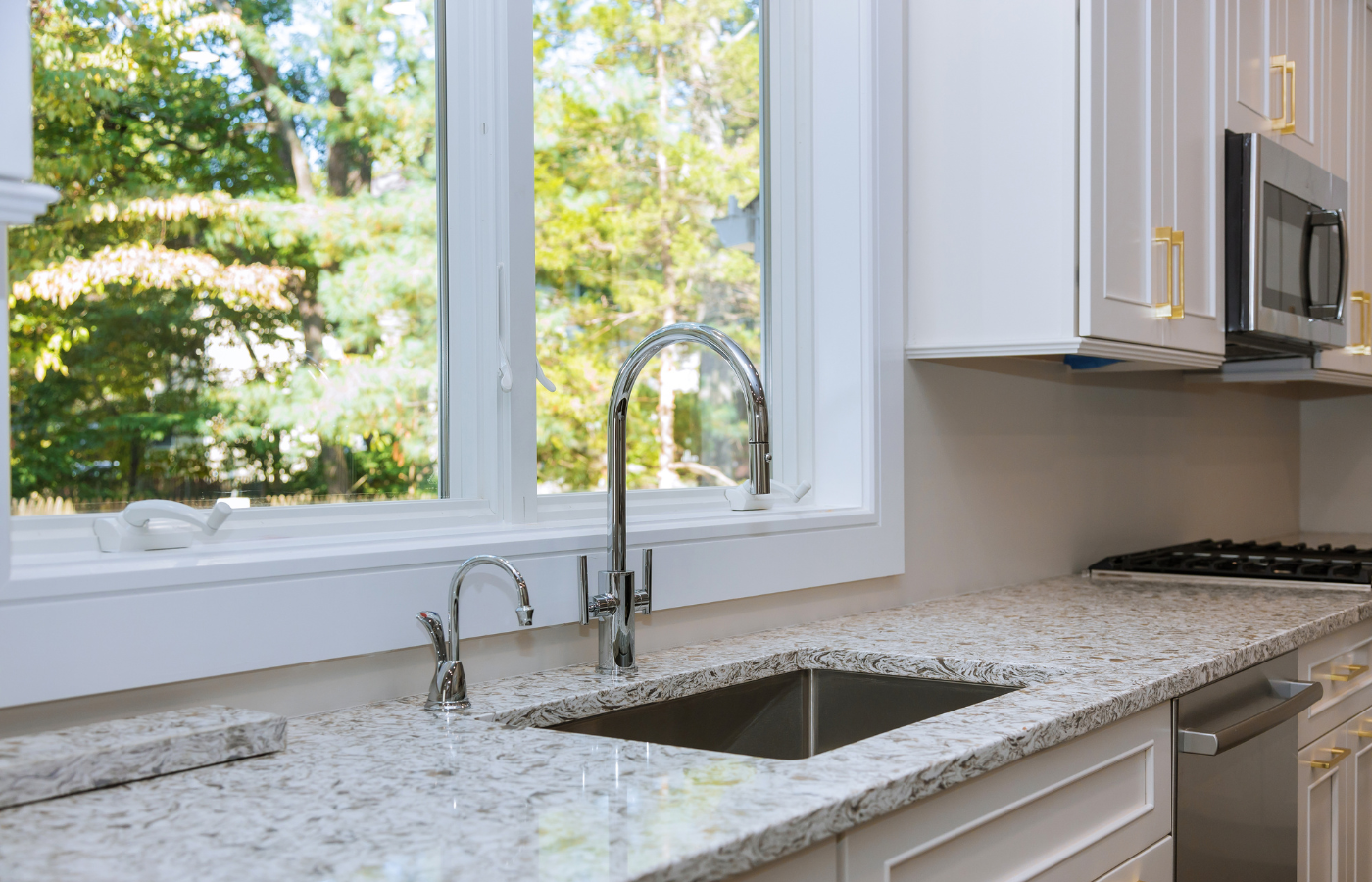
A dark oil spot near the range, a coffee ring beside the sink, or a rusty mark near a metal container can make granite look permanently stained when the problem may still be treatable. The challenge is knowing what caused the discoloration before using a cleaner that could affect the finish.
At Design Surfaces in Westlake, Ohio, we help homeowners understand how natural stone responds to moisture, oils, food, and cleaning products so they can care for it properly. If you are trying to figure out how to remove stains from granite countertops, start by identifying the stain source and using the gentlest method appropriate for the stone.
Start with simple, stone-safe cleaning before trying anything stronger.
For a fresh spill or light surface residue:
Granite is durable, but abrasive tools, harsh acids, and aggressive chemicals can still damage the finish or affect the sealer.
Granite is a natural stone, and some varieties can absorb liquids if spills remain on the surface long enough.
How easily granite stains depends on factors such as:
Common sources of granite stains include:
A mark that looks like a stain may also be surface buildup or temporary moisture absorption, so diagnosis matters.
The Natural Stone Institute recommends identifying the type and source of a stain before choosing a removal method.
Several countertop problems can look similar.
A stain usually changes the color of the stone and remains after routine cleaning.
Moisture absorption may temporarily darken granite, especially around sinks or seams.
Hard water buildup often looks white, chalky, or cloudy and usually develops near faucets or frequently wet areas.
Surface residue can leave haze, streaks, or a film from soap, grease, or cleaner buildup.
Identifying which problem you have can prevent unnecessary scrubbing or the use of overly strong chemicals.
Coffee and tea can leave brown or yellowish discoloration when spills are not cleaned promptly.
For a fresh spill:
If the stain remains after normal cleaning, it may have penetrated below the surface.
At that point, a stain-removal method designed for natural stone may be needed. Avoid repeated aggressive scrubbing, which can affect the finish.
Wine can leave noticeable discoloration, especially on lighter granite.
Blot the spill rather than spreading it across the surface. Then clean the area with a pH-neutral natural stone cleaner.
If the stain remains after the countertop has dried, the pigment may have absorbed into the stone.
The next step should depend on the depth of the stain, the granite type, and whether the surface is sealed.
Oil-based stains are often darker than the surrounding stone and may be more difficult to remove with ordinary cleaning.
Common sources include:
Start by removing surface residue with a pH-neutral stone cleaner.
If a darker patch remains, the oil may have penetrated into the granite. In that case, a poultice or professional stain-removal treatment may be appropriate.
The Natural Stone Institute's guidance on poultices explains how these treatments can draw certain stains out of natural stone.
Avoid using strong degreasers unless they are approved for natural stone.
Rust can develop when metal objects remain in contact with damp stone for too long.
Potential sources include:
Rust stains can be more difficult to remove than food or beverage stains because they may involve metal deposits within the stone.
Do not use a random rust remover without checking whether it is safe for granite. Some rust-removal products are acidic and may affect the finish.
Persistent rust stains may require a product specifically designed for natural stone or professional treatment.
Darkening near the sink does not automatically mean permanent staining.
Granite can absorb moisture, particularly if water repeatedly collects near:
If the darkened area gradually lightens as it dries, moisture absorption may be the cause.
If it remains dark, other possibilities include soap residue, oil buildup, staining, deteriorated caulk, or moisture trapped beneath the surface.
White, cloudy, or crusty marks are often caused by hard water minerals or cleaner residue rather than a deep stain.
Around faucets and sinks, water can evaporate and leave mineral deposits on the surface.
Soap and cleaning products can also leave behind a film if they are not rinsed thoroughly.
If the area feels chalky or crusty, hard water buildup is a likely cause.
Use a granite-safe method for mineral deposits and avoid acidic limescale cleaners unless they are specifically approved for natural stone.
Vinegar is not a good general cleaner for granite.
It is acidic and can affect some sealers and finishes over time.
For everyday care, use a pH-neutral cleaner made for natural stone instead.
The same caution applies to:
A cleaner that works well elsewhere in the home is not necessarily appropriate for granite.
Baking soda is often recommended in DIY cleaning advice, but it should not be treated as a universal solution.
It is mildly abrasive, and aggressive scrubbing can affect polished finishes.
Some stain-removal methods may use a poultice containing an absorbent material, but the correct approach depends on the type of stain and the granite.
If you are unsure, use a stone-safe product or ask a professional before trying a homemade treatment.
Using the wrong cleaner can create dullness, residue, or damage to the sealer.
Be cautious with:
A pH-neutral natural stone cleaner is usually the safest starting point.
You can also review our stone care and maintenance recommendations for additional guidance.
Some stains become more difficult to remove when they remain in the stone for an extended period.
The outcome depends on:
Oil, rust, and deeply pigmented liquids can be particularly persistent.
Prompt cleanup gives you the best chance of preventing deeper absorption.
Many granite countertops benefit from sealing, but not all granite behaves the same way.
A penetrating sealer can help slow liquid absorption and give you more time to clean spills before they become stains.
However, sealing does not make granite stain proof.
How often sealing is needed depends on the stone, sealer, finish, use, and installation. Follow the recommendations for your specific countertop rather than relying on a universal schedule.
Routine habits make a big difference.
To reduce staining and buildup:
Consistent care is much easier than trying to correct a deep stain later.
Professional evaluation may be appropriate when:
Continuing to experiment with stronger products can make the problem harder to diagnose.
Granite remains a popular countertop material because it combines natural character, durability, and long-term performance.
Still, different granites can behave differently.
Color, density, mineral composition, finish, and porosity can all influence how easily stains, water spots, and residue show.
At Design Surfaces, serving homeowners, designers, and contractors across Cleveland, we help clients compare granite slabs in person and understand how the stone will perform in real-world kitchens and bathrooms.
Seeing full slabs before fabrication also makes it easier to evaluate movement, variation, finish, and how visible everyday marks may be.
Learning how to remove stains from granite countertops starts with identifying what caused the mark.
Coffee, wine, oil, rust, moisture, hard water buildup, and cleaner residue can all look different and may require different treatment. Start gently, use products made for natural stone, and avoid assuming that a stronger cleaner will work better.
With proper care and prompt cleanup, granite can remain a durable and beautiful surface for many years.
If you are choosing granite or comparing countertop materials for an upcoming kitchen or bathroom project, visit the Design Surfaces showroom in Westlake to explore full slabs, finishes, colors, and natural stone options in person.
Call: 440.899.9900 • Contact: Submit a Request • Email: info@designsurfacesdist.com


