Contact info +
.png)
.png)
.png)
Showroom Hours:
Mon-Fri - 9AM-5PM | Sat - 10AM-2PM | Sun - Closed
Mon-Fri - 9AM-5PM | Sat - 10AM-2PM | Sun - Closed


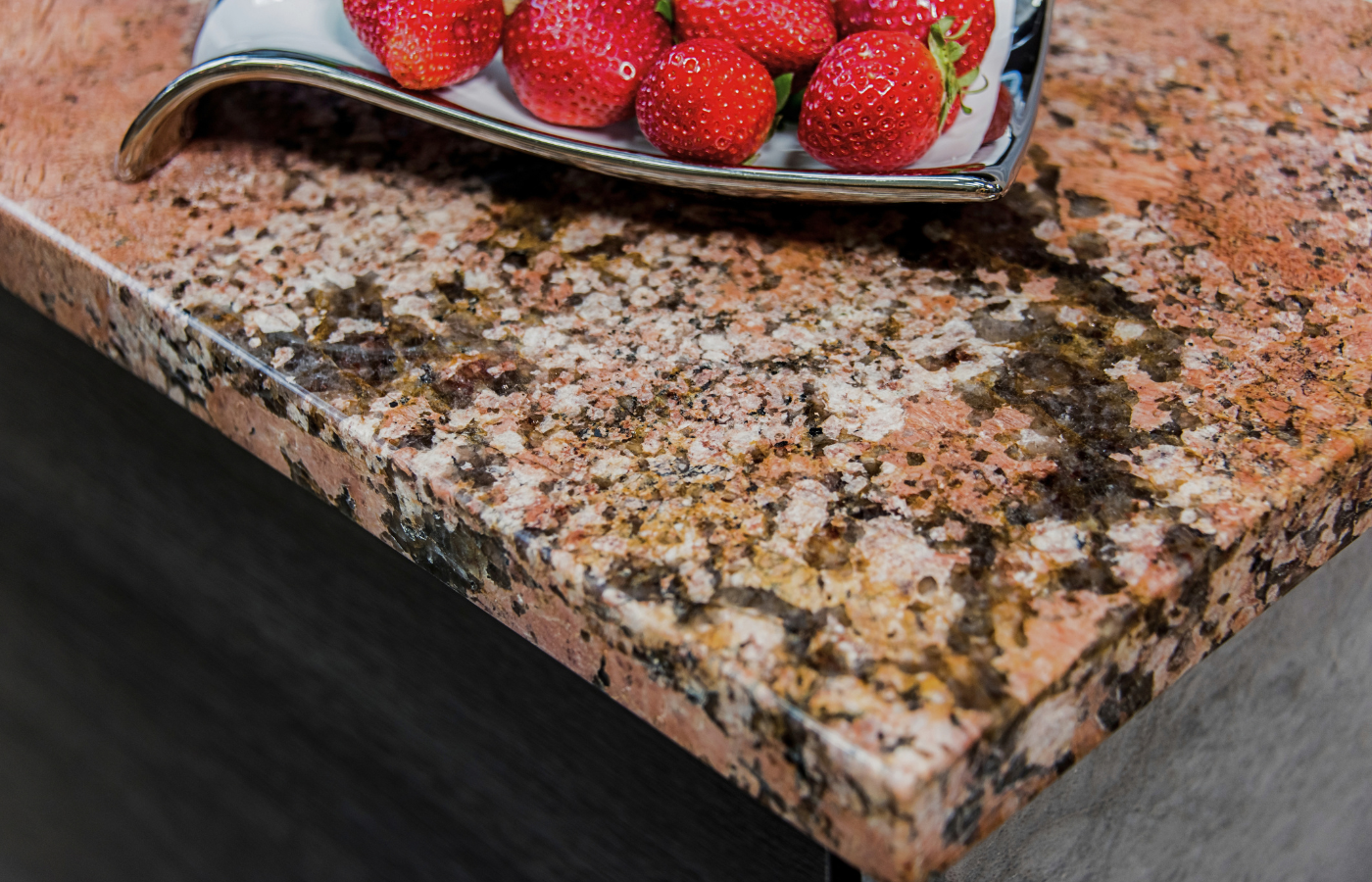
You wipe down your granite countertop and notice something that was not there before: a dark patch near the sink, a shadow beneath the coffee maker, or an area that suddenly looks deeper in color than the surrounding stone. Sometimes it disappears as the surface dries. Other times, it stays.
A granite countertop turning dark does not automatically mean the stone is permanently stained. Water absorption, cooking oils, moisture around the sink, residue, and the condition of the sealer can all change how granite looks. At Design Surfaces in Westlake, we recommend identifying what is causing the color change before trying to clean, seal, or restore the stone.
Granite often turns darker when moisture or another liquid enters the pores of the stone. Because granite is a natural material, its absorption rate can vary from one slab to another.
The most common causes include:
The appearance of the mark can offer clues about what is happening.
A spot that darkens when wet and disappears after drying is very different from an oily patch that remains for days.
Water absorption is one of the simplest explanations for granite that temporarily turns darker.
Place water on certain granites and the stone may deepen in color as moisture enters its pores. Once the water evaporates and the granite dries completely, the original color may return.
You may notice this most often:
Temporary darkening does not necessarily mean the granite is damaged. However, if water begins absorbing much faster than it used to, it may be worth evaluating the countertop's existing sealer.
A dark mark that does not disappear after the granite dries may be an oil-based stain.
Cooking oils and grease can penetrate natural stone and create darker areas that look wet even when the countertop feels completely dry.
Common sources include:
Oil stains can be particularly noticeable on lighter granite.
If you suspect oil, avoid aggressively scrubbing the area. Once oil has entered the stone, ordinary surface cleaning may not be enough to remove it.
The area surrounding a sink experiences more water exposure than almost any other part of a countertop.
Small amounts of water repeatedly collect around faucet bases, soap dispensers, sink edges, seams, and caulk joints. Over time, you may begin noticing darker granite in these areas. Hard water can also create mineral buildup around frequently wet areas.
First, determine whether the darkening disappears after the area remains completely dry.
If it does, moisture absorption may be the cause.
If it does not, consider other possibilities, including:
A persistent dark area around the sink deserves more attention than a temporary water mark.
Not every dark mark comes from plain water.
Coffee, tea, wine, sauces, and other strongly colored liquids can leave discoloration if they penetrate the stone.
The faster a spill is cleaned, the less opportunity it has to absorb.
If a mark remains after normal cleaning and the granite is completely dry, you may be looking at a stain rather than temporary moisture.
This distinction matters because adding more sealer will not remove a stain that is already inside the stone.
Sealer helps reduce the rate at which liquids penetrate granite. It does not make the countertop completely waterproof or stain proof.
As the protection changes over time, you may notice that water behaves differently on the surface.
Possible signs include:
There is no universal rule that every granite countertop must be resealed on the same schedule.
The density of the stone, type of sealer, finish, installation location, cleaning habits, and amount of daily use can all affect performance.
Evaluate what the stone is actually doing before automatically applying another coat.
A dark area that follows a seam, sink edge, backsplash, or another installation detail may require a closer look.
The issue may not simply be moisture entering from the top of the countertop.
Water can sometimes collect around compromised caulk, plumbing areas, seams, or other locations where moisture is repeatedly introduced.
Pay particular attention if the dark area:
In these situations, adding sealer to the top of the granite may not address the source of the problem.
Sometimes granite appears darker because something is sitting on the surface rather than inside it.
Cooking residue, soap, oily cleaning products, polishes, and other products can leave behind a film that changes how light reflects from the stone.
The area may look:
Start with gentle, stone-safe cleaning before assuming the granite has absorbed a stain.
If the appearance improves as the residue is removed, deeper treatment may not be necessary.
Time is one of the most useful clues.
If a dark area appears after water exposure and gradually fades as the granite dries, moisture absorption is likely.
If the countertop feels dry but the dark mark remains, staining becomes more likely.
Consider these questions:
Do not rush to treat the mark before answering these questions. Using the wrong product can turn a relatively simple issue into a more difficult one.
There is no exact drying time that applies to every granite countertop.
How quickly the stone returns to its normal appearance depends on factors such as:
A small wet area may lighten relatively quickly. More significant moisture can take considerably longer.
If the area continues to remain dark, especially around a sink or seam, investigate the source rather than repeatedly applying cleaners or sealer.
A simple water test can provide useful information about how readily the countertop is absorbing moisture.
Start with a clean, dry, inconspicuous section of granite. Place a small amount of water on the surface and observe how the stone responds.
If the granite begins noticeably darkening beneath the water, moisture is being absorbed.
If the water remains on the surface without changing the stone's appearance, the granite may be relatively dense or the existing sealer may still be limiting absorption effectively.
The test should be treated as an observation rather than a precise measurement. If you are unsure what the result means, consult the stone supplier, fabricator, installer, or sealer manufacturer before applying additional products.
The right solution depends on the cause.
Remove the source of the moisture and allow the stone to dry thoroughly.
Do not immediately apply sealer over damp granite.
A deeper oil stain may require a treatment designed to draw the substance out of natural stone. More aggressive household cleaning is not necessarily better.
Use an appropriate pH-neutral natural stone cleaner and a soft cloth. Avoid abrasive scrubbing.
Evaluate whether the granite's existing sealer is still performing effectively.
Make sure the source is not an installation, caulk, plumbing, or persistent moisture issue before treating the surface itself.
Stop experimenting with different cleaners and treatments. Professional evaluation may prevent further damage and help determine whether the issue is moisture, staining, residue, or something else.
Not if the dark spot already exists because of absorbed moisture or staining.
Sealer is primarily preventive. It is designed to slow future absorption, not pull existing discoloration out of the stone.
The granite should be clean and appropriately dry before sealing. Otherwise, applying a product over an unresolved dark area may make diagnosis more difficult.
Identify and address the existing problem first. Then determine whether resealing is appropriate.
A mysterious mark can make it tempting to reach for the strongest cleaner available. That can be a mistake.
Avoid experimenting with:
A cleaner being effective on another household surface does not mean it is appropriate for granite.
Start with the gentlest suitable approach and escalate only when you know what you are treating.
Not necessarily.
Temporary darkening from absorbed water can simply be a visible characteristic of natural stone. Once the moisture evaporates, the granite may return completely to its original appearance.
The situation becomes more concerning when the discoloration:
Those signs suggest that the cause deserves closer investigation.
Good everyday habits can reduce both moisture absorption and staining.
To help protect granite countertops:
For additional guidance, review the Natural Stone Institute's recommendations for natural stone care and maintenance.
Granite does not need to be treated delicately, but understanding how natural stone responds to liquids makes maintenance much easier.
Granite remains popular because it combines durability with natural variation that cannot be perfectly duplicated from one slab to another.
That variation also means two granite countertops may behave differently.
A stone's density, finish, mineral composition, color, and porosity can influence how readily it shows moisture or absorbs liquids. Looking beyond color and pattern during the selection process can help you choose a stone that fits both your design preferences and expectations for maintenance.
At Design Surfaces, serving homeowners, designers, and contractors across Cleveland, we help clients compare full granite slabs and understand the practical differences between natural stone options before fabrication.
Seeing the entire slab in person also gives you a better understanding of its movement, variation, scale, and overall character than a small sample alone.
If your granite countertop is turning dark, first determine whether you are seeing temporary moisture, an absorbed stain, surface residue, or a problem concentrated around a sink or installation area.
Let wet granite dry before judging the final appearance. If the discoloration remains, identify what caused it before attempting stronger cleaning methods or adding more sealer.
Understanding the difference can save you from unnecessary treatments and help preserve the natural appearance of the stone.
Visit Design Surfaces in Westlake to explore granite slabs and other countertop materials in person and get guidance on choosing a surface that fits the way you use your home.
Call: 440.899.9900 • Contact: Submit a Request • Email: info@designsurfacesdist.com


