Contact info +



Showroom Hours:
Mon-Fri - 9AM-5PM | Sat - 10AM-2PM | Sun - Closed
Mon-Fri - 9AM-5PM | Sat - 10AM-2PM | Sun - Closed


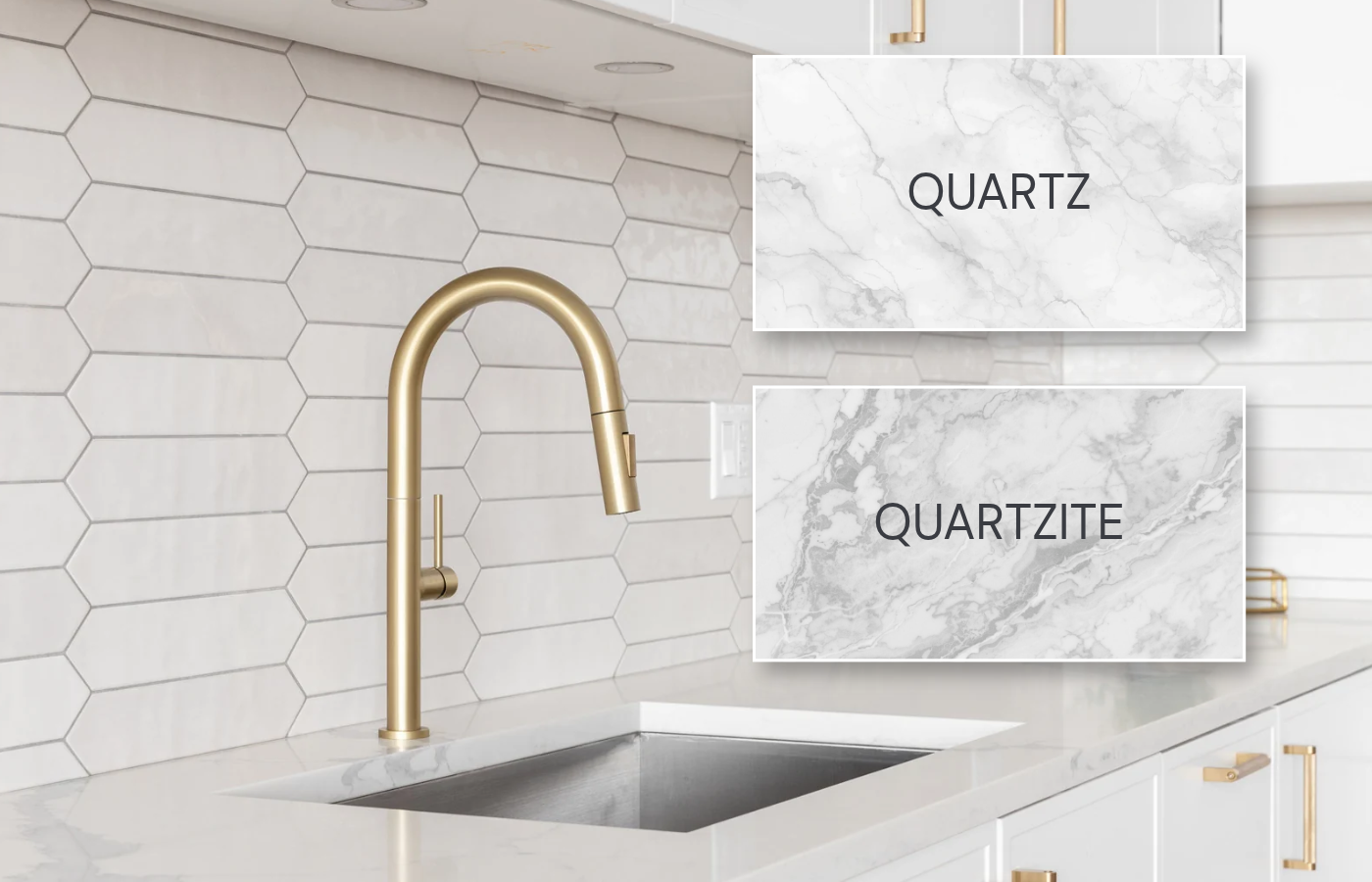
Quartzite and quartz may sound like the same countertop material, but they are surprisingly different. One is natural stone with unique veining and mineral patterns. The other is engineered to provide consistent designs, excellent stain resistance, and easier maintenance.
Both are beautiful options for kitchens and bathrooms. The question is which one makes more sense for your home.
Quartzite generally offers greater natural heat resistance and distinctive stone patterns, while quartz provides a nonporous surface that does not require sealing. Both are durable, but they respond differently to heat, spills, scratches, and everyday use.
At Design Surfaces in Westlake, Ohio, homeowners can explore full quartzite slabs and engineered quartz surfaces side by side. Understanding the differences before visiting the showroom can help you narrow your options and choose a countertop you'll enjoy for years.
The biggest difference between quartzite and quartz is how they're made.
Quartzite is natural stone. It forms when quartz-rich sandstone is transformed by intense heat and pressure beneath the earth's surface. The stone is quarried, cut into slabs, and finished for use in homes.
Quartz is an engineered countertop material. Manufacturers combine quartz minerals with resin binders, pigments, and other ingredients to create slabs with controlled colors, patterns, and performance characteristics.
Although both contain quartz minerals, their compositions affect how they look, feel, and perform.
Quartzite appeals to homeowners who appreciate the individuality of natural stone. Quartz is often preferred by those who want a particular color or pattern with fewer maintenance requirements.
Neither is automatically the better material. The right choice depends on what matters most in your kitchen or bathroom.
Quartzite is a natural metamorphic stone created when sandstone undergoes geological heat and pressure. During this process, quartz grains recrystallize and form a dense, interlocking structure.
The result is a hard, durable stone that can feature everything from soft, understated movement to dramatic veining.
Popular quartzite varieties include Taj Mahal, Mont Blanc, and Cristallo. Each offers a different appearance, and even slabs from the same variety can have noticeable differences in color and pattern.
Quartzite is often a favorite when homeowners want their countertops to become a defining feature of the room.
However, one important detail deserves attention: not every stone sold commercially as quartzite has identical mineral composition.
Some slabs marketed under the quartzite name contain minerals that are more sensitive to acids or require different maintenance. This is why understanding the characteristics of the specific slab matters.
For a closer look at the material, explore our complete guide to quartzite countertops, including their pros and cons.
Quartz countertops are engineered surfaces made by combining quartz minerals with resins, pigments, and other materials.
Unlike natural stone, which is quarried in individual blocks, quartz is manufactured to achieve particular colors, patterns, and surface characteristics.
Some designs feature subtle, nearly uniform coloring. Others recreate the appearance of marble or quartzite with sweeping veins and contrasting backgrounds.
Quartz is especially appealing to homeowners who want an elegant countertop without having to think about periodic sealing.
However, quartz is not indestructible. Excessive heat, harsh chemicals, and concentrated impacts can still damage the surface.
Learn more in our guide to quartz countertops, including their advantages, disadvantages, and maintenance requirements.
Both materials are durable enough for everyday kitchen use, but they have different strengths.
Genuine quartzite is particularly impressive when it comes to surface hardness. Because it consists predominantly of quartz minerals, it generally offers excellent resistance to scratching.
Engineered quartz is also highly durable. Its combination of mineral particles and resin binders creates a strong countertop suitable for busy households.
The difference becomes more noticeable when considering specific types of damage.
Quartzite's primary mineral, quartz, ranks approximately 7 on the Mohs hardness scale. This gives genuine quartzite excellent resistance to many everyday scratches.
Engineered quartz is also scratch resistant, although its performance depends on the finished product's composition and manufacturing process.
Neither surface should be used as a cutting board. Knives, ceramic dishes, abrasive materials, and heavy objects can still leave marks or affect the finish.
Both quartz and quartzite can chip or crack when subjected to concentrated force.
Exposed corners, sink cutouts, and unsupported sections are particularly vulnerable to impact or structural stress.
A heavy cast-iron pot dropped onto the edge of either countertop could cause damage.
Proper fabrication, installation, and support are essential for long-term performance, regardless of which material you choose.
Which is more durable? Quartzite generally has the advantage in natural surface hardness, but both materials can perform exceptionally well in residential kitchens.
Quartzite generally handles heat better than engineered quartz.
Genuine quartzite is natural stone composed predominantly of quartz minerals. Engineered quartz contains resin binders that can be affected by excessive temperatures.
Placing a very hot skillet or baking dish directly on engineered quartz may cause discoloration, cloudy marks, or other surface damage.
Quartzite is more tolerant of heat, but that doesn't mean hot cookware should routinely be placed directly on it.
Sudden temperature changes, natural fissures, resin-filled areas, and certain surface treatments can influence how a finished quartzite countertop responds to extreme heat.
For both materials, using a trivet is the safest approach.
If you frequently cook with cast-iron skillets, Dutch ovens, and hot baking dishes, quartzite may offer a practical advantage.
For a broader comparison, read our guide to heat-resistant countertop materials and how they perform in the kitchen.
Quartz generally has the advantage when it comes to everyday stain resistance.
Its nonporous surface helps prevent liquids from penetrating the material, and it does not require sealing.
Quartzite is natural stone, so its absorption characteristics vary between slabs. Some varieties are relatively dense, while others can absorb moisture, cooking oils, or other liquids more readily.
For example, if cooking oil sits on an absorbent quartzite surface for an extended period, it may leave a darkened area. A properly selected sealer can help reduce the likelihood of this type of staining.
Quartz is less likely to absorb the spill, although certain chemicals and substances can still discolor or damage its surface.
Many quartzite countertops benefit from sealing, but not every slab requires the same treatment or schedule.
The need for sealing depends on the stone's porosity, existing treatments, and everyday performance.
Some quartzite surfaces may require periodic resealing, while denser varieties may need less frequent attention.
Sealing helps reduce liquid absorption. It does not make natural stone completely stainproof or prevent acid etching in stones containing acid-sensitive minerals.
Quartz countertops do not require sealing.
For more guidance, read our article on how often quartzite countertops should be sealed.
If low maintenance is your highest priority, quartz generally has the advantage.
Both materials are relatively easy to clean, but quartzite may require additional attention depending on the particular slab.
Everyday quartz maintenance is straightforward:
Because quartz is nonporous, you do not need to schedule sealing treatments.
Quartzite also benefits from simple daily habits:
For general care recommendations, the Natural Stone Institute provides helpful information about maintaining natural stone surfaces.
The maintenance difference: Quartz offers a simpler routine. Quartzite may require more stone-specific care, but many homeowners consider that a worthwhile tradeoff for its natural appearance.
This is where the decision becomes personal.
Quartzite offers natural variation and depth. Quartz provides greater consistency and more control over the final appearance.
Quartzite can feature dramatic veins, subtle mineral formations, layered colors, and sweeping patterns that extend across an entire slab.
Some varieties have soft cream and beige backgrounds. Others feature striking white, gray, blue, or darker tones.
Because the patterns are naturally formed, no two slabs are exactly alike.
This makes quartzite especially appealing for large kitchen islands and other areas where the countertop is intended to stand out.
However, it also makes slab selection important.
A small sample may not reveal the full movement, color variation, or veining that will appear in your finished kitchen.
Quartz offers a different design advantage.
Because it is manufactured, homeowners can select from coordinated patterns and colors with greater predictability.
Modern engineered quartz can imitate the appearance of marble and quartzite, including subtle veining and dramatic stone-inspired designs.
It is often a practical option when you need several countertop sections to have a cohesive appearance.
Patterns may repeat between slabs, however, and exact vein placement depends on the product and fabrication layout.
Absolutely.
A polished finish reflects light and emphasizes color and veining. Honed and other lower-sheen finishes create a softer, more understated appearance.
The finish can influence how visible fingerprints, water spots, and everyday marks appear.
Explore our comparison of honed vs. polished countertops to see how different finishes affect the look of a surface.
Which looks better? Choose quartzite for natural individuality and quartz for greater design consistency. Neither is inherently more beautiful.
Quartzite is often more expensive than standard engineered quartz, but pricing varies considerably.
Premium quartz products can cost as much as, or sometimes more than, certain quartzite selections.
The total investment depends on the material itself and the complexity of the project.
Important pricing factors include:
For example, a dramatic quartzite slab that requires careful vein matching across a large island and backsplash may involve additional fabrication work.
A premium engineered quartz design may have a higher material cost but offer a more predictable pattern layout.
For that reason, comparing only the material price per square foot may not tell the whole story.
Our guide to countertop costs per square foot in Ohio explains the factors that influence the final price of a countertop project.
Both materials work beautifully in kitchens, but they suit different priorities.
Think about how your kitchen is actually used.
If you're designing a showpiece island and love dramatic natural stone, quartzite may be the better fit.
If your priority is an easy-to-maintain surface for a busy household, quartz may make more sense.
Neither choice requires sacrificing beautiful design.
Quartz is often a convenient choice for bathroom vanities because it resists moisture absorption and does not require sealing.
It also offers consistent colors that coordinate well with cabinetry, tile, and fixtures.
Quartzite can create a striking bathroom vanity, particularly when the stone's natural veining becomes a focal point.
However, bathroom countertops are regularly exposed to water, cosmetics, lotions, and cleaning products. The specific quartzite's absorption and chemical sensitivity should be considered.
For homeowners prioritizing low maintenance, quartz has an advantage. For those who want the individuality of natural stone, quartzite is well worth exploring.
Our guide to the best countertop materials for bathrooms compares additional options.
Natural quartzite may be suitable for certain outdoor applications, but the exact stone, finish, climate, and installation conditions matter.
Engineered quartz is generally intended for indoor use unless the manufacturer specifically approves it for outdoor installation.
Prolonged sunlight and temperature fluctuations can affect conventional engineered quartz products.
For homes in Cleveland and Northeast Ohio, outdoor countertop selection also needs to account for freezing temperatures, moisture, and seasonal weather changes.
Before selecting either material for an outdoor kitchen, confirm that the specific product and installation system are appropriate for the environment.
Quartzite and engineered quartz are different materials, so distinguishing them usually begins with understanding how they are produced.
Quartzite is quarried as natural stone. Quartz is manufactured.
The more complicated question is whether a stone marketed as quartzite is geologically genuine quartzite.
Some commercially labeled quartzites contain other minerals or belong to different geological categories.
A stone's appearance alone cannot confirm its composition. Dramatic veining, a polished finish, or a particular color does not necessarily prove that a slab is genuine quartzite.
When selecting natural stone, ask about the material's classification, absorption characteristics, and recommended maintenance.
Professional testing may be appropriate when the composition is uncertain.
Photographs and small samples are helpful starting points, but they rarely communicate the full appearance of a countertop.
A quartzite slab that looks subtle in a photograph may reveal dramatic movement when viewed at full scale.
Likewise, an engineered quartz sample may look different when its pattern extends across a large kitchen island.
At Design Surfaces, homeowners can explore full stone slabs and compare materials alongside tile, flooring, vanities, and other finishes.
When visiting the showroom, consider:
You may discover that a stone you loved online isn't quite right for your space, while another material looks even better in person.
For additional tips, read our guide to choosing countertops by viewing full stone slabs.
Genuine quartzite has excellent natural hardness because it is composed predominantly of quartz minerals. Engineered quartz is also durable, but its performance depends on the complete manufactured composition, including resin binders. Both resist many everyday scratches.
Genuine quartzite generally offers excellent scratch resistance. Engineered quartz also resists scratches, but neither material is scratchproof. Cutting boards are recommended for both.
Quartzite may be more susceptible to absorption-related staining because it is natural stone. Engineered quartz is nonporous and generally offers stronger everyday stain resistance, although certain substances can still discolor or damage it.
Usually, yes. Quartzite may require periodic sealing and stone-specific cleaning products. Quartz does not require sealing and is generally easier to maintain.
Neither material guarantees a higher resale value. Buyers may appreciate quartzite's natural appearance or quartz's low-maintenance convenience. The overall design, quality, and condition of the kitchen typically matter more than the material name alone.
Both can last for decades when properly fabricated, installed, and maintained. Their long-term performance depends on the specific material, installation quality, and how the countertops are used.
For homeowners who value natural stone, distinctive veining, and strong heat resistance, quartzite can be worth the additional investment. If consistent design and minimal maintenance matter more, quartz may offer better value for your needs.
Choosing between quartzite and quartz isn't about finding a material that wins every category. It's about choosing a surface that looks beautiful in your home and works with the way you live.
Quartzite offers the individuality of natural stone, excellent surface hardness, and impressive heat resistance. Quartz provides consistent design options, strong everyday stain resistance, and the convenience of a countertop that doesn't require sealing.
At Design Surfaces, our family's roots in stone date back to 1975. Our Westlake showroom features natural and engineered countertop materials, a dedicated Stone Warehouse with full slabs, full-room displays, and an on-site Stone Fabrication Workshop.
Visit us at 24000 Sperry Drive, Westlake, OH 44145 to compare quartzite and quartz in person. You can also explore tile, flooring, vanities, sinks, faucets, and hardware to see how the materials work together.
Walk-ins are always welcome, and our team is happy to help you narrow your choices.
For more personalized guidance, schedule a free in-store design consultation. There's no purchase required, and you can take samples home to see how they look in your space.
Call: 440.899.9900
Email: info@designsurfacesdist.com


