Contact info +
.png)
.png)
.png)
Showroom Hours:
Mon-Fri - 9AM-5PM | Sat - 10AM-2PM | Sun - Closed
Mon-Fri - 9AM-5PM | Sat - 10AM-2PM | Sun - Closed


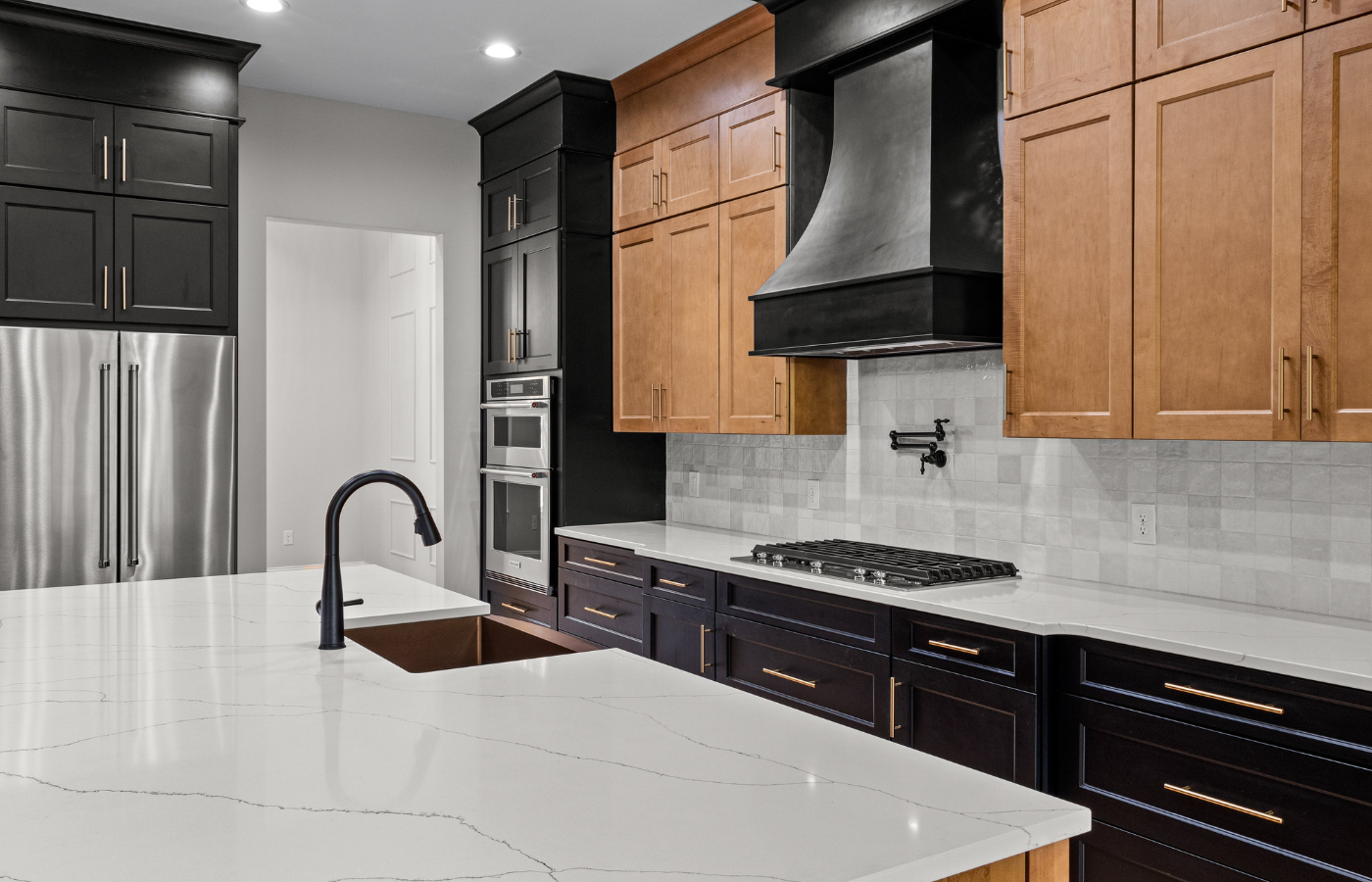
Quartzite is known for its durability, natural movement, and distinctive appearance, but it is still a natural stone. That means some quartzite countertops can absorb moisture, cooking oils, and other liquids if they are not adequately protected.
So, how often should quartzite countertops be sealed? There is no universal schedule. Some countertops may need resealing more frequently than others depending on the stone's porosity, finish, sealer, and daily use. At Design Surfaces in Westlake, we recommend paying attention to how the actual stone performs rather than automatically applying sealer every year.
Quartzite should be resealed when the existing protection is no longer adequately limiting liquid absorption.
You may see recommendations to seal quartzite annually, but a fixed schedule does not account for the significant variation between natural stone slabs or sealing products. One countertop may continue resisting moisture well beyond a year, while another may require attention sooner.
Several factors can affect sealing frequency:
Instead of treating resealing as an automatic yearly task, evaluate how the countertop is performing.
Many quartzite countertops benefit from sealing because natural stone can absorb liquids through its pores.
A penetrating sealer is designed to reduce that absorption. It enters the stone rather than creating a thick coating over the surface, helping give you additional time to clean spills before they penetrate deeply enough to cause discoloration.
The Natural Stone Institute explains that penetrating sealers improve stain resistance by reducing how readily liquids enter natural stone.
This can be especially useful in kitchens, where quartzite may regularly encounter:
Sealing provides additional protection, but it does not eliminate the need for proper care.
One of the most useful signs is a change in how the countertop reacts to moisture.
If water remains on the surface without noticeably darkening the quartzite, the existing sealer may still be performing effectively, or the stone itself may be relatively dense.
If the quartzite begins to darken as it gets wet, moisture may be absorbing into the stone.
Other signs worth watching include:
These signs do not automatically mean the countertop needs another coat of sealer. Existing stains, mineral buildup, cleaner residue, and moisture beneath or around an installation can sometimes look similar.
A simple water test can help you observe how readily the surface absorbs moisture.
Start with a clean, dry, inconspicuous section of quartzite. Place a small amount of water on the surface and watch for changes in the stone beneath it.
If the quartzite noticeably darkens, the stone may be absorbing moisture.
If the water remains on the surface without changing the appearance of the stone, the existing protection may still be performing adequately or the quartzite may naturally have relatively low absorption.
Do not leave standing water on the countertop unnecessarily. The purpose is simply to observe the stone's response.
When you are uncertain about the result, consult your stone supplier, fabricator, installer, or sealer manufacturer before adding another product.
Not necessarily.
Annual sealing is often presented as a simple maintenance rule, but natural stone does not always behave according to a calendar.
The Natural Stone Institute's quartzite care guidance also notes that sealing needs depend on the porosity of the particular stone rather than one schedule for every countertop.
Quartzite varies from slab to slab. Sealers also vary considerably in formulation and expected performance.
A heavily used kitchen countertop that frequently encounters water and cooking oils may behave differently from quartzite installed on a lightly used bathroom vanity.
Rather than automatically resealing once every 12 months, monitor the surface and follow recommendations appropriate to the specific stone and sealing product.
No. This is one of the most important things to understand about quartzite maintenance.
Two countertops both sold as quartzite can respond differently to moisture because natural stone varies in density, mineral composition, structure, and porosity.
Finish matters too.
A polished finish creates a smooth, reflective surface. Depending on the individual stone and fabrication, polished quartzite may absorb liquids differently than other finishes.
Honed quartzite has a softer, matte appearance. Moisture, oils, fingerprints, and other marks may also appear differently against the less reflective finish.
Leathered and other textured finishes create additional depth and tactile character. Their maintenance requirements can vary based on the stone and finish.
This variation is why the individual slab and its performance matter more than a blanket maintenance schedule.
Yes. Applying more sealer is not necessarily better.
Penetrating sealers are intended to enter available pores within the stone. If the quartzite is already adequately sealed and cannot absorb additional product, excess sealer can remain on the surface.
That may contribute to:
If your countertop is still resisting moisture effectively, adding another application simply because a year has passed may be unnecessary.
Sink areas experience more repeated water exposure than almost any other part of a kitchen countertop.
Water can collect around:
If quartzite temporarily darkens when it gets wet and returns to its normal color after drying, moisture may be entering the stone.
Persistent darkening deserves closer attention. It could indicate absorbed moisture, staining, problems around a seam or caulk joint, or another issue that additional sealer alone will not necessarily solve.
Identify the cause before applying another product.
No. Sealed quartzite is not stain proof.
A penetrating sealer helps slow absorption. It does not create an impenetrable barrier.
Cooking oil, wine, coffee, sauces, cosmetics, and other substances can still cause discoloration, particularly when spills remain on the countertop for an extended period.
Think of sealing as additional reaction time rather than complete protection.
Prompt cleanup remains one of the simplest ways to keep quartzite looking its best.
Not every water-related mark is caused by absorption.
White rings, cloudy areas, and chalky deposits around faucets are often associated with minerals left behind as water evaporates. In that situation, adding sealer will not remove the existing buildup.
A dark area, on the other hand, may indicate that moisture has entered the stone.
This distinction matters because the solution is different. Mineral buildup requires appropriate stone-safe cleaning, while increased absorption may indicate that the countertop's sealing needs should be evaluated.
The result depends on the particular stone.
Dense quartzite may absorb relatively little moisture. More absorptive stone can be more susceptible to discoloration from liquids and oils.
Potential problems can include:
Once a substance penetrates into natural stone, removing it may require more involved treatment.
Appropriate sealing helps reduce that risk without changing the fundamental character of the stone.
A natural-look penetrating sealer is generally intended to preserve the existing appearance of quartzite rather than create a visible coating.
However, not every sealer is designed to produce the same result.
Some products are formulated to enhance or deepen the stone's color. Before applying anything, determine whether the product is:
Testing products in an inconspicuous area can also help prevent unexpected changes in appearance.
Routine cleaning should remain gentle even after quartzite has been sealed.
For everyday maintenance, use a soft cloth with water or a pH-neutral cleaner formulated for natural stone.
Avoid assuming the sealer makes the countertop resistant to every cleaning chemical. Harsh acidic products, abrasive powders, rough scrubbers, and incompatible cleaners may affect the stone, its finish, or the sealer.
Good cleaning practices can help preserve both the appearance of the quartzite and the performance of its protective treatment.
Sealing is only one part of quartzite maintenance. Everyday habits matter too.
To help protect your countertops:
The goal is not to make quartzite maintenance complicated. It is simply to understand how your particular surface behaves.
Consider professional guidance when:
Applying another coat of sealer without identifying the problem can make troubleshooting more difficult.
Quartzite offers the movement and variation of natural stone along with the durability many homeowners want from a hardworking countertop.
But maintenance should be part of the selection process.
When comparing slabs, consider not only color and veining but also the particular stone's finish, intended application, care requirements, and sealing recommendations.
At Design Surfaces, serving homeowners, designers, and contractors across Cleveland, we help clients view quartzite slabs in person and understand how different natural stones fit both the design and practical needs of a space.
Seeing the full slab also gives you a much better understanding of its movement, color variation, scale, and overall character before fabrication.
So, how often should quartzite countertops be sealed? The most useful answer is not automatically every year. Resealing should be based on the particular stone, the sealer being used, and how effectively the countertop continues to resist liquid absorption.
Pay attention to changes in how water and spills behave. If the quartzite begins absorbing moisture more readily, develops repeated darkening, or performs differently than it once did, it may be time to evaluate its protection.
With appropriate sealing, stone-safe cleaning, and everyday care, quartzite can remain a distinctive and durable part of the kitchen or bathroom for years.
Visit Design Surfaces in Westlake to compare quartzite slabs, finishes, colors, and other natural stone options in person.
Call: 440.899.9900 • Contact: Submit a Request • Email: info@designsurfacesdist.com


