Contact info +
.png)
.png)
.png)
Showroom Hours:
Mon-Fri - 9AM-5PM | Sat - 10AM-2PM | Sun - Closed
Mon-Fri - 9AM-5PM | Sat - 10AM-2PM | Sun - Closed


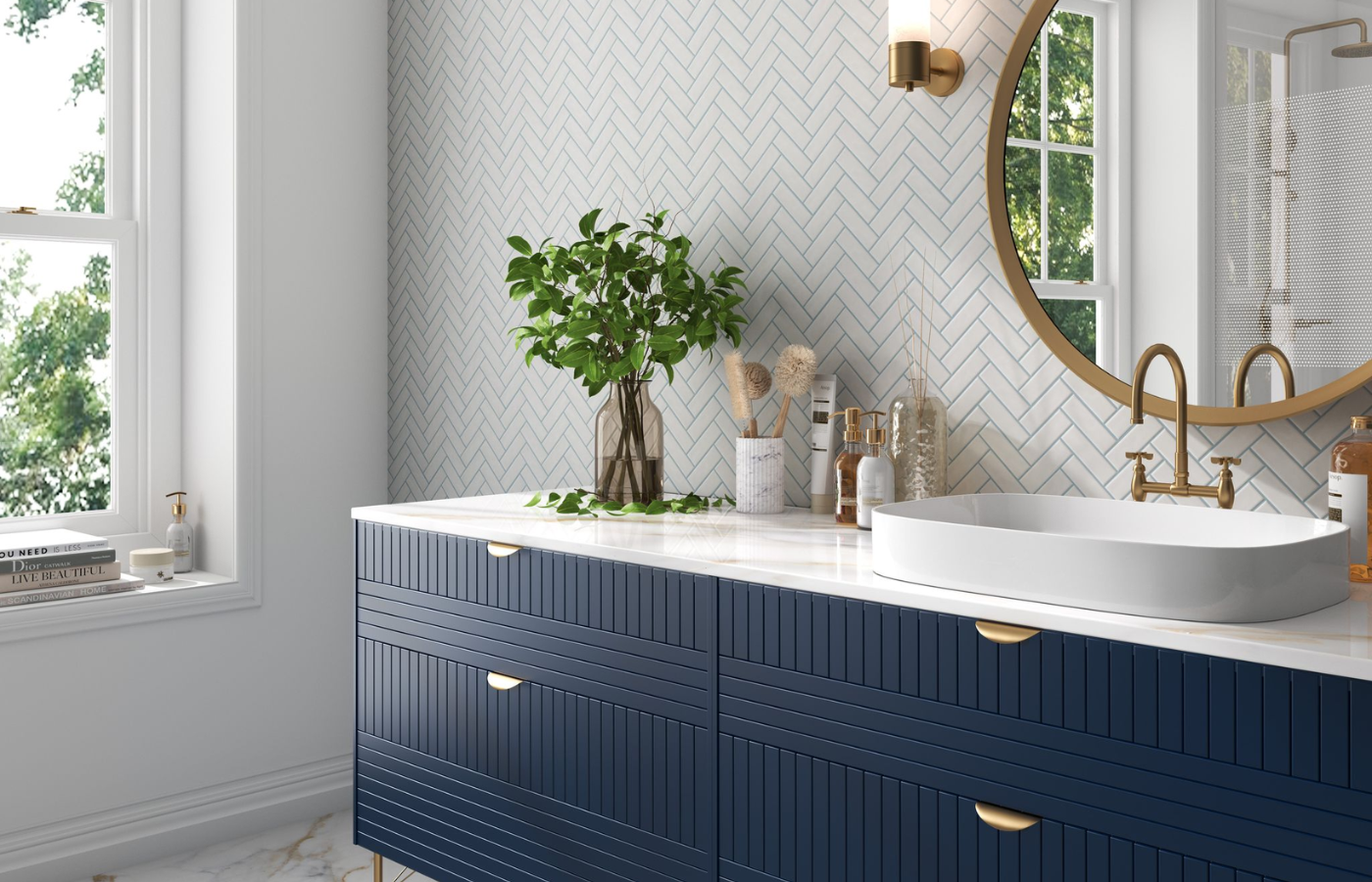
Choosing the right bathroom countertop material means balancing appearance, durability, moisture resistance, maintenance, and how the space is actually used. Bathrooms deal with water, humidity, cosmetics, soaps, grooming products, and frequent cleaning, so the surface you choose needs to perform as well as it looks.
For many homeowners, quartz, quartzite, porcelain, and granite are among the best bathroom countertop materials. Quartz and porcelain stand out for low maintenance, while quartzite and granite offer the natural variation and character of real stone.
At Design Surfaces in Westlake, Ohio, we help homeowners, designers, builders, and contractors throughout Cleveland compare countertop materials, colors, patterns, finishes, and full slabs in person.
If you want the quick answer:
The right choice depends on your bathroom, maintenance preferences, design style, and budget.
Bathroom countertops face a different environment than many other surfaces in the home. Steam, standing water, cosmetics, soaps, cleaning products, hot styling tools, and everyday use can all affect the countertop over time.
When comparing materials, consider:
There is no single material that is best for every bathroom. Understanding the strengths and limitations of each option makes it easier to choose confidently.
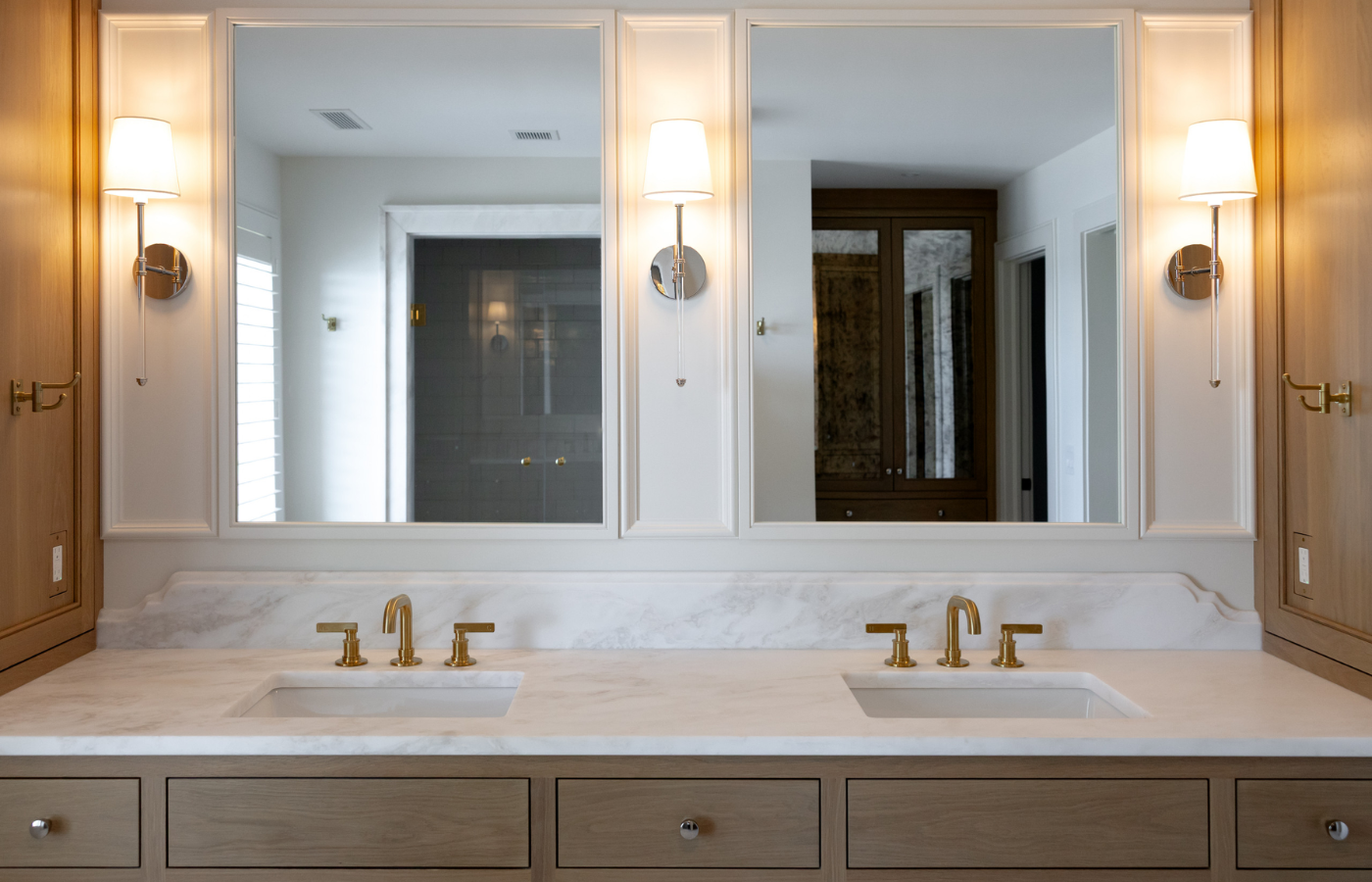
Quartz is one of the most practical choices for bathroom countertops because it combines durability, consistent design, and relatively simple maintenance.
Engineered quartz is made using quartz minerals combined with resins and other components. Unlike many natural stones, the finished surface is nonporous and generally does not require sealing.
Quartz is particularly appealing when you want the appearance of stone without the maintenance requirements associated with some natural materials.
Quartz is durable, but it is not indestructible. Always follow the manufacturer's recommendations regarding cleaning products and exposure to heat.
Best for: primary bathrooms, family bathrooms, guest bathrooms, double vanities, and homeowners prioritizing easy maintenance
Quartzite combines natural stone character with impressive durability. Each slab is unique, with its own veining, movement, colors, and variations.
For homeowners who want their bathroom vanity to become a design feature rather than simply a functional surface, quartzite can be an excellent choice.
Quartzite is a natural stone, so care and sealing requirements can vary depending on the particular slab, finish, sealer, and installation.
Do not confuse quartzite with quartz. Quartzite is natural stone, while quartz is an engineered surface.
Best for: statement vanities, powder rooms, primary bathrooms, spa-inspired spaces, and designs where natural stone is a focal point
Porcelain slabs are an increasingly versatile option for bathrooms, particularly for homeowners interested in clean lines, low water absorption, and contemporary design.
Porcelain is manufactured at high temperatures, creating a dense surface that performs particularly well in moisture-prone spaces.
Porcelain can also coordinate particularly well with other bathroom surfaces, including walls and shower applications.
Fabrication and installation matter. Large porcelain slabs require professionals familiar with handling and fabricating the material.
Best for: modern bathrooms, minimalist designs, floating vanities, low-maintenance spaces, and contemporary remodels
Granite remains one of the most recognizable natural stone countertop materials, and its combination of durability and natural variation continues to make it a strong bathroom option.
Every granite slab has its own pattern, mineral composition, and color variation, giving the finished vanity genuine natural character.
Many granite countertops benefit from periodic sealing, although the appropriate schedule depends on the specific stone, finish, sealer, fabrication, installation, and use.
Rather than assuming granite must be resealed according to a fixed schedule, follow the care recommendations for your particular countertop.
Best for: traditional, transitional, classic, and natural-material-focused bathrooms
Each of these materials can work beautifully in a bathroom, but they solve different priorities.
Choose quartz if: you want a durable, nonporous surface with minimal routine maintenance.
Choose quartzite if: natural variation, veining, and one-of-a-kind stone character are your priorities.
Choose porcelain if: you want very low water absorption, straightforward maintenance, and a sleek contemporary appearance.
Choose granite if: you want durable natural stone with extensive color and pattern possibilities.
Seeing the materials next to each other can make these differences much easier to understand.
Quartz and porcelain are generally the strongest choices when low maintenance is the priority. Both typically require straightforward routine cleaning and do not generally require sealing.
Quartz offers the familiarity of a traditional countertop surface with extensive design options. Porcelain provides particularly low water absorption and can work well for homeowners interested in modern, large-format surfaces.
Natural stones such as granite and quartzite require more consideration regarding sealing and stone-safe cleaning products, but many homeowners consider the additional care worthwhile for their natural variation.
Porcelain, quartzite, quartz, and granite are all durable enough for bathroom applications when properly selected, fabricated, installed, and maintained.
Instead of looking for one universally "most durable" material, consider the type of durability that matters most to you.
For example, think about:
A countertop that matches your actual habits will usually be a better long-term choice than one selected solely from a durability ranking.
Quartz and porcelain can be particularly effective in compact bathrooms because both are available in light colors and subtle patterns that can help create a clean, open appearance.
However, small bathrooms also present an opportunity to use natural stone.
Because a vanity requires less material than a large kitchen, you may be able to select a distinctive granite or quartzite slab for a relatively small surface area.
Design Surfaces Tip: Ask about countertop remnants when planning a smaller vanity or powder room. Depending on available inventory and your dimensions, a remnant may provide an opportunity to use a premium material without requiring a full slab.
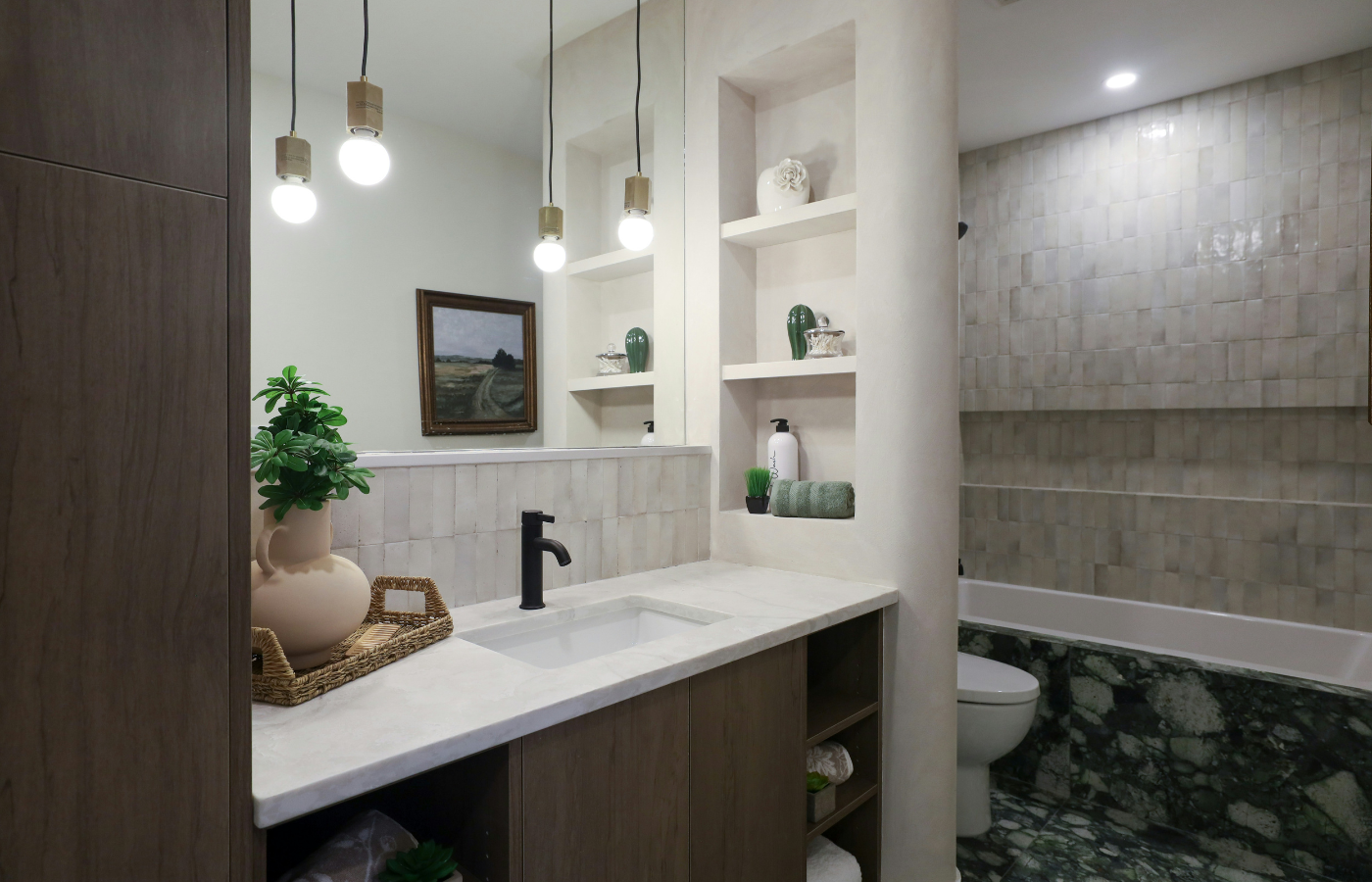
A busy family bathroom has different requirements than an occasional-use powder room.
For heavily used spaces, easy cleaning and moisture resistance may be priorities. In a powder room, you may have more flexibility to emphasize dramatic veining or distinctive natural stone.
If minimal maintenance is important, start by comparing quartz and porcelain.
If you are comfortable following natural-stone care and sealing recommendations, granite and quartzite open up additional design possibilities.
Do not select the countertop in isolation.
Consider how it works with your:
A successful bathroom design feels intentional across all of these elements.
Warm and cool lighting can significantly affect how colors and undertones appear.
Bring cabinet, tile, paint, and hardware samples when possible so you can evaluate materials together.
Small samples cannot show the complete movement, veining, color variation, or character of a natural stone slab.
This is particularly important with granite and quartzite, where one section of a slab may look substantially different from another. The original guide likewise recommends viewing full slabs rather than relying exclusively on samples.
Regardless of which material you choose, proper care can help maintain its appearance.
General countertop care includes:
Most importantly, know which countertop material you have before selecting a cleaner. Products appropriate for one surface may not be appropriate for another.
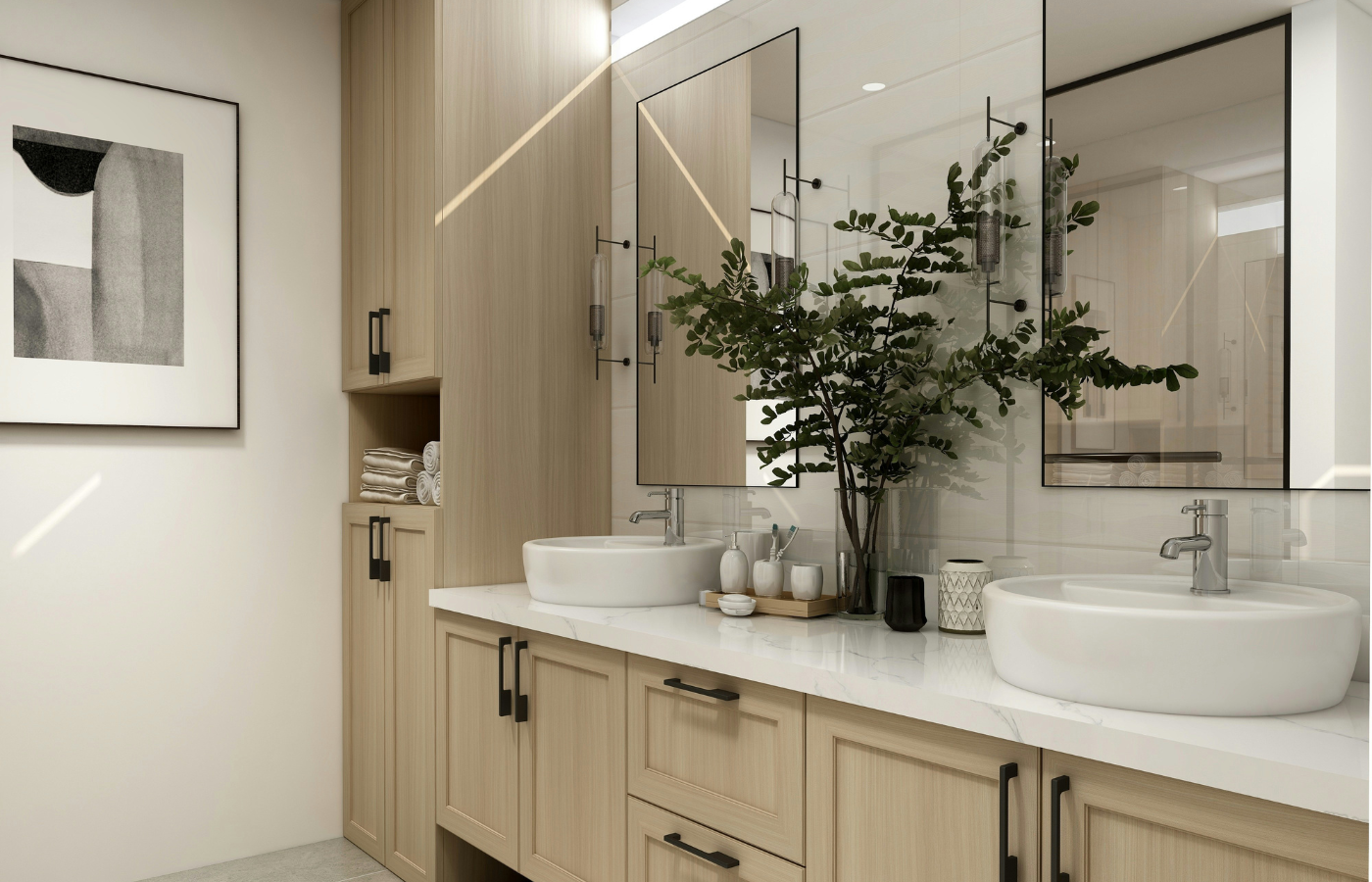
The countertop may anchor the vanity, but the surrounding materials determine how cohesive the finished bathroom feels.
At Design Surfaces, you can compare countertop materials alongside tile, shower surfaces, vanities, flooring, and other finishes. Seeing materials together can help identify undertones, textures, and patterns that may be difficult to judge separately.
For example, a heavily veined countertop may work best with quieter tile, while a subtle countertop can provide room for a more distinctive shower or backsplash.
There is no single best material for every bathroom. Quartz is an excellent low-maintenance option, quartzite provides distinctive natural beauty, porcelain combines low water absorption with modern design flexibility, and granite provides durable natural stone character.
Yes. Quartz is particularly well suited for bathrooms because it is nonporous, generally requires no sealing, and is easy to maintain. These characteristics make it useful for primary, guest, and family bathrooms.
Yes. Quartzite provides natural veining and excellent durability, making it particularly attractive for statement vanities and bathrooms where natural stone is an important design feature.
Yes. Porcelain's low water absorption, stain resistance, heat resistance, and relatively simple maintenance make it well suited for bathroom applications.
Many granite countertops benefit from periodic sealing, but the appropriate frequency varies. Follow recommendations for the particular stone and sealer rather than automatically using a fixed schedule.
Quartz and porcelain are generally among the lowest-maintenance options because neither typically requires routine sealing and both are relatively easy to clean.
Powder rooms offer considerable flexibility because they often experience less intensive daily use than primary bathrooms. Quartz, quartzite, porcelain, and granite can all work well. A powder room can also be an excellent place to use a more distinctive stone pattern or countertop remnant.
Yes, particularly when choosing natural stone. Veining, movement, color, and pattern can look significantly different across a full slab than they do on a small sample.
The best bathroom countertop is the one that fits both your design and the way you actually use the space.
Choose quartz when easy maintenance is the priority, quartzite when you want distinctive natural stone, porcelain when you want low water absorption and contemporary versatility, and granite when you want proven durability with natural character.
At Design Surfaces in Westlake, Ohio, homeowners, designers, builders, and contractors throughout Cleveland can compare full slabs and coordinate countertops with tile and other surfaces in person. Seeing the materials together makes it easier to evaluate color, veining, maintenance, and overall design before making your final selection.
Visit the Design Surfaces showroom in Westlake to explore bathroom countertop materials and find the right surface for your project.
Call: 440.899.9900
Email: info@designsurfacesdist.com
Contact: Submit a Request


