Contact info +



Showroom Hours:
Mon-Fri - 9AM-5PM | Sat - 10AM-2PM | Sun - Closed
Mon-Fri - 9AM-5PM | Sat - 10AM-2PM | Sun - Closed


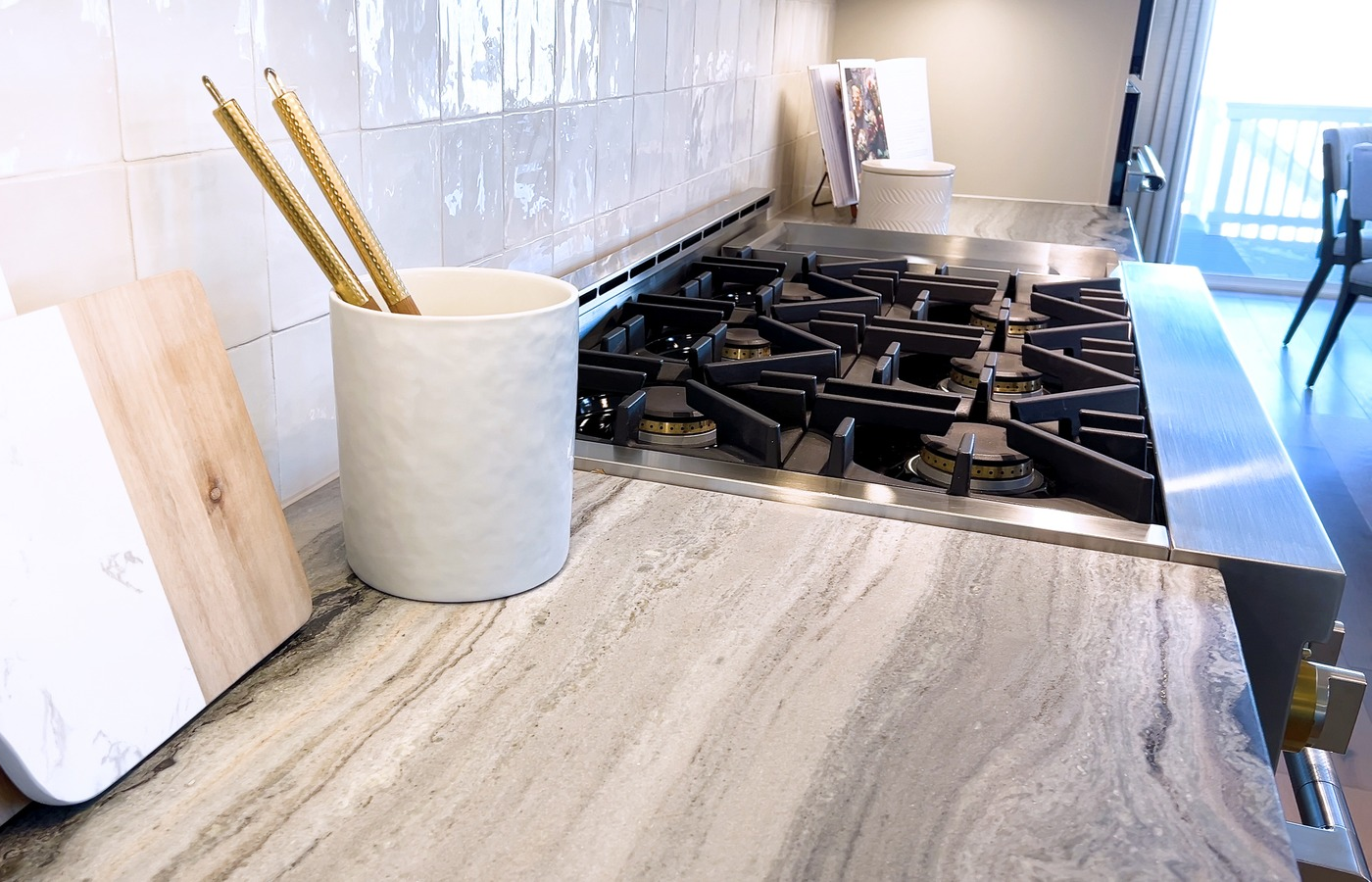
Your quartzite countertops looked beautiful when they were installed, but lately you've noticed cloudy spots, streaks, or areas that don't reflect light the way they used to. You clean the surface, wipe it dry, and the dullness is still there.
What's causing it, and can you bring back the original shine?
Quartzite countertops can look dull because of soap residue, hard water deposits, improper sealing, surface wear, or changes to the stone's finish. Some problems can be corrected with simple cleaning, while others may require professional polishing or restoration.
The key is figuring out whether the dullness is something sitting on the surface or a change to the finish itself. Here's how to recognize the difference and what to do next.
Quartzite is a durable natural stone formed when quartz-rich sandstone undergoes intense heat and pressure. Its hardness makes it an excellent countertop material, but that doesn't mean the finished surface is immune to changes in appearance.
A quartzite countertop may look cloudy or less reflective for several reasons:
Not every dull spot means the quartzite is damaged. In fact, some of the most common causes are relatively straightforward to address.
One of the first things to check is cleaning-product buildup.
Using too much dish soap, applying several different countertop sprays, or failing to remove cleaning residue can leave a thin film across the surface.
This film may become more noticeable under pendant lights or when sunlight hits the countertop at an angle.
You might see streaks after cleaning, cloudy patches across large sections, or fingerprints that seem to reappear immediately after wiping.
Start with a pH-neutral cleaner formulated for natural stone and a clean microfiber cloth.
Follow the product instructions, remove any remaining residue, and dry the countertop thoroughly.
If the surface looks clearer afterward, buildup was likely contributing to the dull appearance.
Avoid repeatedly applying stronger cleaners in an attempt to make the stone shine. More product isn't necessarily better, and certain chemicals may create additional problems.
If gentle cleaning doesn't change the appearance, the dullness may involve something other than ordinary residue.
Does your quartzite look dull mainly around the kitchen sink or bathroom faucet?
Hard water may be responsible.
When water evaporates, it can leave behind dissolved minerals. Over time, these deposits create a whitish film or cloudy spots that affect the stone's appearance.
Common signs include:
Unlike a stain that has penetrated the stone, hard water deposits generally accumulate on the surface.
Begin with gentle cleaning using a product approved for natural stone.
If mineral deposits remain, ask your stone supplier, fabricator, or a qualified restoration professional about a compatible mineral remover.
Don't reach for vinegar or a conventional acidic bathroom cleaner.
Although acidic products can dissolve mineral buildup on some household surfaces, they may damage certain natural stones, surface treatments, or finishes.
To help prevent the problem from returning, wipe standing water from the countertop and dry areas around faucets after use.
Quartzite is often described as resistant to scratches and etching, but there's an important distinction homeowners should understand.
Genuine quartzite consists predominantly of quartz minerals, which are relatively resistant to ordinary household acids.
However, some stones sold commercially as quartzite contain acid-sensitive minerals or have different geological compositions.
This means not every slab marketed as quartzite responds to cleaning products and acidic substances in exactly the same way.
Potential sources of surface changes include:
Genuine quartzite is generally much more resistant to acid etching than marble or limestone.
However, some commercially labeled quartzites contain minerals that can react with acids.
If a dull mark appears after a spill or cleaning treatment, the cause may involve an acid-sensitive mineral, surface treatment, or another condition.
Etching changes the surface itself, rather than leaving a removable stain.
That distinction matters because cleaning won't restore a finish that has been chemically altered.
For more information, read our guide to countertop stains vs. etching and how to tell the difference.
In some cases, professional stone restoration can improve or correct an affected finish.
However, the appropriate treatment depends on the material's composition and the type of damage.
Avoid using DIY marble polishing powders or abrasive restoration kits without professional guidance. A product suitable for one stone may be inappropriate for another.
Sealing helps reduce liquid absorption in natural stone, but improper application can create appearance problems.
If excess sealer remains on the countertop instead of being removed according to the manufacturer's instructions, it may leave a visible film.
You might notice:
These symptoms can indicate sealer residue rather than damage to the quartzite itself.
Not necessarily.
A penetrating sealer is designed primarily to reduce liquid absorption, not to restore the shine of a polished countertop.
A surface can look dull while its sealer is still functioning properly.
Likewise, a shiny countertop can absorb liquids if it isn't adequately protected.
Applying another coat of sealer to fix dullness may make the problem worse if excess product is already present.
If the haze appeared after sealing, contact the professional who applied the treatment or consult the sealer manufacturer's instructions.
Our guide to how often quartzite countertops should be sealed explains why sealing requirements vary by slab.
Quartzite is known for its hardness, but even durable stone can develop changes in appearance over time.
Dragging rough objects across the countertop, using abrasive cleaning tools, or repeatedly moving small appliances may contribute to surface marks.
Fine scratches can scatter light differently from the surrounding polished finish, making an area appear less reflective.
You may notice changes in heavily used sections, such as kitchen islands or main food preparation areas.
Sometimes.
A qualified stone restoration professional may be able to improve scratches or restore a damaged finish using techniques appropriate for the specific stone.
However, polishing a small area without the proper equipment and experience can create an uneven appearance.
The repaired section may become noticeably shinier or duller than the surrounding countertop.
If the finish itself has changed, professional evaluation is usually preferable to experimenting with abrasive products.
If your quartzite looks cloudy immediately after installation, everyday wear probably isn't the cause.
The appearance may be related to materials used during fabrication, finishing, sealing, or installation.
Possible causes include:
Some issues can be corrected with appropriate cleaning. Others may require additional finishing work.
First, confirm which finish you selected.
Polished quartzite has a reflective appearance, while honed quartzite is intentionally less glossy. Leathered finishes have a textured surface with their own distinctive sheen.
If you selected polished quartzite but notice uneven areas, streaks, or unexpected haze, contact your fabricator or installer before applying any treatment.
For a closer look at countertop finishes, explore our guide to honed vs. polished countertops.
The most useful first step is to identify when the dullness appeared and whether gentle cleaning improves it.
If your quartzite has lost some of its original shine, don't immediately reach for a polishing compound.
Start with the least aggressive approach.
Use a pH-neutral cleaner intended for natural stone and a soft microfiber cloth.
Follow the cleaner's instructions and remove any remaining residue.
Moisture can temporarily change the appearance of natural stone.
Allow the countertop to dry before deciding whether the dullness has improved.
Check whether the cloudiness is spread across the surface or limited to specific spots.
Notice whether it appears around the sink, near the stove, or in heavily used areas.
Did you recently change cleaning products?
Was the countertop sealed?
Did a spill sit on the surface?
Was the stone recently installed?
These details can help identify the likely cause.
If gentle cleaning doesn't help, consult a qualified natural stone professional.
The correct solution may involve removing residue, addressing a surface treatment, or restoring the finish.
Not every dull countertop needs polishing, and not every cloudy area needs resealing.
These options address different problems, so the right choice depends on the condition of the stone.
Cleaning may resolve the issue when the dullness comes from soap film, everyday residue, or certain removable deposits.
Professional restoration may be appropriate when the polished finish has been affected by scratches, surface wear, or another form of damage.
The result depends on the stone's composition and the extent of the problem.
Resealing may be appropriate when the quartzite is absorbing liquids more readily and the existing sealer is no longer providing adequate protection.
However, sealing does not automatically restore shine.
Replacement is generally worth considering when the countertop has extensive damage, structural problems, or an appearance that cannot be restored satisfactorily.
A cloudy finish alone usually isn't a reason to replace an otherwise sound countertop.
If you're considering new countertops as part of a larger renovation, our guide to countertop costs per square foot in Ohio explains what affects the final investment.
Quartzite doesn't require an elaborate daily routine, but using the right products and habits can help preserve its appearance.
Use products intended for natural stone rather than assuming an all-purpose household cleaner is appropriate.
Using too much cleaner can create streaks or a cloudy film.
Follow product instructions and dry the surface with a clean microfiber cloth.
Keep areas around faucets and sinks dry to reduce mineral buildup.
Steel wool, rough scouring pads, and abrasive cleaners can affect the surface finish.
Quartzite absorption varies by slab, and some commercially labeled quartzites contain minerals that respond differently to acidic substances.
Prompt cleanup is a good habit for any natural stone countertop.
Ask about the needs of your specific quartzite rather than assuming every slab must be resealed annually.
For additional maintenance information, the Natural Stone Institute provides guidance on caring for natural stone.
Soap film, cleaning-product residue, or an incompatible cleaner may be responsible. Start with a pH-neutral stone cleaner and a microfiber cloth. If the cloudiness remains, the issue may involve the finish or a surface treatment.
Yes, in some cases. Removable residue may respond to appropriate cleaning, while a damaged polished finish may require professional restoration.
Vinegar is not recommended for routine quartzite cleaning. Genuine quartzite is relatively resistant to ordinary household acids, but some commercially labeled quartzites contain acid-sensitive minerals or treatments that may be affected.
Not necessarily. Penetrating sealers are designed primarily to reduce liquid absorption, not restore a polished finish. Applying additional sealer without identifying the problem may create more haze.
Yes. Minerals left behind when water evaporates can create white spots, cloudy patches, or a dull film, particularly around sinks and faucets.
DIY polishing isn't generally recommended without guidance specific to the stone and finish. Using the wrong compound or abrasive can create uneven sheen or additional damage.
The countertop may have a honed or leathered finish, which is naturally less reflective than polished quartzite. If you selected a polished finish and notice unexpected haze or uneven areas, contact the fabricator or installer.
A dull quartzite countertop doesn't necessarily mean the stone is damaged.
Sometimes the problem is as simple as cleaning-product residue or hard water buildup. Other situations involve sealing, surface wear, or changes to the finish that may require professional attention.
Understanding the cause is the best way to choose a solution without risking additional damage.
At Design Surfaces, our family's roots in stone date back to 1975. Our Westlake showroom features natural and engineered countertop materials, a dedicated Stone Warehouse with full slabs, full-room displays, and an on-site Stone Fabrication Workshop.
Visit us at 24000 Sperry Drive, Westlake, OH 44145 to explore full quartzite slabs, compare colors and finishes, and discover materials that complement your kitchen or bathroom design.
You can also explore tile, luxury vinyl flooring, vanities, sinks, faucets, and hardware to see how everything works together.
Walk-ins are always welcome, and our team is happy to help you understand the characteristics and maintenance considerations of different natural stones.
For personalized guidance, schedule a free in-store design consultation. There's no purchase required, and you can take samples home to see how they look in your space.
Call: 440.899.9900
Email: info@designsurfacesdist.com


