Contact info +



Showroom Hours:
Mon-Fri - 9AM-5PM | Sat - 10AM-2PM | Sun - Closed
Mon-Fri - 9AM-5PM | Sat - 10AM-2PM | Sun - Closed


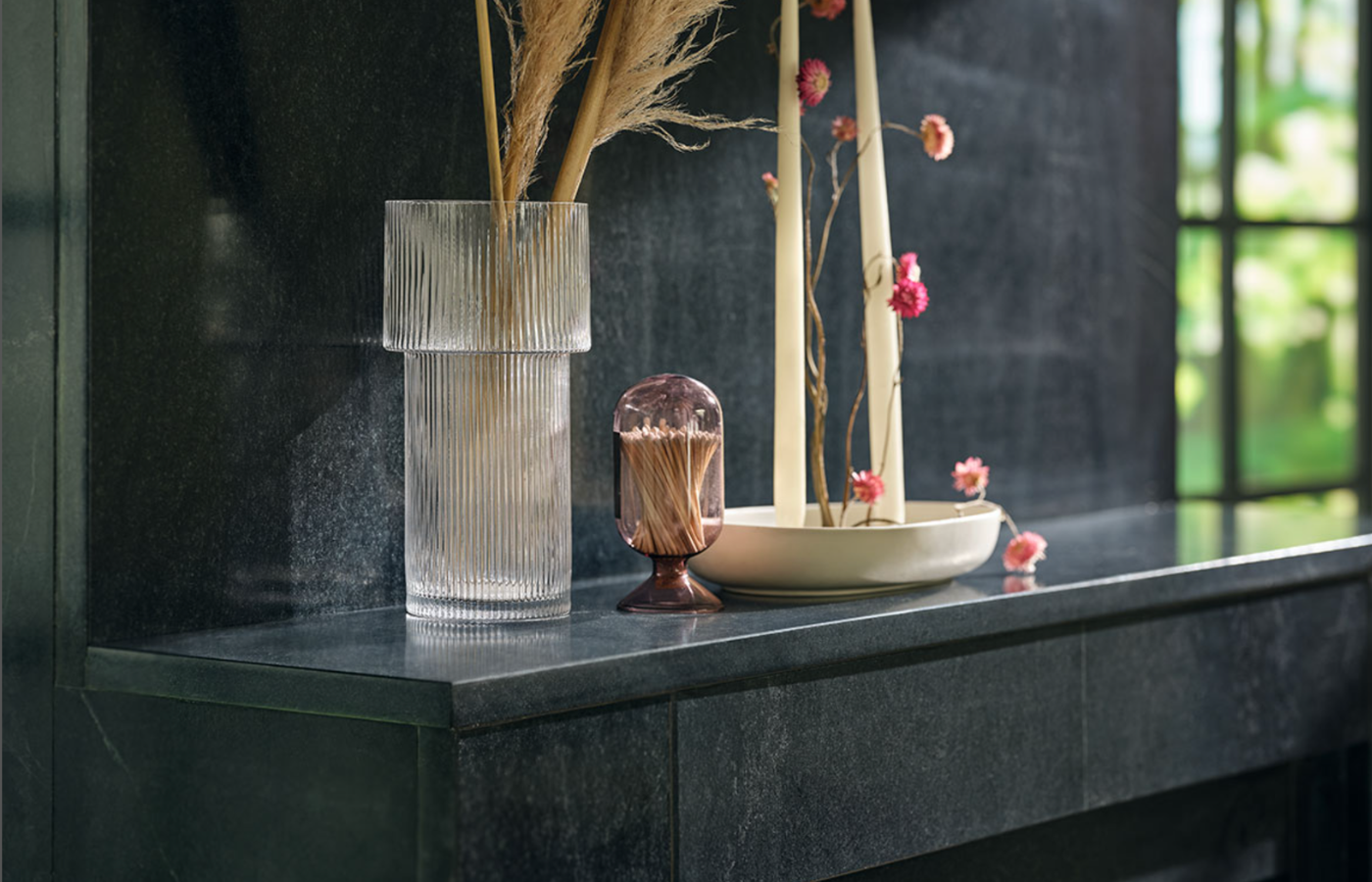
Black Soapstone brings a distinctive kind of luxury to kitchens, bathrooms, and architectural spaces. With its deep charcoal coloring, subtle white veining, and smooth, velvety texture, this natural stone offers an understated alternative to dramatic marble patterns and highly polished countertops.
Unlike many natural stones, soapstone is naturally nonporous, highly resistant to heat, and generally does not require sealing. Its appearance also evolves over time, developing a rich patina that gives each surface its own character.
Black Soapstone is particularly appealing in kitchens with natural wood cabinetry, warm neutral finishes, and modern architectural details. Its charcoal background creates depth without overwhelming the surrounding design.
But is Black Soapstone a good countertop material? Does it scratch easily? How much does it cost? And how do you maintain its dark appearance?
In this Stone Spotlight, Design Surfaces explores everything homeowners should know about Black Soapstone, including its appearance, cost, durability, maintenance, finishes, and design possibilities.
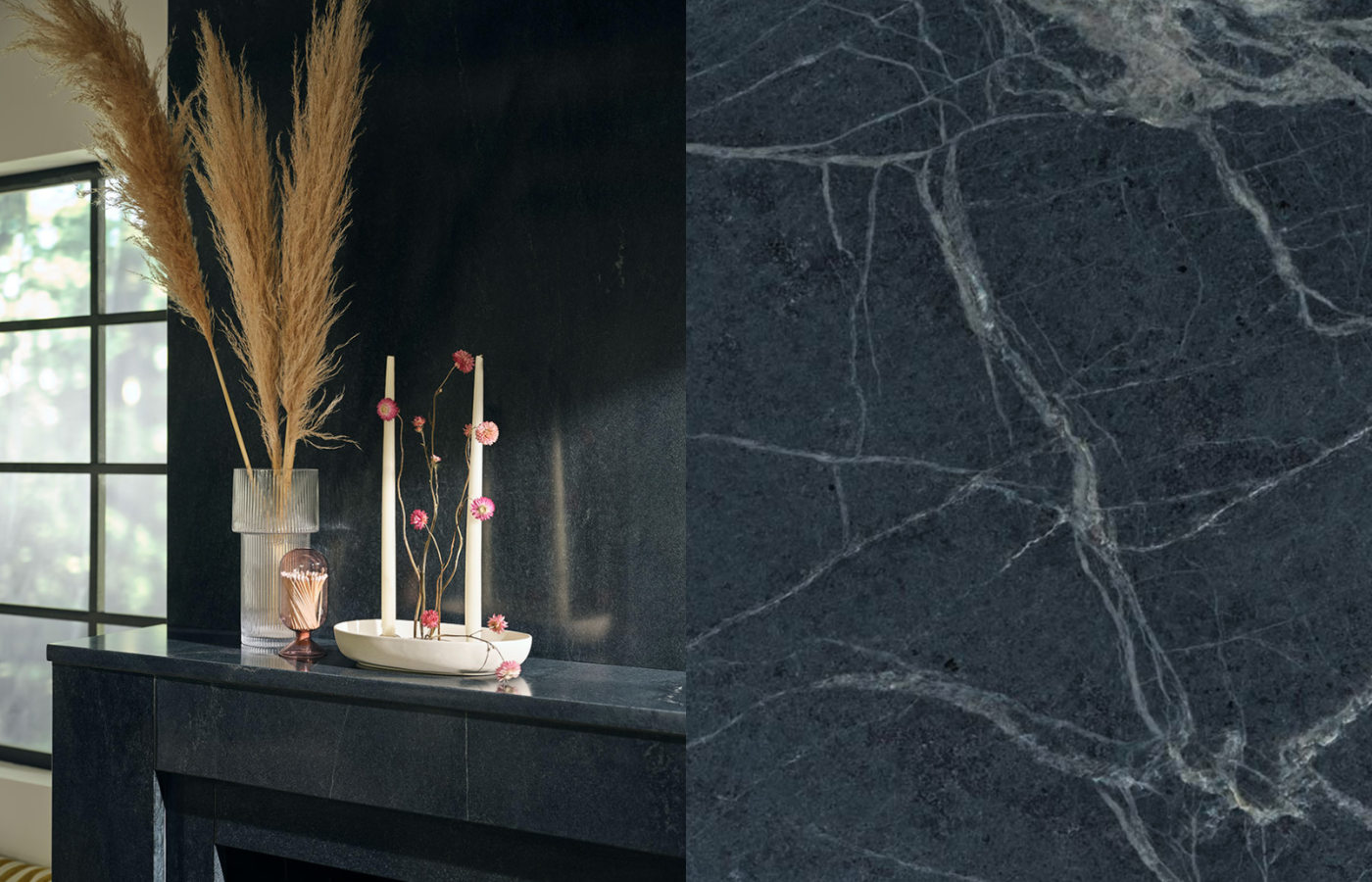
Black Soapstone is a natural metamorphic stone composed primarily of talc, along with varying amounts of other minerals.
Its talc content gives the stone its signature smooth, almost silky feel. Unlike harder natural stones such as granite and quartzite, soapstone is relatively soft, which makes it more susceptible to scratching but also contributes to its distinctive texture.
Black Soapstone typically features a charcoal gray to nearly black background with subtle white or gray mineral veining. Some slabs have a relatively uniform appearance, while others display more noticeable natural movement.
Soapstone is quarried in several regions around the world, including Brazil and India. The exact origin depends on the supplier and individual stone.
Unlike engineered quartz, which is manufactured using mineral particles and binding materials, soapstone is quarried directly from the earth.
Every slab features natural variations in color, veining, mineral composition, and surface characteristics.
For more information about its composition and natural properties, explore the geological characteristics of soapstone.
Despite its name, Black Soapstone is not always uniformly jet black.
Many untreated slabs feature a charcoal gray or graphite background. Some varieties appear nearly black, while others have subtle greenish undertones.
Fine white or gray mineral veins create natural movement across the surface.
Common color characteristics include:
This combination makes Black Soapstone appealing for homeowners who want dark countertops with natural depth rather than a completely uniform manufactured appearance.
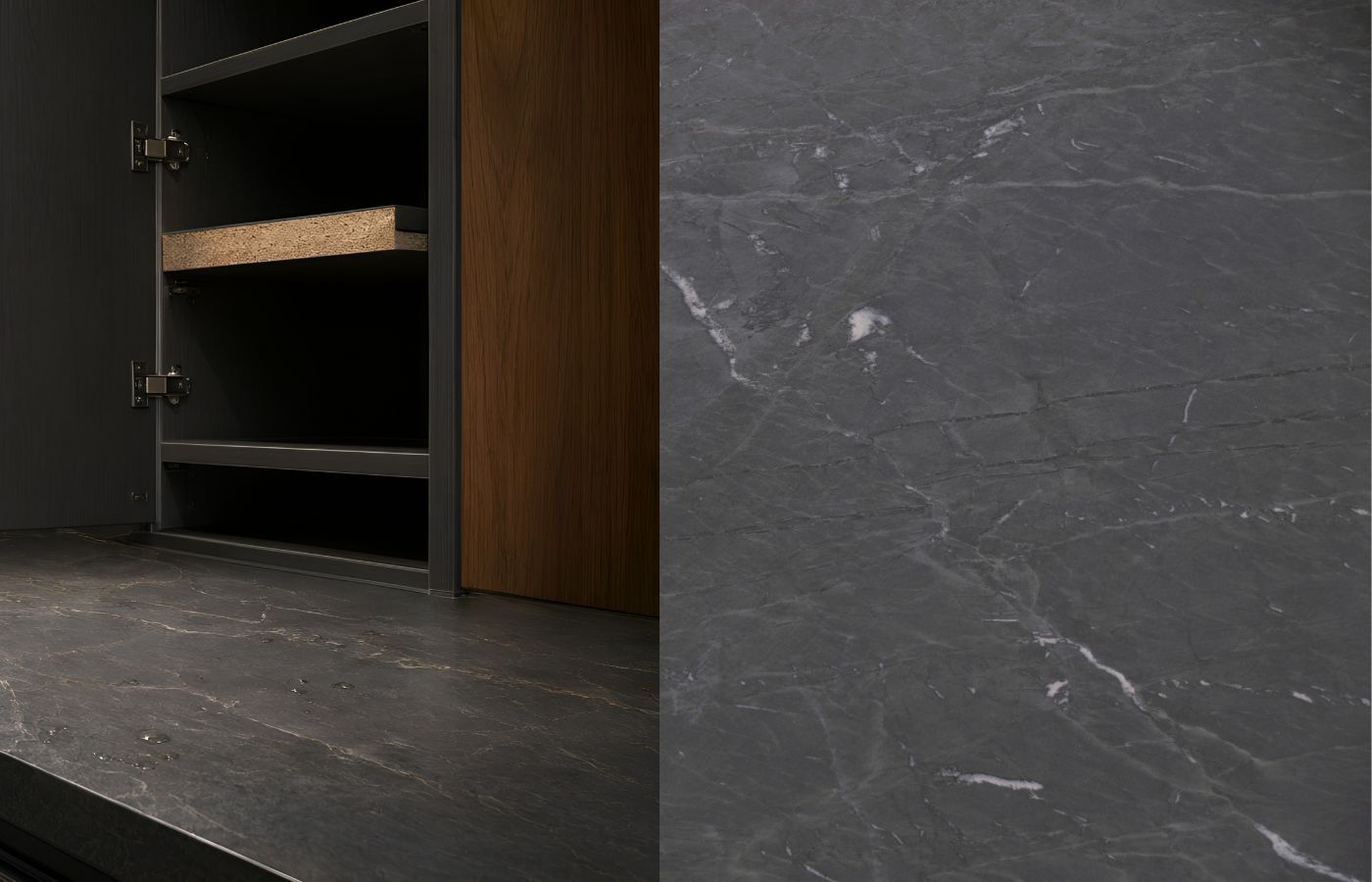
Some varieties are naturally darker than others, but many Black Soapstone slabs initially appear charcoal gray.
Applying mineral oil or a suitable soapstone wax can temporarily deepen the color, creating a richer black appearance.
Over time, soapstone also develops a natural patina through everyday use and handling.
This gradual change is one of the material's defining characteristics.
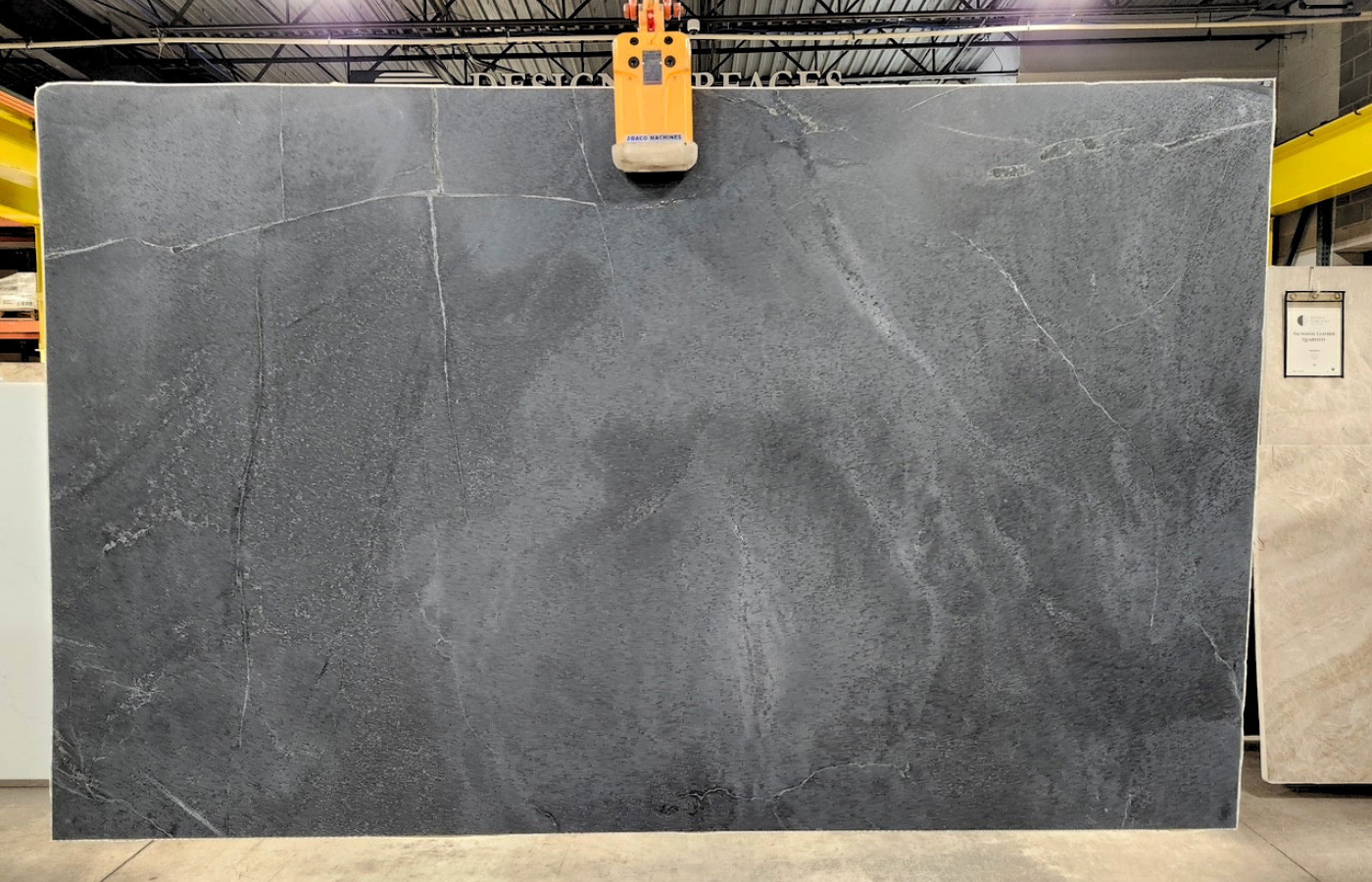
No. Every natural soapstone slab is unique.
One slab may feature a nearly uniform charcoal background, while another may display more pronounced white veining or mineral movement.
Even stones sold under similar commercial names can differ in color, origin, finish, and composition.
For large islands, full-height backsplashes, and other prominent applications, viewing actual slabs is especially important.
Black Soapstone appeals to homeowners and interior designers because it combines understated natural beauty with distinctive practical characteristics.
Its deep charcoal coloring provides contrast against light cabinetry, while its subtle veining adds interest without competing with other design elements.
Unlike highly polished materials, soapstone often has a softer, more organic appearance.
It works particularly well in:
Its natural patina also makes it appealing to homeowners who appreciate materials that develop character over time.
Rather than maintaining a completely uniform appearance, soapstone gradually reflects the way a space is used.
Before selecting Black Soapstone countertops, it is important to understand both their advantages and limitations.
For homeowners who appreciate natural character and an evolving surface, Black Soapstone can be an excellent choice.
However, those seeking a highly scratch-resistant countertop with a consistently uniform appearance may prefer another material.
Black Soapstone is generally considered a midrange to premium natural countertop material, although pricing varies considerably by supplier, slab selection, and project requirements.
The final cost depends on the actual stone, its availability, the countertop layout, fabrication requirements, and local labor rates.
Several factors influence the total project cost.
Black Soapstone may cost more than some commonly available granite varieties, but pricing varies significantly.
Certain premium granite slabs can be similarly priced or more expensive.
Rather than comparing stone names alone, evaluate the actual slab and the complete fabrication and installation estimate.
For homeowners seeking a naturally dark stone with subtle veining, excellent heat resistance, and a distinctive patina, Black Soapstone can be a worthwhile investment.
Its appearance works across many design styles, from traditional kitchens to contemporary interiors.
However, its value depends on your budget, maintenance expectations, and willingness to accept scratches and natural aging as part of the material's character.
Yes. Black Soapstone can be a durable and practical kitchen countertop material, but its performance differs from harder natural stones.
Soapstone is naturally resistant to heat, moisture absorption, and many common household acids.
However, it is relatively soft and can scratch or dent more easily than granite or quartzite.
Understanding these characteristics is important before choosing soapstone for a busy kitchen.
Yes. Soapstone is generally more susceptible to scratching than granite, quartzite, and many engineered quartz countertops.
Knives, abrasive particles, heavy cookware, and rough objects can leave visible marks.
However, certain superficial scratches may be reduced through appropriate refinishing techniques.
Because soapstone is relatively soft, some surface marks can be easier for a qualified stone professional to address than damage to harder materials.
Using cutting boards and avoiding unnecessary abrasion will help preserve the surface.
Soapstone has excellent natural heat resistance.
Its thermal properties are one reason it has historically been used for fireplaces, stoves, laboratory surfaces, and other heat-related applications.
However, using trivets remains a sensible precaution.
Extremely hot cookware, sudden temperature changes, existing weaknesses, or nearby materials can still create risks.
Yes. Although soapstone is less brittle than some harder natural stones, its relative softness means exposed edges and corners can dent or chip when struck.
The selected edge profile, slab thickness, fabrication quality, and everyday use can influence the risk.
Slightly softened edges may be more practical than sharp corners in busy kitchens.
If you're planning a new countertop, understanding countertop edge profiles and modification limitations can help you consider both appearance and everyday practicality.
One of Black Soapstone's biggest advantages is its naturally nonporous character.
Unlike many granite, marble, and quartzite varieties, soapstone generally does not require a penetrating sealer to protect against liquid absorption.
Soapstone is highly resistant to absorption-based staining because of its dense, nonporous structure.
Liquids such as water, coffee, and wine generally remain on the surface rather than penetrating deeply into the stone.
However, oils, fingerprints, cleaning residue, and uneven surface treatments can temporarily change the appearance of certain areas.
These marks are not necessarily permanent stains.
Routine cleaning can often address surface residue.
Soapstone is generally resistant to acid etching from common household substances such as lemon juice and vinegar.
This is an important difference between soapstone and marble, which is more vulnerable to acidic substances.
However, homeowners should still use appropriate cleaning products and follow the care recommendations for their specific stone.
No. Genuine soapstone generally does not require conventional penetrating sealers for stain resistance.
Because soapstone is naturally nonporous, sealing is usually unnecessary.
However, some homeowners apply mineral oil or soapstone wax to deepen the color and create a more uniform dark appearance.
These treatments are primarily aesthetic rather than necessary for protection against liquid absorption.
No. Oiling Black Soapstone is optional.
Untreated soapstone typically has a softer charcoal gray appearance. Applying mineral oil can temporarily darken the surface and emphasize its natural veining.
Soapstone wax products may also be used to create a richer appearance, depending on the manufacturer's recommendations.
If you leave soapstone untreated, it gradually develops a natural patina.
Areas that receive frequent contact with hands, cooking oils, and everyday use may darken faster than less frequently touched surfaces.
This can create variations in color across the countertop.
Some homeowners appreciate this evolving appearance, while others prefer a more consistent dark finish.
No. Mineral oil generally darkens soapstone temporarily.
The appearance may lighten as the oil wears away or is cleaned from the surface.
Repeated applications may be necessary if you want to maintain a consistently dark appearance.
Always follow the recommendations for the specific soapstone and treatment product.
Black Soapstone, black granite, and black engineered quartz can create similar dark countertop designs, but their characteristics differ.
Black Soapstone typically features a soft charcoal background with subtle natural veining.
Black granite is available in a wide range of dark patterns, including nearly uniform black varieties and stones with more noticeable mineral movement.
Black engineered quartz offers manufactured patterns, including solid colors and marble-inspired designs.
Granite and engineered quartz are generally more resistant to everyday scratching than soapstone.
Soapstone's softer surface is more likely to develop visible marks over time.
Soapstone has excellent natural heat resistance.
Granite also generally performs well around heat, although sudden temperature changes can create risks.
Engineered quartz contains resins and other manufactured components, making it more sensitive to high temperatures.
Using trivets is a sensible precaution for all three materials.
Soapstone is naturally nonporous and highly resistant to liquid absorption.
Granite's porosity varies by stone, and some varieties benefit from sealing.
Engineered quartz is generally nonporous and does not require conventional penetrating sealers.
Soapstone does not normally require sealing, but optional oiling or waxing can change its appearance.
Granite may require periodic sealing depending on the specific stone.
Engineered quartz typically requires routine cleaning according to the manufacturer's instructions.
For a closer look at another popular countertop comparison, explore our guide to quartzite vs. quartz countertops.
Black Soapstone may appeal to homeowners who appreciate a soft, organic appearance and the natural character that develops over time.
Granite may be preferable for those who prioritize scratch resistance and want a harder natural stone surface.
Engineered quartz may appeal to homeowners seeking consistent patterns, a wide range of colors, and straightforward maintenance.
The best choice depends on your design preferences, budget, and expectations for everyday use.
One of Black Soapstone's strongest design advantages is its ability to complement a wide range of cabinetry.
Its dark, understated appearance can create contrast, warmth, or a dramatic monochromatic effect depending on the surrounding materials.
White oak is one of the most complementary cabinet materials for Black Soapstone.
The wood's natural grain and warm coloring contrast beautifully with the stone's deep charcoal tones.
This combination works especially well in organic modern, Scandinavian-inspired, and transitional kitchens.
Consider warm white walls, brushed brass hardware, and a neutral backsplash to complete the look.
White cabinetry creates a classic contrast against dark soapstone.
The combination works well in traditional, modern farmhouse, and contemporary kitchens.
Warm whites often create a softer appearance, while brighter whites emphasize the contrast.
A full-height soapstone backsplash can create additional visual continuity.
Cream cabinetry creates a warmer, more layered contrast than bright white.
This pairing works particularly well in European-inspired and traditional kitchens.
Natural wood flooring and warm metallic hardware can help complete the palette.
Walnut cabinetry provides rich wood tones that complement soapstone's dark appearance.
The combination creates a sophisticated, warm aesthetic without relying on stark contrast.
Light-colored walls, backsplash tile, and thoughtfully planned lighting can help balance the darker materials.
Sage, olive, and deep forest green cabinets can create a natural, earthy palette with Black Soapstone.
Softer greens provide gentle contrast, while deeper greens create a dramatic, moody appearance.
This combination works especially well with brass hardware and warm wood accents.
Black-on-black kitchens can create a striking architectural appearance.
The key is incorporating differences in texture, sheen, and surrounding materials.
A honed soapstone countertop can introduce subtle natural movement against painted black cabinetry.
Consider lighter flooring, warm lighting, or a contrasting backsplash to keep the space balanced.
Because Black Soapstone has a dark background and subtle veining, backsplash selection can significantly influence the overall kitchen design.
Using the same stone for countertops and backsplash creates a cohesive, architectural appearance.
The subtle natural veining continues across horizontal and vertical surfaces.
This approach works particularly well in contemporary and minimalist kitchens.
Warm white subway tile creates a timeless contrast against Black Soapstone.
A handmade-look or lightly textured finish can add dimension without competing with the countertop.
Zellige-style tile introduces subtle variation, texture, and light reflection.
Warm white, cream, taupe, and soft beige tones pair particularly well with dark soapstone.
Simple porcelain tile provides a clean, durable backsplash option.
Large-format tile can create a streamlined appearance, while smaller formats introduce subtle pattern and texture.
Certain light-colored marbles, limestones, and other natural stones can create an elegant contrast with Black Soapstone.
However, consider the maintenance requirements of the backsplash material, particularly behind cooking surfaces.
IMAGE: Black Soapstone countertop with dark cabinetry and visible natural veining (Photo 2)
Black Soapstone provides a versatile foundation for coordinating cabinetry, hardware, and flooring.
Natural white oak flooring is a particularly appealing choice because it balances the dark countertop with warm wood tones.
Medium walnut, warm brown, and light neutral flooring can also work beautifully.
For homeowners seeking a durable wood-look alternative, luxury vinyl flooring offers a variety of colors and textures.
The goal is to balance the countertop's depth with the surrounding materials rather than make every surface equally dark.
The finish can significantly influence Black Soapstone's appearance.
Honed soapstone has a matte or low-sheen appearance.
It emphasizes the stone's smooth texture and understated natural movement.
This finish is particularly popular in organic modern, traditional, and minimalist interiors.
Honed surfaces may also make the stone's evolving patina part of the overall aesthetic.
Certain suppliers offer polished Black Soapstone.
A polished finish creates more light reflection and may emphasize the stone's dark coloring and natural veining.
However, soapstone's relative softness means the appearance of a polished surface may change with use.
Finish availability varies by supplier and individual product.
Choose honed soapstone if you prefer a soft, matte appearance and an organic feel.
Consider polished soapstone if you want a more reflective look and the selected product is available in that finish.
Always compare actual samples and confirm the recommended care requirements before making a final decision.
Black Soapstone can be incorporated into a wide range of residential and commercial designs.
A Black Soapstone island can create a striking focal point, particularly when paired with light cabinetry or natural wood.
The stone's subtle veining adds visual interest without overwhelming the surrounding design.
A waterfall island extends the countertop material vertically down one or both sides.
This creates a clean architectural effect and showcases the stone's natural movement.
For a cohesive result, discuss slab layout, veining, and seam placement with your fabricator.
If you're planning a large island, our guide to countertop slab sizes, seams, and layout explains important considerations before fabrication.
Using the same soapstone across countertops and backsplash creates visual continuity.
This approach is especially effective in kitchens with simple cabinetry and minimal decorative details.
Pair light perimeter cabinets with a natural wood or dark-colored island.
Black Soapstone can help connect the two finishes and create a balanced design.
Black Soapstone can create an elegant bathroom vanity.
Its dark coloring pairs beautifully with natural wood, warm metallic fixtures, and light neutral tile.
Its nonporous characteristics also make it appealing for moisture-prone spaces.
Soapstone's natural heat resistance makes it a distinctive material for certain fireplace surrounds and hearth applications.
Its charcoal coloring and subtle veining can complement both traditional and contemporary fireplaces.
However, the suitability of a particular slab depends on the fireplace design, temperature exposure, and applicable installation requirements.
Large soapstone slabs can create dramatic feature walls in residential or commercial interiors.
Their subtle veining adds depth and natural texture without requiring bold patterns.
Black Soapstone is generally straightforward to maintain because of its naturally nonporous surface.
For everyday cleaning:
Avoid abrasive cleaning pads and unnecessarily harsh chemicals.
Although soapstone is resistant to many household acids, using appropriate cleaning products helps preserve the desired surface appearance.
For additional educational information about natural stone maintenance, visit the Natural Stone Institute.
Some superficial scratches can be reduced through appropriate refinishing methods.
Depending on the stone and finish, a qualified stone professional may recommend localized sanding or other techniques.
However, improper refinishing can create uneven areas or change the surface texture.
For deeper scratches, chips, or visible damage, consult a professional familiar with soapstone.
If you prefer a consistently dark appearance, mineral oil or a soapstone-specific wax may help deepen the color.
Follow the supplier's recommendations and test the treatment in an inconspicuous area before applying it broadly.
If you prefer the natural patina, you can leave the stone untreated and allow its appearance to evolve over time.
Selecting the actual slab is one of the most important steps in a natural stone project.
Online photographs and small samples cannot fully represent every slab's color, veining, texture, and movement.
Before purchasing, consider these factors.
Is the slab closer to charcoal gray, deep black, or a slightly greenish tone?
Consider how its appearance changes when dry, oiled, or viewed under different lighting conditions.
Do you prefer a relatively uniform dark background or more noticeable white veining?
Consider how the pattern will appear across a large kitchen island or backsplash.
Confirm that the available slab sizes work with your countertop layout.
Ask about thickness options and how they affect edge details, support, and fabrication.
Compare honed and polished samples when available.
Consider how each finish complements the cabinetry, backsplash, flooring, and lighting.
Not all soapstone varieties have identical mineral compositions.
Some are softer or harder than others, which can influence scratch resistance and fabrication characteristics.
Ask about the specific material rather than relying on the name alone.
For large islands and full-height backsplashes, review the proposed layout before fabrication.
Careful planning can help highlight the stone's natural veining and create a more cohesive finished design.
IMAGE: Close-up of Black Soapstone veining and surface texture (Photo 3, right side)
Yes. Black Soapstone can be an excellent kitchen countertop material because it is naturally nonporous, heat-resistant, and resistant to common household acids. However, it is softer than granite and quartzite, so scratches and surface marks are more likely.
Yes. Soapstone is relatively soft and can scratch more easily than many other countertop materials. Some superficial marks may be reduced through appropriate refinishing, but homeowners should expect the surface to develop character over time.
No. Genuine soapstone generally does not require penetrating sealers because it is naturally nonporous. Mineral oil or soapstone wax may be used to deepen the color, but these treatments are primarily aesthetic.
Some varieties are naturally very dark, while others appear charcoal gray. Oiling, waxing, and natural patina can deepen the appearance over time.
Black Soapstone is generally considered a midrange to premium countertop material. The actual price depends on the slab, thickness, availability, fabrication requirements, and installation costs.
Soapstone has excellent natural heat resistance. However, using trivets remains a sensible precaution to protect the countertop and surrounding materials from unnecessary thermal stress.
Black Soapstone's natural coloring and subtle veining work in traditional, transitional, farmhouse, and contemporary interiors. Its timeless appearance makes it adaptable to changing design styles, although personal preferences and trends vary.
Black Soapstone offers a distinctive combination of deep charcoal coloring, subtle natural veining, and a smooth, understated appearance.
Its natural heat resistance, nonporous characteristics, and evolving patina make it an appealing choice for homeowners who appreciate both functionality and the unique character of natural stone.
Whether you're designing a kitchen with white oak cabinets, creating a dramatic waterfall island, or selecting a dark bathroom vanity, Black Soapstone can provide an elegant foundation.
The most important step is choosing a slab that complements your design and understanding its specific characteristics before fabrication and installation.
At Design Surfaces Tile & Stone in Westlake, Ohio, our team helps homeowners, designers, and contractors throughout Cleveland and Northeast Ohio explore premium countertop materials and coordinate tile, flooring, sinks, faucets, and hardware.
Visit Design Surfaces at 24000 Sperry Drive, Westlake, OH 44145, or call 440-899-9900 to explore countertop materials for your project.
Natural Stone Disclaimer: This Stone Spotlight is intended as a general introduction to the featured material. Natural stone varies from slab to slab, including differences in color, veining, mineral composition, hardness, and surface characteristics. Pricing, availability, finishes, durability, and maintenance requirements may also vary by supplier and individual slab. We recommend viewing actual slabs and confirming material specifications and care recommendations before making a final selection.


