Contact info +
.png)
.png)
.png)
Showroom Hours:
Mon-Fri - 9AM-5PM | Sat - 10AM-2PM | Sun - Closed
Mon-Fri - 9AM-5PM | Sat - 10AM-2PM | Sun - Closed


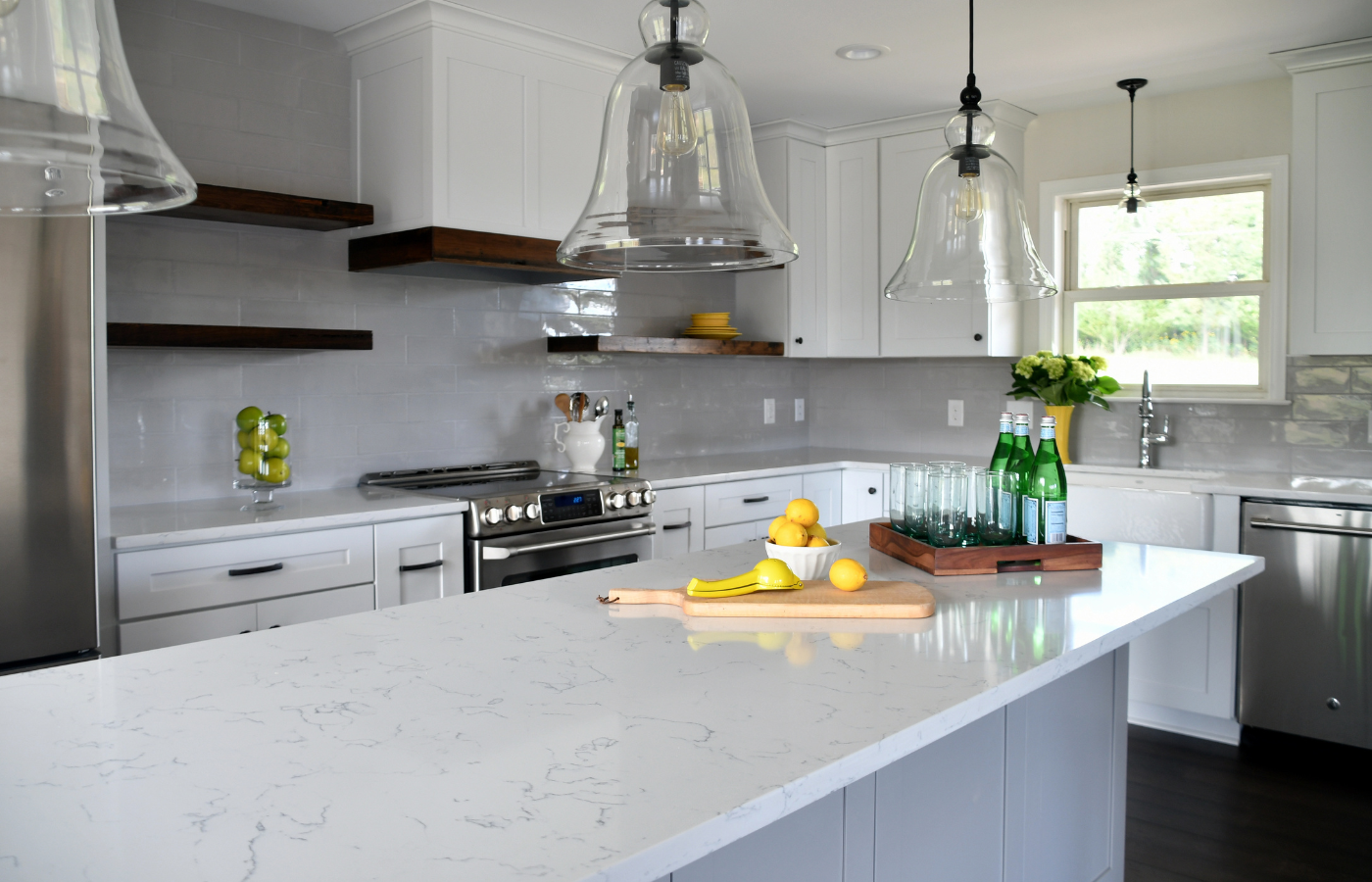
A splash of coffee beside the machine. A faint ring near the sink. A dark mark where cooking oil sat overnight. Quartz is known for being easy to maintain, but everyday life can still leave behind stains, residue, and discoloration that ordinary wiping does not remove.
Before reaching for a stronger cleaner, figure out what kind of mark you are dealing with. At Design Surfaces in Westlake, Ohio, we recommend starting with the gentlest appropriate cleaning method because engineered quartz contains resins and pigments that can be affected by excessive heat, abrasive scrubbing, and certain chemicals.
Below, we explain how to remove stains from quartz countertops, what to try for common spills, what to avoid, and when a mark may not actually be a stain.
Start with warm water, mild dish soap, and a soft microfiber cloth. Many marks that look like stains are actually dried food, grease, cleaner residue, or other material sitting on the surface.
For a stubborn mark:
Avoid assuming that more scrubbing or a stronger chemical will produce a better result. If gentle cleaning does not change the mark, identifying the cause should come before escalating the treatment.
Quartz is highly stain resistant, but stain resistant does not mean stain proof.
Engineered quartz is manufactured using quartz minerals combined with resins, pigments, and other materials. Its low-porosity surface helps prevent many liquids from penetrating as readily as they might with some natural stones.
That is one reason quartz works so well in busy kitchens and bathrooms.
Still, spills can leave marks, particularly when strongly colored foods, oils, cosmetics, or other substances remain on the surface for extended periods.
Common sources include:
The first question should not simply be, "How do I remove this stain?" It should be, "Is this actually a stain?"
Several different countertop problems can look surprisingly similar.
Surface residue sits on top of the quartz. Dried food, grease, soap, cleaner film, and mineral deposits are common examples.
A stain is discoloration associated with a substance that has been in contact with the surface.
Hard water buildup can leave white, chalky, cloudy, or crusty deposits, especially around faucets and sinks.
Surface discoloration or damage can result from excessive heat, inappropriate chemicals, prolonged UV exposure, abrasion, or changes involving the resin.
This distinction matters because cleaning can remove residue and many surface marks, but it cannot necessarily reverse permanent changes to the material.
Coffee and tea are among the most common sources of dark rings and spots on kitchen countertops.
For a fresh spill, wipe it up promptly and clean the area with warm water and mild dish soap.
If the liquid has dried:
If discoloration remains, consult the care instructions for your specific quartz brand before using a specialty cleaner.
Grease can leave behind a darker-looking patch or hazy film, particularly around cooktops and food-preparation areas.
Start with a small amount of grease-cutting dish soap and warm water. Clean the area gently, rinse away the soap, and dry the surface.
Heavy buildup may require more than one cleaning.
Pay particular attention to rinsing. Soap left behind on quartz can create its own film, making the countertop appear cloudy even after the original grease has been removed.
Strongly colored foods should be cleaned promptly rather than left to dry.
Tomato sauce, wine, berries, food coloring, and heavily pigmented spices can leave noticeable marks on light-colored quartz.
Begin with the same basic method: warm water, mild soap, gentle cleaning, thorough rinsing, and drying.
For a persistent mark, use only a product considered appropriate for the particular quartz surface. Quartz manufacturers may have different recommendations for treating stubborn food stains, so check before experimenting with household chemicals.
Bathroom quartz encounters a different set of challenges.
Foundation, lipstick, self-tanner, hair products, skincare products, and other cosmetics may contain pigments, oils, dyes, or chemicals that leave residue behind.
Wipe spills promptly and begin with mild soap and warm water.
If a cosmetic product has dried onto the vanity, soften the residue rather than aggressively scraping it away. For persistent discoloration, follow the quartz manufacturer's cleaning recommendations.
Keeping cosmetics on a tray can also help prevent repeated spills from collecting directly on the countertop.
A white mark is not necessarily a stain.
Around a sink or faucet, cloudy white spots may be mineral deposits left behind as water evaporates. Soap residue and cleaner buildup can produce a similar hazy appearance.
If the mark feels slightly crusty or appears concentrated around a faucet, hard water buildup may be the more likely explanation.
This matters because a hard water deposit requires a different approach from a coffee or oil stain.
Do not automatically apply vinegar or a powerful limescale remover. Check whether the product is approved for your quartz surface before using it.
Sometimes the cleaning process itself creates the problem.
Using too much soap, failing to rinse completely, or repeatedly applying products that leave a film can make quartz appear hazy.
Try cleaning the area with warm water, thoroughly removing any remaining product, and drying it with a clean microfiber cloth.
If the cloudy area does not change, consider whether you are dealing with mineral buildup or actual surface discoloration rather than cleaner residue.
Baking soda is frequently recommended online as a universal stain remover, but it should not automatically be used on every quartz surface.
It is mildly abrasive, and aggressive rubbing may affect certain finishes.
The safer approach is to check the care instructions for your specific quartz manufacturer before using baking soda, a homemade paste, or another abrasive product.
The same principle applies to many DIY cleaning methods. A popular household solution is not necessarily the right solution for an engineered surface.
Vinegar is another common DIY recommendation, especially for mineral buildup.
However, quartz manufacturers can have different recommendations regarding acidic and chemical cleaners. Do not assume that vinegar is appropriate simply because it works on another surface in your home.
If you are trying to remove hard water deposits, use a method or product approved for your particular quartz.
One of the easiest ways to turn a manageable stain into a bigger problem is to use an incompatible cleaner.
Unless specifically approved by the manufacturer, be cautious with:
Quartz is durable, but durability does not make the surface immune to chemical or physical damage.
If repeated, appropriate cleaning has no effect, stop before moving to increasingly aggressive methods.
A persistent mark may be something other than a removable stain.
Consider:
Is it near a window?
Long-term exposure to sunlight can affect some engineered surfaces.
Did a hot pan or appliance sit there?
Excessive heat can affect the resin used in engineered quartz.
Was a strong cleaner or chemical spilled?
Chemical exposure may alter the surface rather than simply stain it.
Does the area have a different sheen?
A change in gloss or texture can indicate surface alteration.
Is it concentrated around the faucet?
Mineral buildup may be responsible.
At this point, identifying the cause is more important than trying another cleaner.
Some discoloration may be difficult or impossible to remove if the material itself has been altered.
That is why early cleanup and appropriate care matter.
A surface deposit is different from discoloration caused by excessive heat, chemicals, UV exposure, or another change to the material. Cleaning products cannot necessarily restore quartz when the appearance of the surface itself has changed.
If you are uncertain, have the mark evaluated before attempting aggressive DIY treatments.
Quartz does not require complicated everyday maintenance.
A few habits can prevent many of the marks homeowners encounter:
Consistent, gentle care is usually more effective than periodically relying on aggressive cleaning.
Consider professional guidance when a mark remains after appropriate cleaning or when you suspect heat, chemical, or physical damage.
Professional evaluation can be especially helpful when:
Continuing to experiment with stronger products can make diagnosis more difficult and, in some cases, create additional damage.
How a countertop looks in the showroom matters, but so does how it will behave in your home.
When comparing quartz, think about where it will be installed, how heavily the space will be used, and how much everyday maintenance you prefer.
Color and pattern can also influence how visible crumbs, fingerprints, water spots, and residue appear. A dramatic patterned surface may disguise everyday marks differently than a very uniform solid color.
At Design Surfaces, serving homeowners, designers, and contractors across Cleveland, we help clients compare quartz surfaces with both design and real-world performance in mind. Seeing samples and larger surfaces in person can make it easier to evaluate color, movement, finish, and how a material fits the way your kitchen or bathroom will actually be used.
Learning how to remove stains from quartz countertops is less about finding one powerful stain remover and more about identifying the mark before treating it.
Coffee residue, grease, hard water buildup, cleaner film, and permanent discoloration can look similar while requiring very different responses. Start gently, clean spills promptly, and follow the care recommendations for the quartz installed in your home.
If you are choosing quartz for a new kitchen, bathroom, bar, or other space, visit the Design Surfaces showroom in Westlake to compare colors, patterns, finishes, and countertop options in person.
Call: 440.899.9900 • Contact: Submit a Request • Email: info@designsurfacesdist.com


