Contact info +
.png)
.png)
.png)
Showroom Hours:
Mon-Fri - 9AM-5PM | Sat - 10AM-2PM | Sun - Closed
Mon-Fri - 9AM-5PM | Sat - 10AM-2PM | Sun - Closed


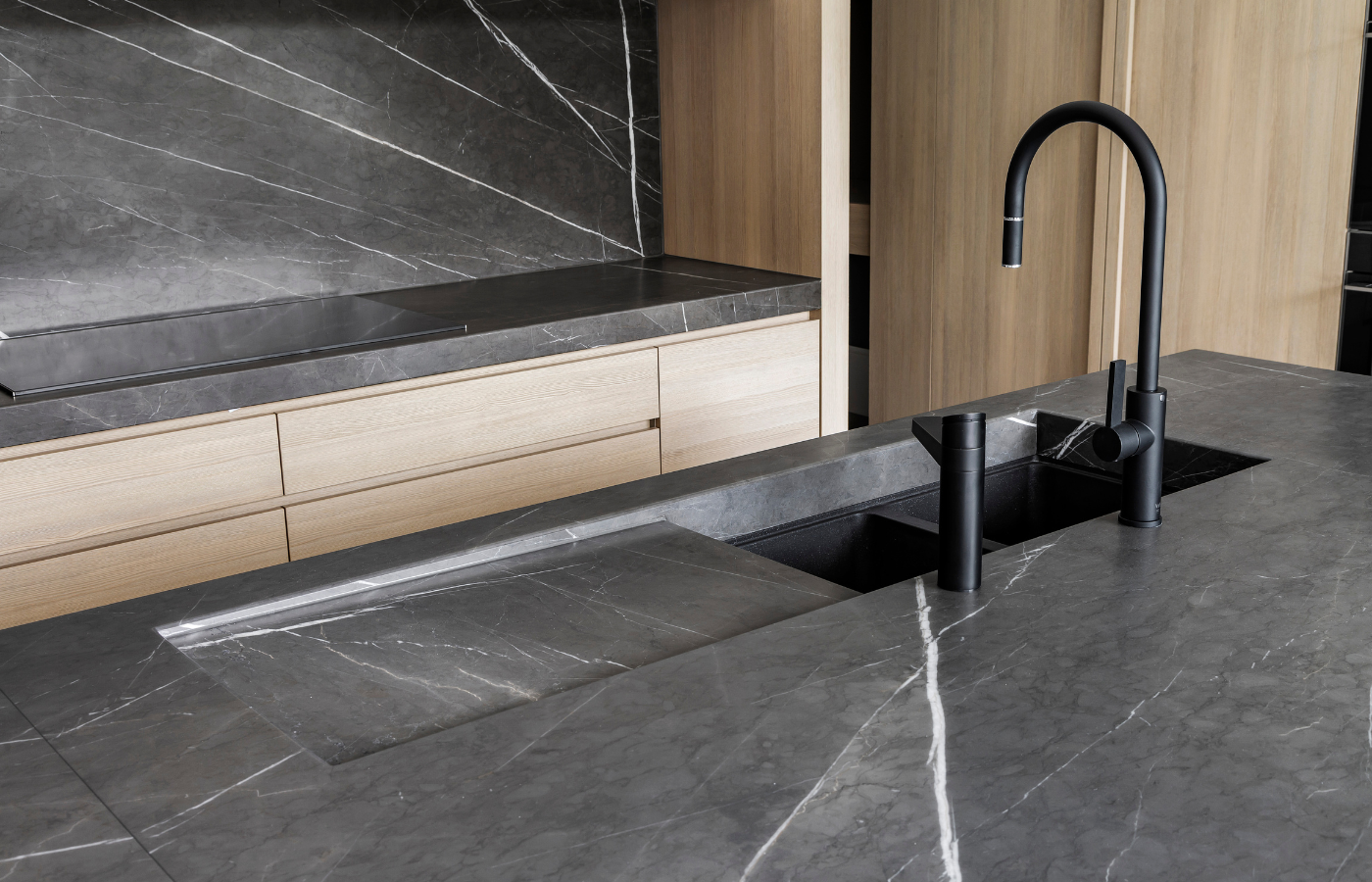
A dark ring near the sink, a wine mark on an island, or an oily patch beside the range can make a quartzite countertop look permanently damaged when the problem may actually be treatable. The challenge is knowing whether you are looking at a true stain, moisture absorption, hard water buildup, or a change to the finish.
At Design Surfaces in Westlake, Ohio, we help homeowners understand how natural stone behaves before they reach for a cleaner that may make the problem worse. If you are trying to figure out how to remove stains from quartzite countertops, start by identifying the type of mark and using the gentlest method appropriate for the stone.
Start with basic stone-safe cleaning before moving to stronger treatment.
For a fresh spill or light residue:
Avoid aggressive scrubbing or assuming that a stronger household cleaner is the answer. Quartzite is durable, but improper cleaning can still affect the finish or leave residue behind.
Quartzite is a natural stone and can absorb liquids depending on its porosity, finish, sealing condition, and how long a substance remains on the surface.
That means quartzite is generally durable, but it is not completely stain proof.
Common sources of quartzite stains include:
Some marks are easier to remove than others. A fresh surface spill is very different from oil that has penetrated into the stone or moisture that has darkened the area beneath the surface.
One of the most important steps is figuring out what kind of mark you are seeing.
The Natural Stone Institute recommends identifying the type and source of a stain before determining the appropriate removal method.
A stain usually creates a visible color change that remains after routine cleaning.
Moisture absorption may darken quartzite temporarily, especially around sinks, seams, or areas exposed to standing water.
Surface residue can make the countertop look hazy, streaky, cloudy, or dirty even when the stone itself is not stained.
Hard water buildup often appears white, chalky, or crusty around faucets and wet areas.
These problems can look similar from a distance, but they require different treatment.
Coffee and tea can leave brown or yellowish marks if spills are not cleaned promptly.
For a fresh spill, blot it immediately and clean the area with a pH-neutral stone cleaner.
If the mark remains:
If the discoloration does not improve, the stain may have penetrated more deeply and require a treatment designed for natural stone.
Wine combines strong pigment with acidity, which makes prompt cleanup especially important.
Blot the spill rather than wiping it across a larger area. Then clean the surface with a pH-neutral cleaner made for natural stone.
If color remains after the area has dried, the stone may have absorbed some of the liquid.
At that point, avoid experimenting with random stain removers. The right treatment depends on the quartzite, finish, sealing condition, and depth of the stain.
Oil-based stains often appear darker than the surrounding stone and can be more persistent than water-based spills.
Common sources include:
Start by removing any residue from the surface with a pH-neutral stone cleaner.
If a dark area remains, the oil may have penetrated into the stone. A poultice or professional stain-removal treatment may be recommended depending on the type of quartzite and the source of the stain.
For deeper natural-stone stains, the Natural Stone Institute also explains how poultices work and when repeated treatment or professional help may be necessary.
Avoid using strong degreasers unless they are specifically appropriate for natural stone.
Darkening near a sink does not always mean the stone is permanently stained.
Natural stone can absorb moisture, particularly if water sits on the surface or reaches an unsealed area near a seam, faucet, or sink opening.
A moisture-related dark spot may lighten gradually as the stone dries.
If the darkening remains, possible causes include:
Persistent dark areas should be evaluated rather than repeatedly cleaned.
White, cloudy, or chalky marks often point to surface buildup rather than a deep stain.
Hard water can leave mineral deposits as water evaporates. Soap and cleaner residue can create a similar hazy appearance.
If the mark feels slightly crusty or is concentrated around a faucet, mineral buildup may be the more likely cause.
Use a method appropriate for natural stone and avoid automatically reaching for acidic limescale removers.
True quartzite is generally more resistant to acid than marble, but not every stone sold under a quartzite label behaves exactly the same way.
Some stones marketed as quartzite may contain minerals or characteristics that react differently to acids.
If a mark looks dull, pale, or less reflective rather than simply darker, it may be a change to the surface finish rather than a traditional stain.
That is another reason to identify the material accurately before choosing a treatment.
Do not assume vinegar is safe simply because quartzite is a natural stone.
Vinegar is acidic, and the safest approach is to avoid using it unless the care guidance for your specific surface clearly allows it.
Acidic products may affect certain stones, sealers, or finishes.
For routine care, use a pH-neutral cleaner made for natural stone.
Baking soda is commonly recommended in DIY cleaning advice, but it is mildly abrasive.
Aggressive rubbing can affect some finishes, and homemade stain-removal methods are not appropriate for every quartzite.
If you are considering baking soda or a homemade poultice, confirm that the method is suitable for your specific stone and finish before applying it.
Using the wrong cleaner can create a new problem while trying to solve the original one.
Be cautious with:
When in doubt, use a pH-neutral natural stone cleaner and check the recommendations for your specific quartzite.
Some stains can become increasingly difficult to remove when they remain in the stone for an extended period.
The outcome depends on:
A deeply absorbed oil stain may behave differently from coffee, rust, or moisture.
The earlier the source is identified, the better the chance of choosing an appropriate treatment.
Many quartzite countertops benefit from sealing, but sealing requirements vary.
A penetrating sealer can help slow the absorption of liquids, giving you more time to clean spills before they penetrate deeply.
However, sealing does not make quartzite stain proof.
It also does not eliminate the need for prompt cleanup and appropriate care.
How often sealing is needed depends on the stone, finish, sealer, use, and installation. Follow the recommendations for your specific countertop rather than relying on a universal schedule.
Good daily habits make a meaningful difference.
To reduce staining and buildup:
Quartzite is durable, but consistent care helps preserve its appearance over time.
Professional evaluation may be appropriate when:
Continuing to experiment with stronger products can make diagnosis harder and may create additional damage.
Quartzite is a strong choice for homeowners who want natural movement, durability, and a distinctive stone surface, but no two slabs behave exactly the same way.
Color, density, mineral composition, finish, and porosity can all influence maintenance.
A lighter stone may make certain stains more noticeable. A highly polished finish may show water spots differently than a honed surface. Some quartzites absorb moisture more readily than others.
At Design Surfaces, serving homeowners, designers, and contractors across Cleveland, we help clients compare quartzite slabs in person and understand how appearance, finish, care, and everyday use all affect the final choice.
Seeing full slabs before fabrication also gives you a much better sense of the stone's movement, variation, and overall character.
Learning how to remove stains from quartzite countertops starts with identifying what you are actually seeing.
A coffee stain, absorbed moisture, hard water deposit, oily mark, and surface residue may all require different treatment. Start gently, use products appropriate for natural stone, and avoid assuming that a stronger cleaner will deliver a better result.
With the right care and realistic maintenance expectations, quartzite can remain a beautiful and highly durable surface for years.
If you are choosing quartzite or comparing countertop materials for an upcoming kitchen or bathroom project, visit the Design Surfaces showroom in Westlake to explore full slabs, finishes, colors, and natural stone options in person.
Call: 440.899.9900 • Contact: Submit a Request • Email: info@designsurfacesdist.com


