Contact info +
.png)
.png)
.png)
Showroom Hours:
Mon-Fri - 9AM-5PM | Sat - 10AM-2PM | Sun - Closed
Mon-Fri - 9AM-5PM | Sat - 10AM-2PM | Sun - Closed


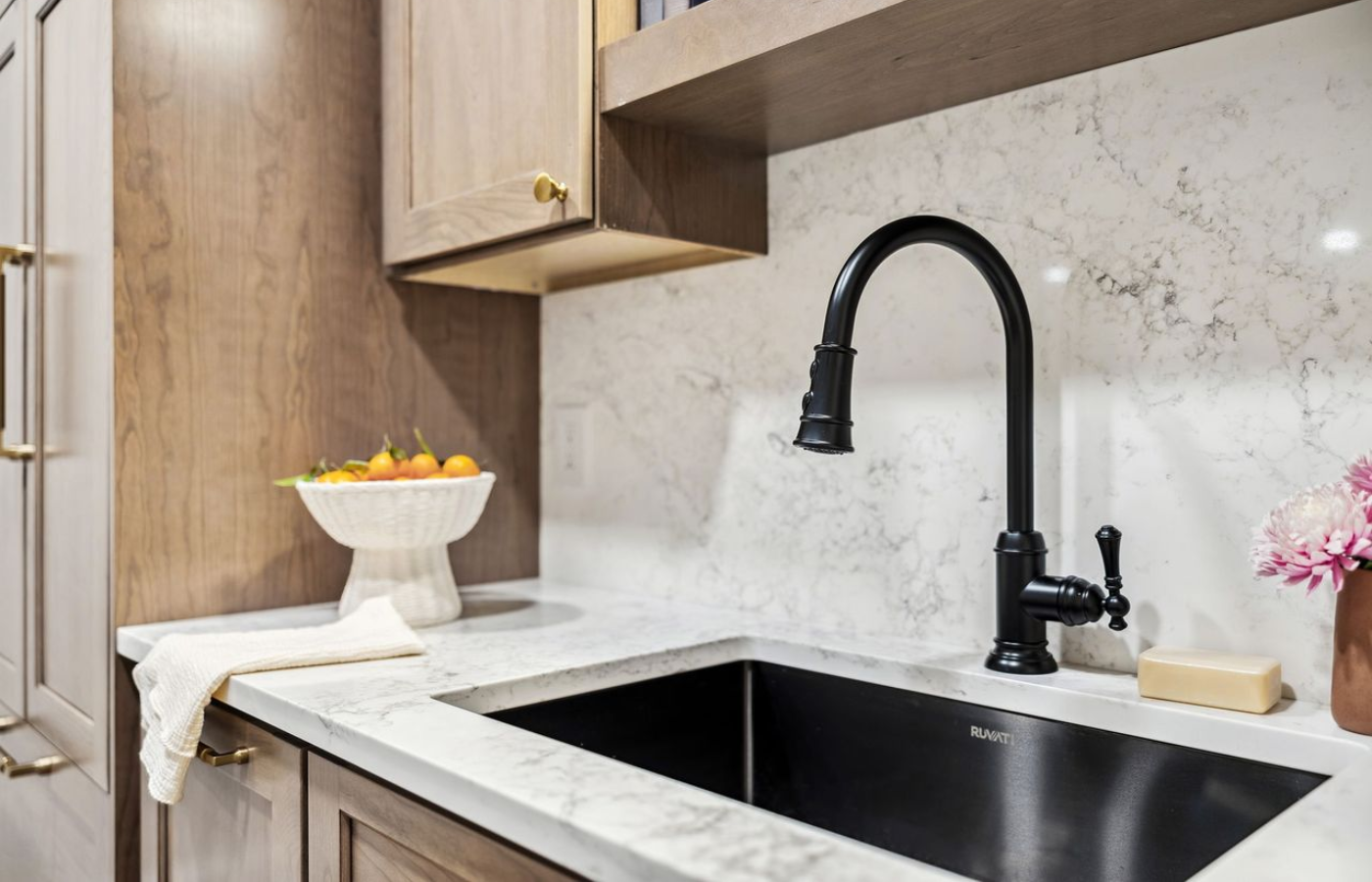
Buying new countertops involves more than choosing a color you like. The process usually includes planning the project, taking preliminary measurements, visiting a countertop showroom, comparing materials and slabs, finalizing design details, templating, fabrication, and installation.
At Design Surfaces in Westlake, Ohio, we help homeowners, designers, builders, and contractors throughout Cleveland compare countertop materials, colors, patterns, finishes, and full slabs in person.
Whether you are remodeling a kitchen, updating a bathroom vanity, or planning another surface project, understanding the countertop buying process can help you make more confident decisions and know what to expect from the first showroom visit through installation.
The countertop buying process typically follows these steps:
The exact sequence can vary depending on the countertop material, fabricator, installer, and scope of the remodel, but these stages provide a useful roadmap.
Before visiting a showroom, think about where the countertop will be installed and what you need from the surface.
Consider:
You do not need every detail finalized before you start shopping.
In many cases, seeing countertop materials in person is what helps homeowners narrow down their preferences in the first place.
You usually do not need exact professional measurements for your first countertop showroom visit.
Approximate dimensions can help you discuss the scope of the project and get a general idea of how much material may be required.
Measure the approximate length and depth of each countertop area and note important features such as:
Photos of the existing room can also be helpful.
These preliminary measurements are for planning. Final fabrication requires much more precise measurements or professional countertop templating.
Seeing countertops in person gives you information that photographs and small online samples cannot always provide.
At a countertop showroom, you can compare materials such as:
Pay attention to more than the basic color.
Look at:
A surface that appears simple online may look dramatically different when viewed as a full slab.
Choosing the right countertop material means balancing design preferences with everyday performance and maintenance.
Quartz is an engineered surface known for consistent patterns, relatively straightforward maintenance, and a nonporous surface that generally does not require sealing.
Quartz may be a good fit if: you want predictable color and pattern with relatively simple everyday care.
Quartzite is a natural stone known for durability, natural veining, and variation from slab to slab.
Quartzite may be a good fit if: you want the character of natural stone and are comfortable following the appropriate stone-care recommendations.
Granite is a natural stone available in a wide range of colors, mineral patterns, and levels of movement.
Granite may be a good fit if: you want durable natural stone with an appearance that varies from slab to slab.
Marble is known for distinctive natural veining and timeless character, but it requires more thoughtful care because it can stain, scratch, and etch.
Marble may be a good fit if: natural beauty and character are priorities and you are comfortable with its maintenance requirements.
Porcelain slabs offer low water absorption, heat resistance, and a wide range of contemporary design options.
Porcelain may be a good fit if: you want a durable surface with modern design possibilities and relatively straightforward maintenance.
When comparing countertop materials, consider how each option will perform in your home as well as how it looks.
For natural stone, seeing the entire slab can be one of the most important parts of the countertop selection process.
A small sample may communicate the general color, but it cannot show everything happening across a slab of granite, quartzite, marble, or dolomite.
A full slab may include:
The specific slab you choose can have a major influence on the finished countertop.
Take a photo of the full slab as well as close-up photos of sections you particularly like. This can make comparing several options easier later.
Countertops should be considered alongside the other materials in the room.
If you already have them, bring:
Seeing these finishes beside a countertop can reveal undertones and combinations that are difficult to judge separately.
This is especially important when comparing whites, creams, grays, and other neutrals. Two countertops that both appear white online may look very different beside the same cabinetry.
Once you have narrowed down the material, evaluate the specific surface in the context of your room.
Consider:
For natural stone, evaluate the entire slab rather than judging the material from one small section.
You can begin shopping for countertops relatively early in the remodeling process.
Countertops often influence cabinetry, backsplash tile, flooring, hardware, paint, and other major design choices, so exploring materials early can make it easier to create a coordinated palette.
Final measurements typically happen later.
The simplest way to think about the timing is:
Countertop selection can begin early. Final measurements, templating, and fabrication happen later once the relevant cabinetry and layout are established.
Starting early gives you more time to compare materials without rushing one of the most visible elements in the room.
Choosing the material is only part of the process.
Depending on the project, you may also need to confirm:
These decisions become especially important when working with natural stone that has prominent movement or veining.
Countertop templating is the process of taking precise measurements of the countertop areas before fabrication.
A template gives the fabricator the dimensions and project details needed to produce countertop pieces for the space.
Depending on the project, templating may account for:
Templating is much more precise than the preliminary measurements used when you first begin shopping.
In many projects, base cabinets need to be installed, secured, and properly positioned before final countertop templating can occur.
That allows precise measurements to be taken from the actual cabinetry rather than relying only on plans or estimated dimensions.
The exact sequence can vary by project, so confirm timing with your fabricator, installer, contractor, or designer.
Slab layout is particularly important when the selected material has strong veining or dramatic movement.
Depending on the countertop and fabrication process, consider:
Not every countertop can be completely seamless.
Seam placement can depend on slab dimensions, countertop layout, transportation requirements, material characteristics, and fabrication considerations.
Precise measurements, fabrication, and installation all play an important role in how the finished countertop fits and performs. The Natural Stone Institute provides additional guidance on the natural stone countertop fabrication and installation process.
Once final measurements and project details are confirmed, the countertop moves into fabrication.
Fabrication turns the selected material into the pieces required for the project.
This may include:
Fabrication requirements vary by material. Natural stone, engineered quartz, and large-format porcelain each require appropriate tools and fabrication techniques.
Before installation day, confirm what needs to be completed in the room.
Depending on the project, preparation may include making sure:
Follow the project-specific instructions provided by your installer or contractor.
After installation, make sure you understand the maintenance requirements for your particular surface.
Ask about:
There is no single countertop-care routine that works for every material.
For natural stone, the Natural Stone Institute recommends identifying the type and composition of the stone before choosing cleaning and maintenance products
Quartz, granite, quartzite, marble, porcelain, dolomite, and other surfaces can have very different maintenance requirements.
You do not need to arrive with every remodeling decision finalized.
For a more productive showroom visit, bring whatever information you already have, such as:
If some of those selections have not been made yet, that is fine. The showroom visit itself can help shape the direction of the project.
No.
You can begin shopping without knowing whether you want quartz, granite, quartzite, marble, porcelain, or another material.
In fact, comparing materials side by side can make that decision easier.
Instead of starting with a material name, think about what matters most to you.
For example:
Those priorities can quickly narrow the options.
There is no single timeline that applies to every countertop project.
Timing can depend on:
If you are working toward a specific completion date, discuss timing early rather than waiting until the final stages of the project.
Small samples are helpful for basic color comparison, but they may not show the full movement and variation of natural stone.
Whenever possible, look at the entire slab before making a final natural-stone selection.
Exact measurements are not necessary for an initial visit, but approximate dimensions make early conversations more useful.
A countertop should fit your daily routine as well as your design.
Understanding cleaning, sealing, heat, staining, scratching, and etching considerations before buying can help you choose a material that fits how the room will actually be used.
Cabinetry, flooring, backsplash tile, hardware, paint, and lighting can all change how a countertop appears.
Compare materials together whenever possible.
Color is only one part of countertop design.
Veining, movement, pattern scale, finish, edge details, slab layout, and lighting all influence the final appearance.
Countertops do not have to be finalized at the beginning of a remodel, but starting the search early gives you more time to compare materials, understand maintenance, and coordinate the overall design.
Start by identifying where the countertop will be installed, how the space will be used, your approximate dimensions, and your preferences for appearance and maintenance. You can then visit a countertop showroom to compare materials and narrow down your options.
No. Approximate countertop measurements are usually enough for the initial shopping and planning stage. Precise measurements or professional countertop templating are completed later before fabrication.
Bring approximate measurements, photos of the room, and any cabinetry, flooring, backsplash, paint, or hardware samples you already have. Inspiration photos and notes about how you use the space can also help narrow the options.
Whenever possible, yes. A full natural-stone slab shows veining, movement, mineral variation, and color changes that may not appear in a small sample.
Yes. You can begin comparing and selecting countertop materials before cabinet installation. Final templating generally happens later once the cabinets and relevant parts of the layout are established.
Preliminary measurements are approximate dimensions used during early planning and shopping. Countertop templating is a more precise measurement process completed before fabrication so the countertop can be produced for the actual space.
Choosing a countertop involves selecting the material, color, pattern, slab, finish, and other design details. Templating happens later and records the precise dimensions needed for fabrication.
Often, narrowing down the countertop first can make backsplash selection easier, especially when the countertop has prominent veining or movement. The best order may vary depending on which material is intended to lead the overall design.
Consider appearance, maintenance, staining and etching sensitivity, sealing requirements, heat and scratch considerations, and how heavily the surface will be used. Seeing several materials in person can make these differences easier to understand.
Neither option is automatically better for every home. Quartz offers consistent patterns and relatively straightforward maintenance, while natural stones such as granite, quartzite, and marble offer distinctive variation and characteristics that differ by material. The right choice depends on your design preferences and maintenance expectations.
Yes. Seeing quartz, granite, quartzite, marble, porcelain, and other materials side by side can help you compare color, movement, finish, natural variation, and maintenance considerations before deciding.
You can start exploring countertop materials while other major design selections are being made. Beginning early gives you time to compare materials and coordinate cabinetry, flooring, backsplash tile, hardware, and other finishes before final measurements and fabrication.
The best countertop is not simply the surface that looks good in isolation. It should work with the room, the surrounding materials, your everyday routine, and the level of maintenance you are comfortable with.
Start with approximate measurements and a clear idea of how the space will be used. Compare materials in person, view full slabs when appropriate, and consider the countertop alongside cabinetry, flooring, tile, hardware, and lighting.
Once the material and design details are established, professional templating, fabrication, and installation turn that selection into a finished surface made for the space.
At Design Surfaces, serving homeowners, designers, and contractors across Cleveland, we help clients compare countertop materials with both design and real-world usability in mind.
Bring your measurements, project photos, finish samples, or simply your ideas to our Westlake showroom and explore countertop options in person.
Visit Design Surfaces in Westlake to start finding the right countertop for your kitchen, bathroom, or next remodeling project.
Call: 440.899.9900
Email: info@designsurfacesdist.com
Contact: Submit a Request


