Contact info +
.png)
.png)
.png)
Showroom Hours:
Mon-Fri - 9AM-5PM | Sat - 10AM-2PM | Sun - Closed
Mon-Fri - 9AM-5PM | Sat - 10AM-2PM | Sun - Closed


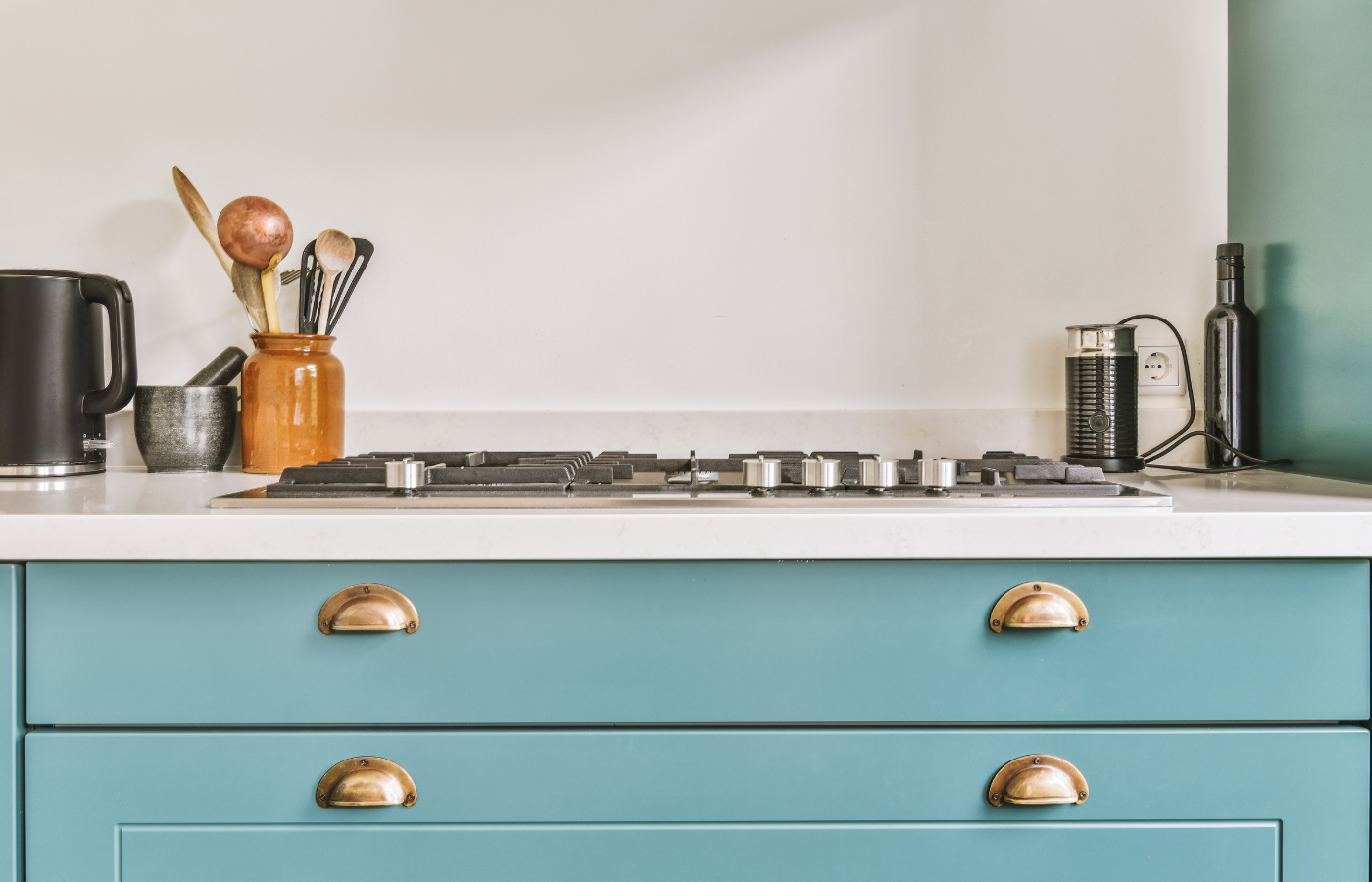
A kitchen can have beautiful cabinets and still feel slightly “off” in ways you cannot name. Often, it comes down to scale. Cabinet hardware is one of the most touched, most visible details in the room, and size has a bigger impact than finish alone. At Design Surfaces, we help Cleveland homeowners treat hardware like a design decision, not an afterthought, because the right proportions make cabinetry look more custom, more intentional, and more expensive. If you want your kitchen to feel elevated without a full renovation, start with hardware size.
Hardware is the jewelry of your kitchen, but jewelry still needs the right scale. A small pull on a wide drawer can look like it was chosen in a rush. An oversized pull can make simple cabinets feel high-end, or it can overwhelm the door if it is not balanced.
Cabinet hardware size influences:
In Cleveland kitchens, where layouts range from historic homes to new builds, the right sizing strategy depends on both cabinet style and room scale.
A simple way to think about hardware sizing is this: the larger the door or drawer, the more visual presence the hardware needs. When hardware is too small, cabinets can look builder-grade. When hardware is sized well, the same cabinets can suddenly look upgraded.
These guidelines help you choose cabinet hardware size confidently:
Your exact “right” size will depend on cabinet style, door thickness, drawer height, and the look you want to create.
If you want a fast way to make a kitchen feel more custom, go slightly larger than the default. Many kitchens end up with undersized pulls because homeowners worry bigger will look too bold. In reality, slightly oversized hardware often reads as designer-level.
Larger pulls tend to:
For a clean, modern Cleveland kitchen, longer pulls also reinforce strong horizontal lines, which makes the whole space feel tailored.
Bigger is not always better. Smaller hardware can look right when the cabinetry already has a lot of detail, or when the style is more traditional.
Smaller knobs or shorter pulls can be a smart choice when:
Even then, “small” should still feel intentional. A tiny knob on a large drawer can look like a mismatch, no matter how beautiful the finish is.
Hardware sizing can push your kitchen style in a clear direction.
Modern kitchens often look best with longer pulls and consistent sizing.
If you want a modern upgrade without replacing cabinets, cabinet hardware size is one of the most powerful changes you can make.
Transitional kitchens balance warmth and clean lines, so sizing matters.
A transitional Cleveland kitchen can look expensive when the hardware feels proportional, not default.
Traditional kitchens can use smaller hardware, but it should still match the door and drawer proportions.
The goal is a collected, timeless look, not a hardware grid that feels too busy.
Many kitchens use both knobs and pulls, but the sizes need to coordinate. When sizes compete, the kitchen can feel visually choppy.
A simple approach:
If you want the easiest path to a cohesive look, keep knob shapes simple and let pull length carry the style.
Cabinet hardware size is not only a design choice. It affects how the kitchen functions.
Larger pulls can be better because they:
If your kitchen is high-traffic, longer pulls often make daily use easier and feel more premium.
Even expensive cabinets can look less polished if hardware sizing is off.
Avoid these common mistakes:
At Design Surfaces, we see the best results when homeowners plan hardware size alongside countertops, backsplash tile, and lighting, so every finish feels coordinated.
The best way to choose cabinet hardware size is to test it at full scale.
Use this quick testing plan:
Small differences in pull length can change the entire feel of the room.
Design Surfaces is a premium destination for kitchens and baths in the Cleveland area, and hardware is part of the finished story. When countertops, tile, and hardware are chosen with the same level of care, the space looks cohesive instead of pieced together.
We help you think through:
We are proud to be serving homeowners, designers, and contractors across Cleveland who want high-end results with practical, expert guidance.
Cabinet hardware size changes how your kitchen looks just as much as finish. The right proportions can make cabinetry feel custom, make the whole room feel more balanced, and add that quiet luxury homeowners want. If you are planning a Cleveland kitchen update, choose hardware with the same care you give your countertops and tile. Visit the Design Surfaces showroom to explore premium materials and finish combinations in person, and contact our team for help building a kitchen that feels intentional from every angle.
Call: 440.899.9900 • Contact: Submit a Request • Email: info@designsurfaces.com


