Contact info +
.png)
.png)
.png)
Showroom Hours:
Mon-Fri - 9AM-5PM | Sat - 10AM-2PM | Sun - Closed
Mon-Fri - 9AM-5PM | Sat - 10AM-2PM | Sun - Closed


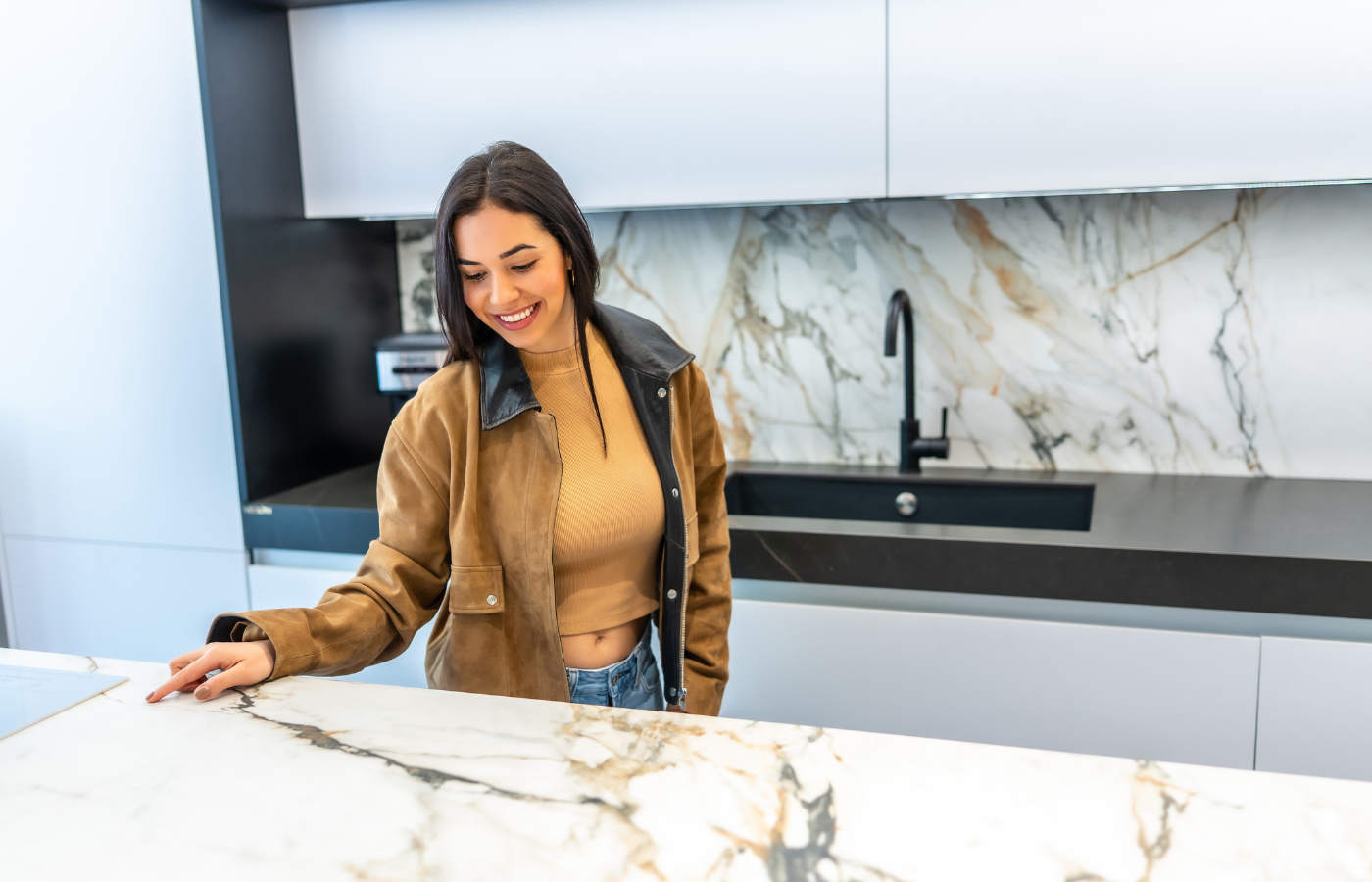
Quartzite is often chosen for its natural movement, durability, and high-end appearance, but one question comes up again and again: does quartzite need to be sealed?
In many cases, yes. Quartzite is a natural stone, and some varieties can absorb moisture, oils, and other liquids if they are left on the surface long enough. Sealing can help slow that absorption and give homeowners more time to clean spills before they become stains. At Design Surfaces in Westlake, Ohio, we help clients understand not just how a slab looks, but how it will perform and what kind of maintenance it may require over time.
Quartzite is formed from sandstone that has been transformed by heat and pressure into a much denser natural stone. It is known for strength and durability, but density does not always mean completely non-porous.
Some quartzite slabs are very dense and absorb little moisture. Others are more porous and may darken more easily when exposed to water or oil.
A penetrating sealer helps reduce how quickly liquids move into the stone.
That can be especially helpful in areas where quartzite is exposed to:
Sealing does not make quartzite waterproof or stain proof, but it can make routine maintenance more manageable.
A natural stone sealer is designed to penetrate into the pores of the stone and reduce liquid absorption.
It does not usually create a thick coating on top of the countertop.
Instead, the goal is to give homeowners more time to clean spills before they penetrate deeply enough to create a visible stain.
A properly selected sealer can help with:
It is important to understand what sealing cannot do as well.
Sealer does not make quartzite immune to damage, eliminate the need for cleaning, or prevent every possible mark.
Not necessarily to the same degree.
Quartzite varies significantly from slab to slab. Different stones can have different levels of porosity, mineral composition, finish, and absorption.
That means one quartzite may absorb water quickly while another barely changes at all.
Factors that influence whether sealing is needed include:
Denser quartzites may absorb less liquid naturally.
Polished, honed, and leathered finishes can behave differently when exposed to moisture and oils.
A kitchen island, bathroom vanity, backsplash, or fireplace surround will not experience the same level of exposure.
A heavily used family kitchen typically faces more spills than a decorative surface.
Because of these differences, quartzite should be evaluated as a specific material rather than assuming every slab has identical maintenance requirements.
One of the simplest indicators is how the stone responds to water.
If a small amount of water sits on the surface and the stone begins to darken noticeably, that may indicate moisture absorption.
If the water remains on top without changing the appearance of the stone, the surface may be less absorbent or may still have effective sealer protection.
This kind of observation can help indicate whether the stone is accepting moisture, but it should not replace professional guidance for a newly installed countertop.
If you are unsure, ask the fabricator, installer, or stone supplier whether the quartzite was sealed and what maintenance schedule they recommend.
There is no universal schedule that applies to every quartzite countertop.
You may see recommendations to reseal stone every year, every few years, or on another fixed timeline. In reality, the right interval depends on the stone and how it is used.
Factors include:
Instead of sealing automatically according to a calendar, evaluate how the surface is performing.
If liquids begin absorbing faster than they once did, or the stone begins darkening more easily around wet areas, it may be time to have the countertop evaluated.
Sealing helps reduce the risk of staining, but it does not eliminate it.
A sealed quartzite countertop can still stain if a spill remains on the surface for too long.
Cooking oil, wine, coffee, cosmetics, and strongly pigmented foods should still be cleaned promptly.
Think of sealer as additional protection rather than a permanent shield.
It gives you more time to react to spills, but good daily habits still matter.
It can help reduce moisture absorption, but not every water ring is caused by liquid penetrating the stone.
A white or cloudy mark may actually be hard water buildup or cleaner residue sitting on top of the countertop.
A dark spot may indicate absorbed moisture.
Those two problems require different treatment.
If your quartzite develops repeated dark areas around the sink, it may be worth checking the sealing condition, caulk, seams, and how often water is allowed to sit on the surface.
Sink areas deserve particular attention because they experience repeated water exposure.
Water can collect around:
If the stone around the sink consistently darkens after getting wet, moisture may be entering the quartzite.
Keeping the area dry and maintaining appropriate sealer protection can help reduce repeated absorption.
Persistent darkening should be evaluated to rule out moisture beneath the surface or issues with the installation.
Bathroom quartzite can also benefit from sealing, depending on the stone.
Vanities are exposed to water, cosmetics, lotions, soaps, and cleaning products.
Sealing can help slow absorption, especially with oils and pigmented products that may otherwise leave visible marks.
As with kitchen countertops, the correct maintenance schedule depends on the specific quartzite and how heavily the surface is used.
Applying more sealer is not always better.
If too much product remains on the surface instead of penetrating properly, it can leave haze, streaks, or residue.
The surface should be prepared correctly, and excess sealer should be removed according to product instructions.
If a quartzite countertop looks cloudy after sealing, the issue may be excess product rather than the stone itself.
For that reason, resealing should be done based on actual need rather than simply adding more product on a fixed schedule.
An unsealed quartzite countertop may still perform well if the stone is extremely dense.
However, more absorbent quartzite can be more vulnerable to:
Once a substance penetrates deeply into natural stone, removing it can become more difficult.
Sealing helps reduce that risk, particularly in busy kitchens and bathrooms.
A properly selected penetrating sealer should not dramatically change the appearance of the stone.
However, some specialty products are designed to enhance color or deepen the appearance of natural stone.
If maintaining the original look is important, confirm whether the sealer is intended to be natural-look or enhancing before it is applied.
This is particularly important with lighter quartzites, where even subtle changes in tone may be more noticeable.
Sealed quartzite still needs appropriate cleaning.
For everyday care, use:
Avoid relying on harsh household cleaners simply because the surface has been sealed.
Strong acids, abrasive products, and incompatible chemicals can affect the sealer, finish, or surrounding installation materials.
Sealer is not a substitute for stone-safe cleaning.
A few simple habits can help maintain both the stone and its sealer:
These habits help reduce unnecessary wear and make it easier to notice when the countertop's performance begins to change.
Quartzite is one of the most distinctive natural countertop materials available, but choosing the right slab involves more than selecting a color or pattern.
Porosity, finish, density, and intended use all matter.
At Design Surfaces, serving homeowners, designers, and contractors across Cleveland, we help clients compare quartzite slabs in person and understand how each material fits the way the space will actually be used.
Seeing full slabs also gives you a better sense of movement, variation, finish, and the level of maintenance you are comfortable with before fabrication begins.
So, does quartzite need to be sealed?
In many installations, sealing is a smart part of routine quartzite care because it helps reduce liquid absorption and lowers the risk of staining. But there is no single sealing schedule that applies to every slab.
The right approach depends on the specific stone, finish, sealer, and how the countertop performs over time.
If you are choosing quartzite for a kitchen, bathroom, or other space, visit the Design Surfaces showroom in Westlake to compare full slabs, finishes, and natural stone options in person.
Call: 440.899.9900 • Contact: Submit a Request • Email: info@designsurfacesdist.com


