Contact info +



Showroom Hours:
Mon-Fri - 9AM-5PM | Sat - 10AM-2PM | Sun - Closed
Mon-Fri - 9AM-5PM | Sat - 10AM-2PM | Sun - Closed


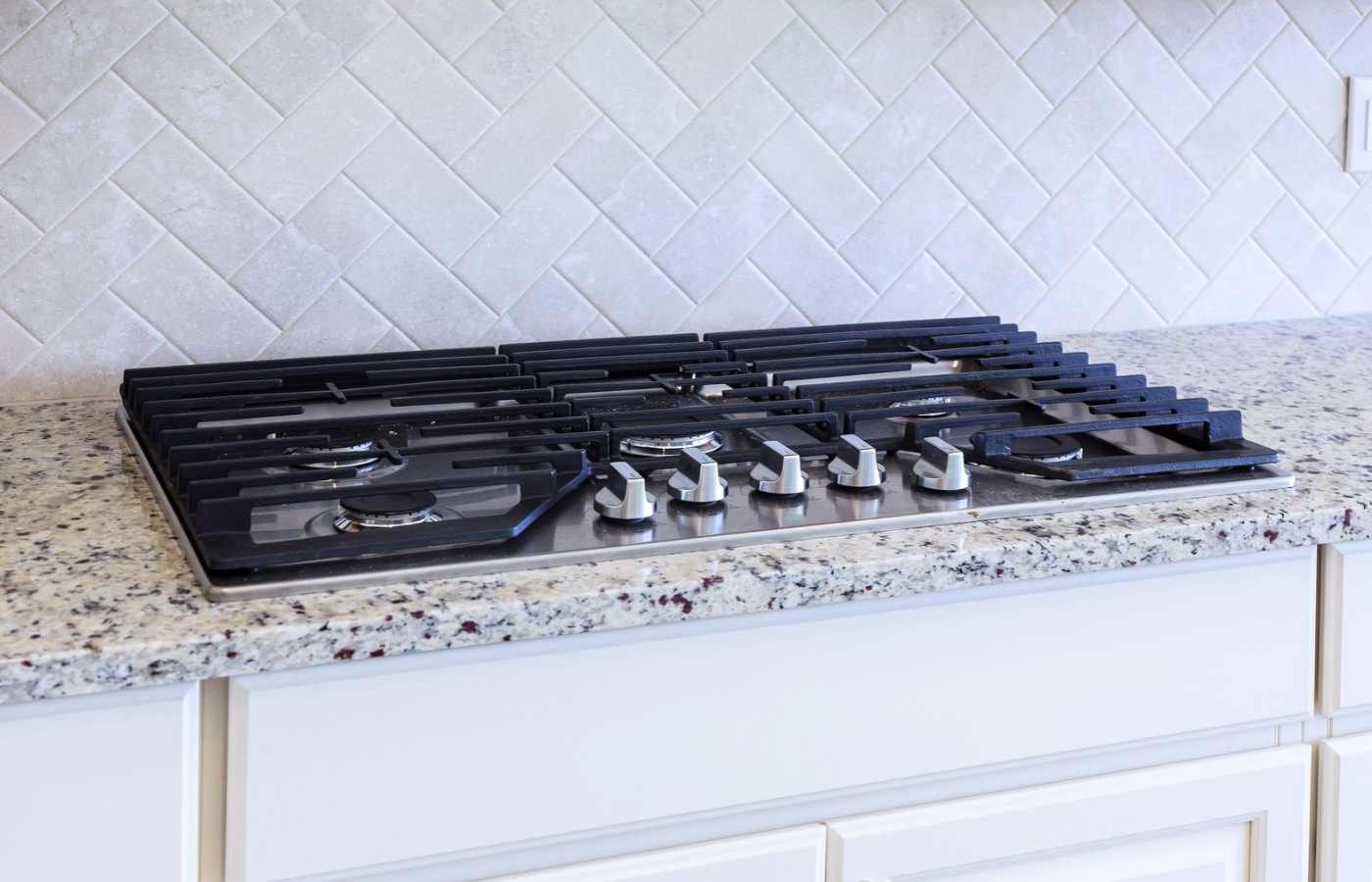
You've just taken a hot skillet off the stove and need somewhere to set it down. Your granite countertop seems like a safe choice, but can the heat actually damage the stone?
Yes, granite is highly heat resistant and can often tolerate brief contact with hot cookware without visible damage. However, using a trivet or heat-resistant pad is still the safest approach. Extreme temperature changes, certain surface treatments, and repeated exposure to concentrated heat can create problems that are easy to avoid.
For homeowners considering granite countertops, heat resistance is one of the material's biggest advantages. Here's what you should know about hot pans, potential damage, and how to keep granite looking beautiful for years.
Granite is a natural igneous rock formed as molten material cools and crystallizes beneath the earth's surface. Its mineral composition gives it excellent resistance to the temperatures encountered during everyday cooking.
Unlike conventional engineered quartz countertops, granite does not contain resin binders throughout the stone. This makes it generally more tolerant of direct heat exposure.
However, a finished granite countertop is more than the natural stone itself.
Depending on the slab and fabrication process, it may also contain sealers, resins used to fill natural fissures, adhesives at seams, or other surface treatments.
These materials can respond differently to heat than granite's natural minerals.
That's why heat resistant and heatproof are not the same thing. Granite performs exceptionally well in kitchens, but that doesn't mean every hot object should be placed directly on the surface.
In many cases, briefly placing a hot pot or pan on granite will not cause immediate damage.
A warm saucepan, for example, is unlikely to create the same concerns as an extremely hot cast-iron skillet removed directly from a high-temperature burner.
The risk depends on several factors:
Most granite countertops handle incidental kitchen heat very well.
Still, there's little reason to expose an expensive countertop to unnecessary temperature extremes when a trivet offers simple protection.
Our recommendation is to use trivets for cookware taken directly from the stove or oven, even though granite is naturally heat resistant.
It's possible for extreme temperature changes to create stress in natural stone, but cracking from ordinary hot cookware is uncommon.
Granite is strong and generally handles everyday kitchen temperatures without difficulty.
However, placing an extremely hot object on a much cooler surface can cause one area of the stone to expand more quickly than the surrounding material.
This is known as thermal stress.
Thermal shock occurs when a rapid temperature change creates enough internal stress to damage a material.
For granite countertops, the potential risk depends on the temperature difference, the stone's characteristics, and existing conditions.
Natural fissures, narrow sections around sink or cooktop openings, and inadequate support can influence how a countertop responds to stress.
That doesn't mean a hot pan will automatically crack granite.
In fact, many granite countertops experience occasional contact with hot cookware without any visible consequences.
But avoiding sudden, extreme temperature changes is a sensible precaution, especially around vulnerable sections of the countertop.
Heat isn't the only possible cause of cracking.
Granite countertops may also develop cracks because of:
If a crack appears near the stove, don't automatically assume a hot pan caused it. A qualified stone professional can evaluate whether the issue is related to heat, impact, or structural support.
Many granite countertops are treated with a penetrating sealer to help reduce liquid absorption and staining.
A sealer is designed primarily to protect against moisture and spills, not to make the countertop heatproof.
Different sealing products have different formulations and temperature tolerances.
Excessive or prolonged heat exposure may affect certain sealers or other surface treatments, although brief contact with hot cookware does not necessarily cause damage.
If you notice a change in the countertop's appearance after heat exposure, the issue may involve residue, a surface treatment, or the stone itself.
Do not automatically apply another coat of sealer to fix a cloudy or discolored area. Sealing does not restore a damaged polish, and excess product can sometimes leave additional residue.
If you're unsure whether your granite needs resealing, consult the fabricator or a qualified natural stone professional.
Granite generally tolerates heat well, but cast-iron cookware deserves extra attention.
Cast iron retains substantial heat and can remain extremely hot after being removed from the burner or oven.
A skillet used for high-temperature searing may expose the countertop to concentrated heat for longer than a lightweight saucepan.
Although genuine granite can often withstand brief contact, placing extremely hot cast iron directly on the surface is not a habit we recommend.
Use a properly rated trivet beneath:
A trivet also protects against accidental burns if someone touches the countertop shortly after the cookware is moved.
Granite is a practical surface for busy kitchens, but hot baking dishes should still be placed on trivets.
Glass, ceramic, and metal baking dishes can retain significant heat after coming out of the oven.
That includes casserole dishes, roasting pans, baking sheets, and other cookware used at high temperatures.
The safest approach is to designate a heat-resistant landing area near the oven.
This is particularly useful when preparing large meals or entertaining, when several hot dishes may need countertop space at the same time.
There isn't one universal temperature rating that applies to every finished granite countertop.
Granite's natural mineral composition provides substantial heat resistance, but the performance of an installed countertop depends on more than the stone alone.
Factors such as natural fissures, resin treatments, sealers, temperature differences, and installation conditions can all influence the outcome.
You may see claims that granite can withstand a specific temperature, but those numbers shouldn't be treated as guarantees for every slab or installation.
For everyday kitchen use, the practical answer is simpler: granite is highly heat resistant, but use protection beneath extremely hot cookware.
Granite generally offers greater natural heat resistance than conventional engineered quartz countertops.
The difference comes from how the materials are made.
Granite is natural stone formed from crystallized minerals.
Engineered quartz is manufactured using mineral particles combined with resin binders, pigments, and other ingredients.
Those resin components can be affected by excessive heat.
Placing an extremely hot pan directly on engineered quartz may result in discoloration, cloudy marks, or other damage.
Granite doesn't contain those same resin binders throughout the stone, giving it an advantage when it comes to natural heat resistance.
However, both materials benefit from trivets.
If you're deciding between countertop options, our guide to heat-resistant countertops and what actually holds up to heat explains how different surfaces compare.
Granite and quartzite are both excellent natural stone options for homeowners who value heat resistance.
However, they are geologically different materials.
Granite is an igneous rock formed through the cooling and crystallization of molten material.
Quartzite is a metamorphic rock formed when quartz-rich sandstone undergoes intense heat and pressure.
Both are generally well suited to everyday kitchen temperatures.
Neither material can be declared universally more heat resistant without considering the specific slab, surface treatments, and installation.
For most homeowners, the more meaningful differences involve appearance, maintenance, absorption characteristics, and the particular stone being considered.
Our guide to quartzite countertops, including their advantages and disadvantages explores what makes this natural stone different.
Granite countertops are available in several finishes, including polished, honed, and leathered.
Each creates a different visual effect.
Polished granite has a reflective surface that emphasizes the stone's color, mineral patterns, and natural depth.
Fingerprints, residue, and changes in sheen may be more noticeable on certain polished surfaces.
Honed granite has a smooth, lower-sheen appearance.
It creates a softer, more understated look that works well in both contemporary and traditional kitchens.
Leathered granite has a textured surface that highlights the stone's natural character.
The texture may help disguise some everyday marks, although cleaning requirements vary by stone and finish.
The finish does not fundamentally change granite's natural heat resistance. However, different surface treatments and finishes can affect how certain marks appear.
For help comparing these options, explore our guide to honed vs. polished countertops.
If you set a hot pan directly on your granite countertop, there's no reason to assume you've damaged it.
Granite often tolerates incidental heat exposure without any visible problems.
If you're concerned, follow these steps.
Use oven mitts or pot holders to transfer the cookware to a trivet or another heat-resistant surface.
Avoid touching the countertop area immediately afterward.
Don't pour cold water onto the heated area.
Rapid cooling can create additional temperature stress.
Allow the countertop to return to room temperature on its own.
Once the surface is cool, look for:
If the granite looks normal, no additional treatment may be necessary.
Start with a pH-neutral cleaner approved for natural stone and a soft microfiber cloth.
Avoid abrasive powders, acidic cleaners, or unapproved polishing compounds.
Some marks may be removable residue rather than actual damage to the granite.
If a new crack, unusual discoloration, or permanent change in sheen remains, contact a qualified natural stone professional.
The appropriate solution depends on whether the problem involves the stone, a surface treatment, or the installation.
Granite doesn't require complicated care, but a few everyday habits can help preserve its appearance.
Place heat-resistant trivets where you normally set down hot cookware.
This makes protecting the countertop convenient rather than something you have to remember.
Don't intentionally expose a small section of granite to sudden heating or cooling.
Narrow sections of stone around openings may be more vulnerable to stress.
Avoid placing heavy, extremely hot cookware directly on these areas.
Choose pH-neutral products formulated for natural stone.
Avoid abrasive cleaners and harsh chemicals that may affect the finish or surface treatments.
Granite absorption varies by slab.
Some granite countertops benefit from periodic sealing, while denser varieties may require less frequent treatment.
For additional maintenance information, the Natural Stone Institute provides guidance on caring for natural stone surfaces.
Yes. Granite remains an excellent choice for active kitchens.
Its combination of natural heat resistance, durability, and distinctive mineral patterns makes it appealing to homeowners who spend a lot of time cooking.
Granite also comes in a wide range of colors, from understated whites and grays to dramatic darker stones with striking movement.
Like any countertop material, it has maintenance considerations.
Some slabs benefit from sealing, and heavy impacts or extreme temperature changes can still cause damage.
But with proper fabrication, installation, and everyday care, granite can provide decades of service.
If you're exploring countertop options for a kitchen renovation, seeing full slabs in person can help you appreciate the differences in color, movement, and finish.
Granite can often tolerate brief contact with hot cookware without visible damage. However, using a trivet is recommended to reduce concentrated heat exposure and protect the finished countertop.
Genuine granite does not typically scorch under ordinary kitchen conditions. However, excessive heat may affect certain surface treatments, resin-filled areas, or residue on the countertop.
Extreme or uneven temperature changes can create thermal stress, but cracking from ordinary hot cookware is uncommon. Natural fissures, structural support, and installation conditions can also influence cracking risk.
Although granite is highly heat resistant, placing extremely hot cookware directly from the oven onto the countertop is not recommended. Use a properly rated trivet or heat-resistant pad.
Certain sealing products may be affected by excessive heat, depending on their formulation. Brief contact with hot cookware does not automatically mean the sealer has failed.
Genuine granite generally has greater natural heat resistance than conventional engineered quartz because it does not contain heat-sensitive resin binders throughout the material.
Hot pads and trivets are recommended, especially for cast-iron cookware, baking dishes, and pots removed directly from the stove or oven.
Granite is a beautiful and practical countertop material for homeowners who want natural stone that performs well in busy kitchens.
Its excellent heat resistance is a major advantage, but simple precautions such as using trivets can help protect the finished surface over time.
Choosing the right granite also involves considering color, veining, finish, maintenance, and how the material complements the rest of your kitchen.
At Design Surfaces, our family's roots in stone date back to 1975. Our Westlake showroom features natural and engineered countertop materials, a dedicated Stone Warehouse with full slabs, full-room displays, and an on-site Stone Fabrication Workshop.
Visit us at 24000 Sperry Drive, Westlake, OH 44145 to explore full granite slabs, compare colors and finishes, and see how different countertop options work alongside tile, flooring, vanities, sinks, faucets, and hardware.
Walk-ins are always welcome, and our team is happy to help you find materials suited to your style and everyday needs.
For personalized guidance, schedule a free in-store design consultation. There's no purchase required, and you can take samples home to see how they look in your space.
Call: 440.899.9900
Email: info@designsurfacesdist.com


